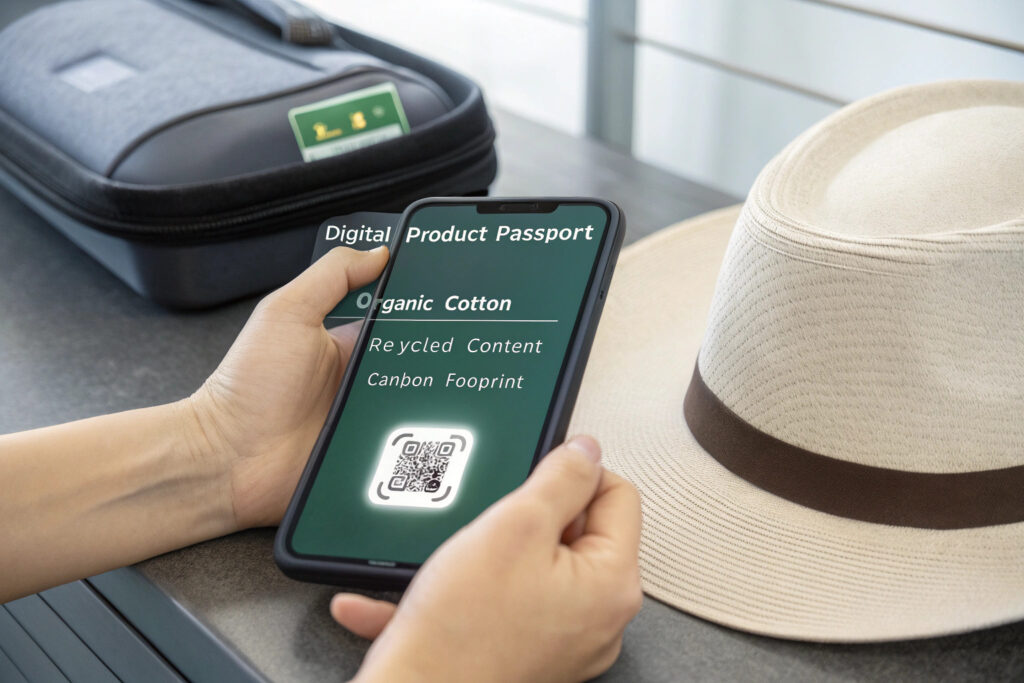
I've been in the hat manufacturing business for over two decades, and I've seen waves of change—new materials, new markets, new technologies. But the change that's coming now is the most profound I've ever witnessed. I was on a call with a major buyer in Germany, a sharp, forward-thinking professional much like my US client, Ron. He wasn't just asking about pricing or lead times. He held up one of our beanies and said, "Elaine, by the time this hits my shelves in a couple of years, it will need a Digital Product Passport. My customers will scan a QR code and see its entire life story. How are you preparing for that? Because if you're not, we can't be partners."
To comply with the upcoming EU Digital Product Passport (DPP) for hats, manufacturers must establish a robust system for collecting, verifying, and linking detailed data about a product's entire lifecycle—from raw material origins to recyclability—and making this information accessible to consumers and authorities via a unique digital carrier, like a QR code. This is not just a new labeling requirement; it's a fundamental shift towards radical transparency and a circular economy.
The fear for any manufacturer or brand is being locked out of the entire EU market—one of the largest and most lucrative in the world. This isn't a distant threat; the regulations are part of the Ecodesign for Sustainable Products Regulation (ESPR), and textiles are one of the first product categories on the list. At Shanghai Fumao Clothing, we're not waiting. We are actively building the digital infrastructure to ensure every hat we produce is ready for this new era of transparency.
What Is the EU Digital Product Passport (DPP)?
You're hearing this term more and more, and it sounds complex and intimidating. You're worried it's another layer of bureaucracy that will add cost and complexity to your supply chain. Is it just a fancy QR code, or is it something more?
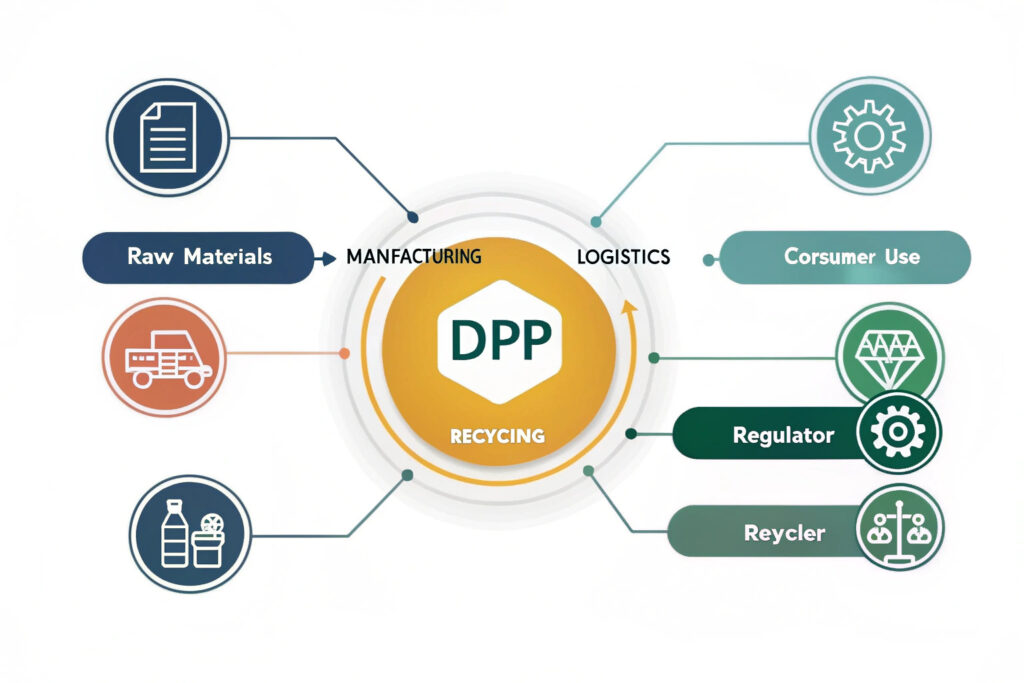
The Digital Product Passport is a digital record that provides detailed, standardized information about a product's environmental and social footprint throughout its entire value chain. Mandated by the European Commission's Ecodesign for Sustainable Products Regulation (ESPR), the DPP aims to empower consumers, businesses, and authorities to make more sustainable choices and accelerate the transition to a circular economy.
Think of it like a car's vehicle identification number (VIN), but infinitely more detailed and focused on sustainability. While a VIN tells you the car's manufacturing history, a DPP will tell you about the hat's "genetic makeup." It will answer questions like: Where was the cotton grown? Was it organic? What percentage of the polyester is recycled? Which factory stitched this hat, and does it meet fair labor standards? What is the hat's carbon footprint? And, most importantly, how can I recycle it at the end of its life?
What specific information will be required for a hat?
While the exact data points for textiles are still being finalized, based on the ESPR's goals, we can expect them to include:
- Material Composition: Detailed breakdown, including the percentage of recycled or bio-based content.
- Supply Chain Traceability: Names and locations of key suppliers, from the yarn mill to the final assembly factory.
- Durability & Repairability: Information on the product's expected lifespan and instructions for simple repairs (e.g., re-attaching a button).
- Recyclability & End-of-Life: Clear instructions on how and where the hat can be recycled, including information on material separation.
- Substances of Concern: Disclosure of any chemicals used that are on the EU's restricted lists.
- Carbon & Environmental Footprint: Data on the product's impact, such as water usage and CO2 emissions during production.
Who needs to comply?
The responsibility falls on any brand or manufacturer who places a product on the EU market. This means that even if you are a US brand manufacturing with us in China, if you intend to sell that hat in Germany, France, or any other EU country, it must have a DPP. It's a global requirement for accessing the European market.
The Biggest Challenge: Data Collection & Verification
The technology to create a QR code is simple. The immense challenge lies in gathering and verifying the vast amount of data required to populate the passport. You're worried about how you can possibly trace every fiber and every process from a dozen different suppliers across multiple countries.
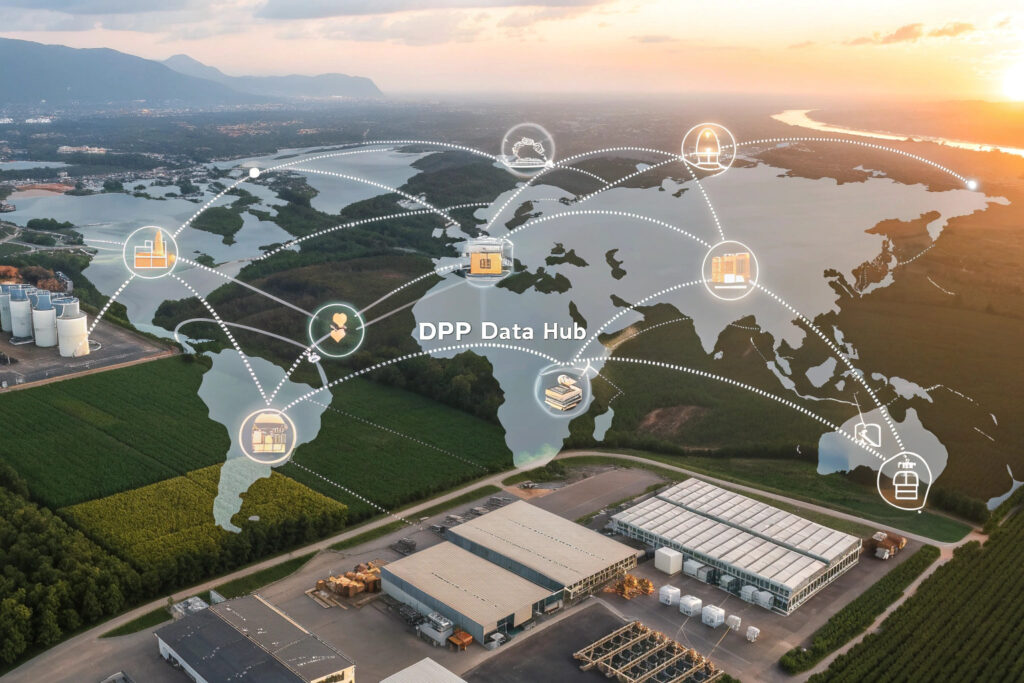
The primary challenge of DPP compliance is creating a transparent and auditable data trail from the raw material source to the finished product. This requires unprecedented collaboration and data-sharing across the entire supply chain, from the cotton farmer to the dye house to the logistics provider.
This is where our 20 years of supply chain management becomes our greatest asset. We already have deep relationships with our suppliers. The task now is to digitize that relationship. We are working with our fabric mills to get batch-level data on recycled content, certified by standards like the Global Recycled Standard (GRS). We are implementing a system to track water and energy usage for specific production runs. It's a massive undertaking, but it's the only way to provide the verified, granular data that the DPP will demand.
How do you ensure the data is accurate?
"Greenwashing" is a major concern. The EU will require data to be verifiable. This means:
- Third-Party Certifications: Relying on established certifications (like GOTS for organic cotton or Oeko-Tex® for chemical safety) will be crucial as they provide third-party verification.
- Blockchain & Digital Ledgers: Many data platforms are using blockchain technology to create an immutable, tamper-proof record of transactions and data points as a product moves through the supply chain.
- Supplier Audits: We will need to conduct even more rigorous audits of our suppliers' data management practices.
What is the role of a "data carrier"?
The "data carrier" is the physical object on the hat that links to the digital passport. This will most likely be a QR code or an NFC tag. It must be:
- Durable: It needs to be on a permanent label that can withstand washing and wear for the entire life of the hat.
- Easily Accessible: It should be easy for a consumer to find and scan.
- Unique: Each product batch, and eventually perhaps each individual item, will have a unique identifier linked to its specific passport.
The Manufacturing Shift: Designing for Circularity
The DPP isn't just about reporting data on your existing products. It's about fundamentally changing how you design and make them. The regulation pushes manufacturers to embrace the principles of a circular economy.
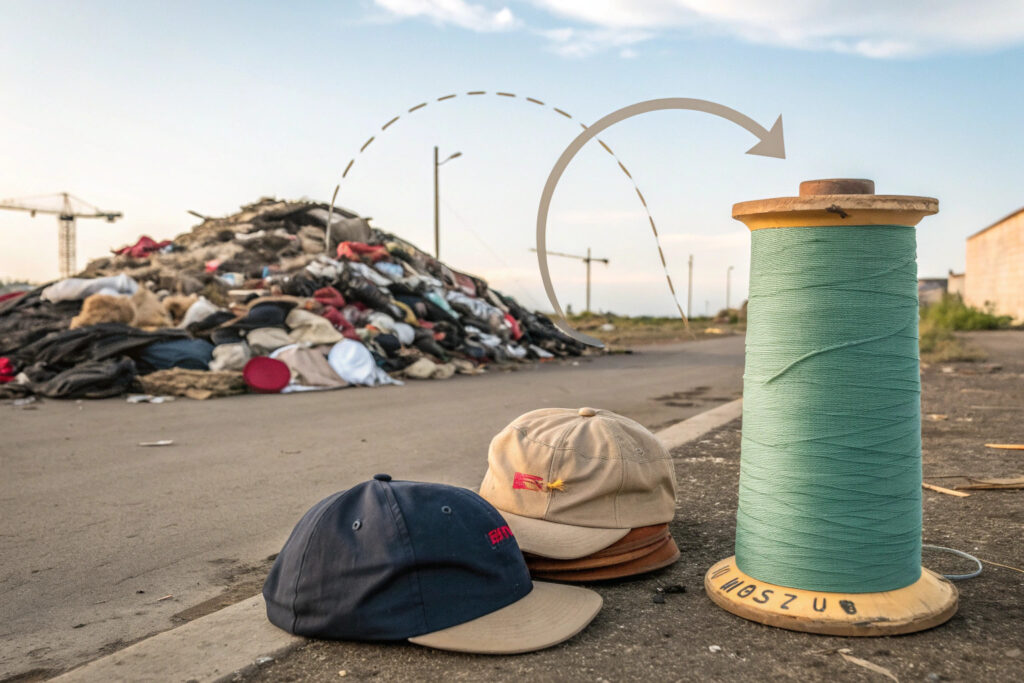
To comply with the spirit of the DPP, manufacturers must design hats for "circularity"—prioritizing the use of mono-materials, designing for easy disassembly, and eliminating hazardous chemicals to ensure the product can be easily repaired or recycled at the end of its life.
This is changing how we approach product development. For example, a standard Baseball Cap is a recycling nightmare. It has a cotton crown, a plastic brim insert, a metal buckle, and polyester embroidery thread. That's four different materials that are difficult to separate.
A "DPP-ready" baseball cap might be designed differently:
- Crown & Brim: Made from 100% recycled polyester.
- Brim Insert: Made from a recycled, compatible polymer that can be recycled along with the polyester.
- Adjustment: A simple fabric tie closure instead of a metal or plastic buckle.
- Embroidery: Using recycled polyester thread.
This "mono-material" design makes the entire hat much easier to shred and recycle into new fiber, a key goal of circular fashion initiatives like the Ellen MacArthur Foundation's work.
How does "designing for disassembly" work?
This means thinking about how a product will be taken apart at the end of its life. For a Beanie with a pom-pom, it means attaching the pom-pom with a simple tie or a removable button instead of permanently sewing it on, especially if it's made from a different material. It's a small shift in design that has a huge impact on recyclability.
What is the impact on material choice?
Material choice becomes paramount. We are expanding our portfolio of certified, sustainable materials:
- Recycled Polyester & Nylon: To reduce reliance on virgin fossil fuels.
- GOTS-Certified Organic Cotton: To eliminate pesticides and reduce water usage.
- Bio-based Polymers: Exploring new materials made from renewable sources.
The DPP will make the sustainability credentials of your materials a primary selling point.
How Should Brands and Buyers Prepare Now?
The DPP is coming, with the first regulations expected to be in force around 2026-2027. You cannot afford to wait. If you are a brand, a buyer, or a retailer, you need to start preparing today.
Brands and buyers must immediately begin dialogue with their manufacturing partners about their DPP compliance strategy, focusing on supply chain mapping, data management capabilities, and plans for developing circular products. Your supplier is no longer just a vendor; they are your compliance partner.
This is the conversation my German buyer was starting with me. It's the conversation every buyer should be having.
- Ask Your Suppliers: "What is your roadmap for DPP compliance? How are you mapping your supply chain? What data platforms are you evaluating?"
- Prioritize Transparent Partners: Choose to work with manufacturers who are already investing in traceability and sustainability.
- Start Small: Begin a pilot project. Choose one product line and work with your supplier to create a prototype DPP for it. This will reveal the challenges and prepare you for the larger rollout.
- Educate Your Team: Your design, sourcing, and marketing teams all need to understand the implications of the DPP. It will affect everyone's job.

What is the cost of non-compliance?
The cost of non-compliance is simple and brutal: the inability to sell your products in the entire European Union. The EU will have market surveillance authorities who can check products and issue fines or recalls for non-compliant goods. The risk of inaction is catastrophic for any global brand.
Is this a risk or an opportunity?
While the compliance challenge is significant, the DPP also presents a massive opportunity. Brands that embrace transparency and circularity will win the trust of the modern consumer. The DPP is not just a regulatory hurdle; it's a tool for telling a powerful story about your product's quality and your brand's values. It's a chance to prove that you are a leader in the future of sustainable fashion.
Conclusion
The EU Digital Product Passport is more than a regulation; it's a revolution. It will fundamentally reshape the textile industry, moving us from an opaque, linear model to a transparent, circular one. The challenges of data collection, supply chain verification, and circular design are immense, but they are not insurmountable. The key is to start now. Brands, buyers, and manufacturers must work together in a spirit of radical collaboration to build the transparent and sustainable supply chains of the future. The era of not knowing where or how your products are made is over. The era of the Digital Product Passport has begun.
If you are looking for a manufacturing partner who is not afraid of this future but is actively building it, my team and I are ready to start this journey with you.
My name is Elaine, Business Director at Shanghai Fumao Clothing, and my email is: elaine@fumaoclothing.com.