Are you concerned about ensuring ethical manufacturing practices throughout your hat supply chain while maintaining compliance with increasingly stringent forced labor regulations? The headwear industry faces significant challenges in verifying ethical production practices, particularly when sourcing involves complex global supply chains with multiple tiers of suppliers.
Avoiding forced labor compliance risks in hat sourcing requires implementing comprehensive due diligence processes, including supply chain mapping, supplier verification, independent audits, and transparent documentation. Key strategies involve understanding high-risk regions, conducting thorough supplier assessments, implementing robust monitoring systems, and maintaining detailed records that demonstrate compliance with regulations like the Uyghur Forced Labor Prevention Act (UFLPA) and other international forced labor prohibitions.
The fashion industry, including headwear manufacturing, faces increased scrutiny regarding labor practices, making ethical sourcing not just a moral imperative but a critical business requirement. Let's explore practical steps to ensure your hat sourcing remains compliant with forced labor regulations while maintaining supply chain reliability - with insights from Shanghaifumaoclothing , your trusted partner for ethical headwear manufacturing with fully compliant supply chains.
What Due Diligence Processes Are Essential?
Implementing systematic due diligence processes forms the foundation of effective forced labor risk management in hat sourcing.
The scene shows detailed supply chain mapping on digital displays, audit reports being reviewed, and team discussions about risk assessment findings.

How Can You Effectively Map Your Supply Chain?
Complete supply chain transparency requires systematic mapping of all production stages. Identify all suppliers including sub-tier manufacturers of components like fabrics, buckles, and embroidery. Document manufacturing locations with specific factory addresses and ownership information. Trace raw material origins back to the source of cotton, wool, polyester, and other inputs. Maintain updated records as suppliers and materials change over time. This comprehensive mapping provides the visibility needed to identify potential risks in regions or facilities with known labor issues.
What Supplier Verification Processes Are Most Effective?
Robust verification processes help identify potential risks before they become compliance violations. Conduct supplier questionnaires specifically addressing forced labor indicators and compliance practices. Verify business credentials including licenses, certifications, and business registration documents. Check for third-party certifications like Responsible Wool Standard, Better Cotton Initiative, or Fair Trade. Review audit history including previous social compliance assessments and corrective action plans. These verification steps create a structured approach to assessing supplier commitment to ethical labor practices from the initial sourcing stages.
How to Implement Effective Monitoring Systems?
Ongoing monitoring and assessment ensure continued compliance and identify emerging risks in your hat supply chain.
The scene demonstrates professional, thorough assessment practices with clear communication between auditors and factory management.

What Audit Protocols Provide Reliable Assessment?
Regular, unannounced audits by qualified professionals offer the most reliable compliance assessment. Conduct comprehensive social audits using recognized standards like SMETA, SA8000, or RBA. Include worker interviews conducted privately and in their native language without management presence. Review documentation including payroll records, time cards, and employment contracts. Verify age documentation through government-issued identification checks. These audit practices help identify potential red flags that might indicate forced labor or other labor abuses in manufacturing facilities.
How Can Technology Enhance Monitoring Capabilities?
Digital tools provide additional monitoring capabilities and supply chain transparency. Implement blockchain tracking for raw materials from source to finished product. Use satellite monitoring to verify manufacturing locations and identify unauthorized subcontracting. Conduct remote assessments when onsite visits are not possible. Deploy worker voice technology that allows anonymous reporting of concerns. These technological solutions provide additional layers of verification and ongoing monitoring beyond traditional audit approaches.
What Regional Risk Factors Should You Consider?
Understanding geographic risk profiles helps prioritize due diligence efforts and implement appropriate safeguards.
The scene shows detailed risk assessments of various sourcing locations, with team members discussing mitigation strategies for high-risk areas.

Which Regions Present Elevated Compliance Risks?
Certain regions require enhanced due diligence based on documented forced labor concerns. Xinjiang region in China is subject to UFLPA enforcement due to well-documented forced labor risks. Cotton-producing regions with state-imposed forced labor systems for cotton harvesting. Areas with high migrant worker populations where recruitment practices may involve exploitation. Regions with weak labor law enforcement where oversight and worker protections are limited. Understanding these regional risk profiles helps allocate appropriate resources for due diligence and monitoring based on specific sourcing locations.
How Can You Mitigate Geographic Risks?
Targeted strategies help address risks associated with specific sourcing regions. Implement enhanced traceability for materials sourced from high-risk regions. Conduct more frequent audits with deeper assessment scope for facilities in concerning areas. Develop alternative sourcing options to reduce dependency on high-risk regions. Require additional documentation including proof of voluntary labor and freedom of movement. These geographic-specific approaches help manage compliance risks while maintaining necessary sourcing relationships through enhanced oversight.At Shanghaifumaoclothing , we source materials exclusively from low-risk regions with verified ethical practices—explore our material sourcing guidelines for UFLPA-compliant inputs.
What Documentation Proves Compliance?
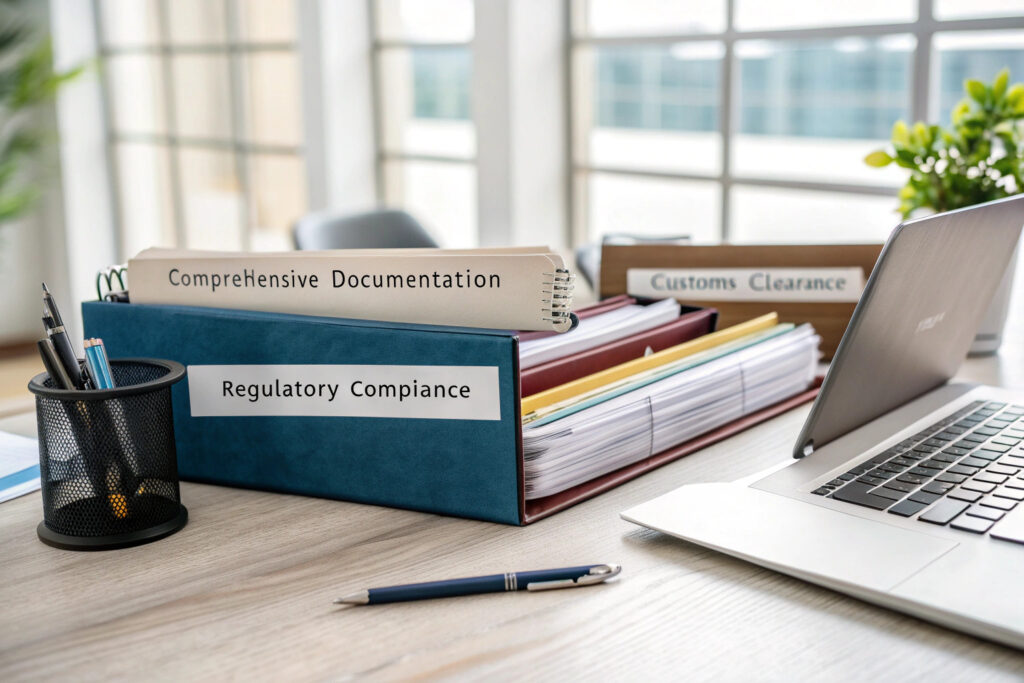
Maintaining comprehensive documentation demonstrates due diligence and facilitates customs clearance and regulatory compliance.
The scene shows well-organized records including supply chain maps, audit reports, material certificates, and due diligence documentation.
What Evidence Demonstrates Due Diligence?
Comprehensive documentation provides the evidence needed to demonstrate compliance efforts. Maintain detailed supply chain maps showing all manufacturing and material sourcing locations. Keep audit reports and corrective actions demonstrating ongoing assessment and improvement. Document material traceability from raw material to finished product. Record worker interviews and assessments showing direct engagement with workforce conditions. This documentation creates an audit trail that regulatory authorities can review to verify compliance efforts.
How Should You Prepare for Customs Compliance?
Specific documentation facilitates smooth customs processing under regulations like UFLPA. Obtain detailed import documentation including supplier declarations regarding forced labor compliance. Maintain evidence of due diligence processes and risk assessment activities. Keep production records showing manufacturing timelines and locations. Document material sourcing with specific evidence of origin for all components. This preparation helps prevent customs holds and demonstrates compliance with forced labor prevention requirements.
Conclusion
Avoiding forced labor compliance risks in hat sourcing requires a comprehensive approach combining thorough due diligence, ongoing monitoring, geographic risk assessment, and meticulous documentation. By implementing systematic processes for supply chain mapping, supplier verification, independent auditing, and evidence collection, you can significantly reduce compliance risks while promoting ethical manufacturing practices throughout your supply chain.
If you're seeking to strengthen your hat sourcing compliance programs or identify ethical manufacturing partners, we invite you to explore our transparent sourcing practices and compliance documentation at documentation Shanghaifumaoclothing . Our commitment to ethical manufacturing and comprehensive due diligence processes can help you source headwear with confidence in its compliance with forced labor regulations. For more information about our compliance practices and ethical sourcing capabilities, please contact our Business Director Elaine at elaine@fumaoclothing.com. Let's build supply chains that prioritize both quality and human dignity.