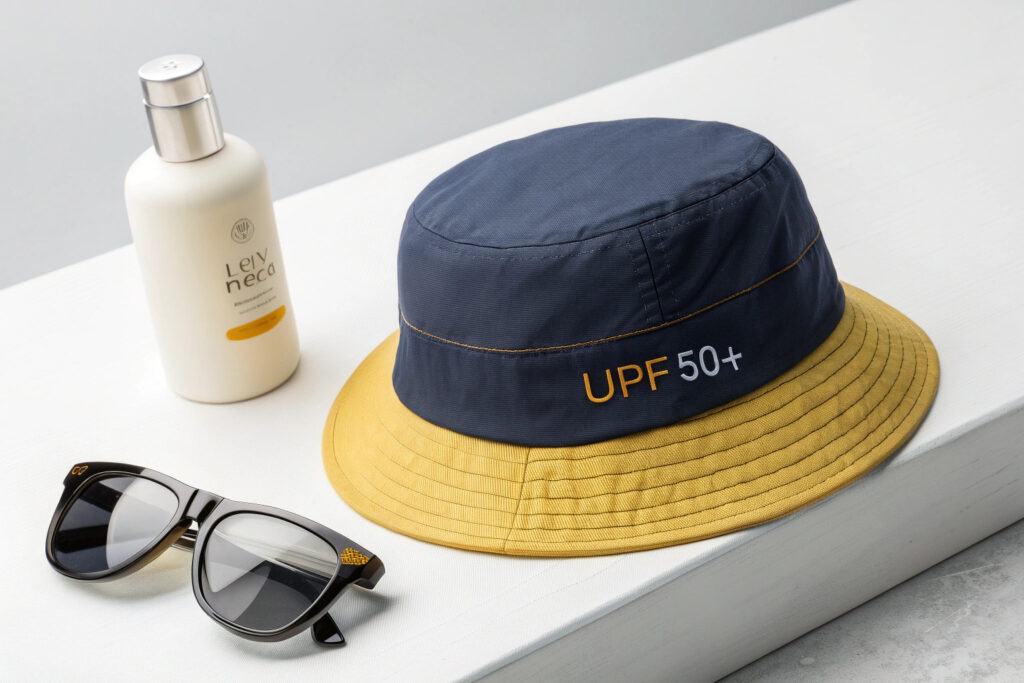
As a brand owner or wholesale buyer catering to health-conscious consumers, you understand that your audience expects more than just style. They are savvy, read labels, and demand products that actively contribute to their well-being. When it comes to outdoor apparel like bucket hats, they're not just looking for shade; they're looking for scientifically verified protection against harmful ultraviolet (UV) radiation. You've probably asked yourself: how do I move beyond a simple "sun hat" and offer a product with certifiable UV protection?
To add verifiable UV protection to wholesale bucket hats, you must employ one of three primary manufacturing methods: 1) Select fabrics with a naturally tight weave structure, 2) Utilize technical fabrics that have inherent UPF properties, like polyester or nylon, or 3) Treat the fabric with a specialized UV-absorbing finish. The most critical step is to then have the final product tested by an accredited lab to assign it an official Ultraviolet Protection Factor (UPF) rating, which you can then market to your customers.
For over two decades at my company, Shanghai Fumao Clothing, we've seen the evolution of consumer expectations. "Sun protection" is no longer a generic claim; it's a technical specification. For the health-conscious market, a UPF rating is like the SPF rating on sunscreen—it's a trusted, scientific measure of effectiveness. Let's break down the professional methods for building and verifying this crucial feature for your next bucket hat collection.
What Is UPF and Why Is It the Gold Standard?
First, it's essential to understand the terminology. While SPF (Sun Protection Factor) measures the effectiveness of sunscreen, UPF (Ultraviolet Protection Factor) measures how much UV radiation (both UVA and UVB) a fabric allows to reach your skin.
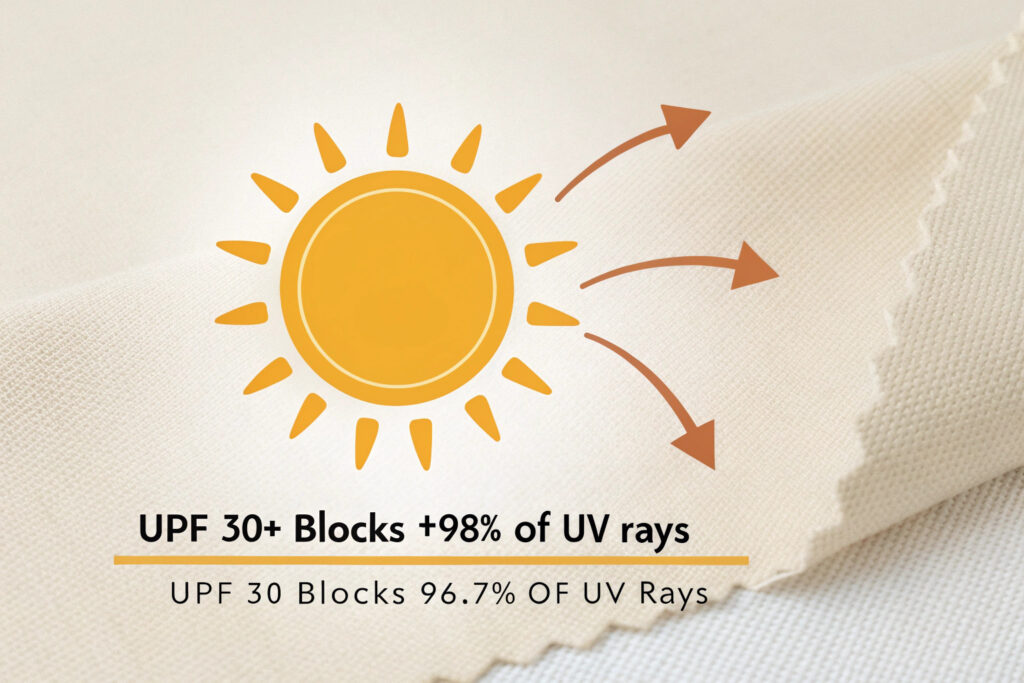
A UPF rating is a clear, direct measure of a garment's protective capability. A hat with a UPF 50 rating, for example, blocks at least 98% of UV rays (allowing only 1/50th to penetrate). For health-conscious consumers, a prominent UPF 50+ tag is a powerful symbol of quality and a key purchasing driver. It transforms your hat from a simple fashion accessory into a legitimate piece of personal protective equipment (PPE).
How Does Fabric Choice Impact Natural UPF?
A heavy, dark-colored cotton canvas can achieve a respectable UPF rating simply because its dense structure physically blocks the sun's rays. The darker the color, the more UV-absorbing dyes are present, which also helps boost the rating. This is a great option for creating a vintage-inspired or workwear-style bucket hat that has inherent protective qualities. However, these fabrics can be heavy and less breathable, which might not be ideal for high-performance athletic wear.
What Is the Role of the Hat's Brim?
For a bucket hat, the width of the brim is a critical design feature that contributes to overall sun safety. A wider brim provides more physical shade, protecting not just the top of the head but also the face, ears, and neck. The American Academy of Dermatology recommends a brim of at least 3 inches for effective protection. When designing your hat, specifying a wider brim is a simple, non-technical way to instantly increase its real-world sun safety, complementing the fabric's UPF rating.
How to use inherent UPF technology fabric?
For a more modern, lightweight, and high-performance hat, the best approach is to use technical fabrics that are engineered for sun protection.
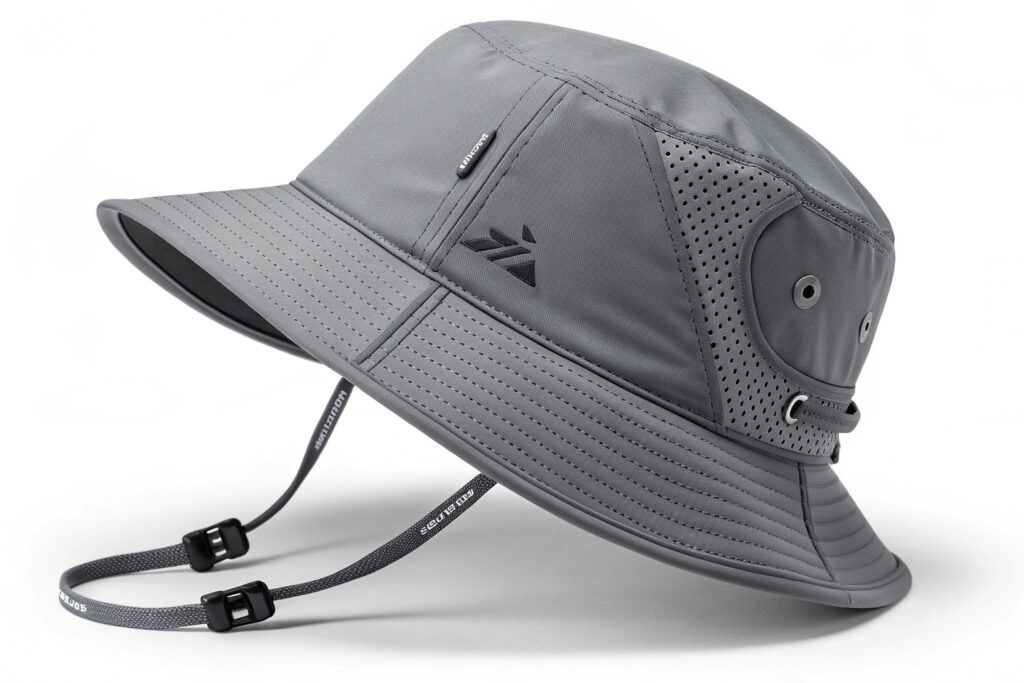
Many synthetic fibers, especially polyester and nylon, are inherently better at blocking UV radiation than natural fibers like cotton or linen. Their chemical structure and the way the fibers are manufactured help to disrupt and absorb UV rays. Fabrics made from these materials can often achieve a high UPF rating without any additional treatments, making them an excellent choice for athletic, travel, or adventure-focused bucket hats.
Why Are Polyester and Nylon Superior for UV Protection?
The polymer chains in polyester and nylon contain aromatic rings, a chemical structure that is very effective at absorbing UV energy. Furthermore, manufacturers can add UV-absorbing compounds like titanium dioxide (the same ingredient used in mineral sunscreen) directly into the polymer solution before the fiber is even created. This means the UV protection is permanently locked into the core of the yarn and will never wash out or degrade over time. This is the most durable and reliable method for creating a high-UPF garment.
How Do You Source These Fabrics?
When working with a manufacturer like Shanghai Fumao Clothing, you can specifically request a "UPF 50+ rated polyester microfiber" or "nylon ripstop with inherent UV protection." We source these technical textiles from specialized mills that can provide certification for the fabric's UPF rating before we even begin production. This allows you to build your hat with a material that you already know meets the highest standard.
How to apply ultraviolet absorption coating?
What if you want the look and feel of a natural fabric like cotton but need the guaranteed performance of a high UPF rating? This is where specialized finishing treatments come in.
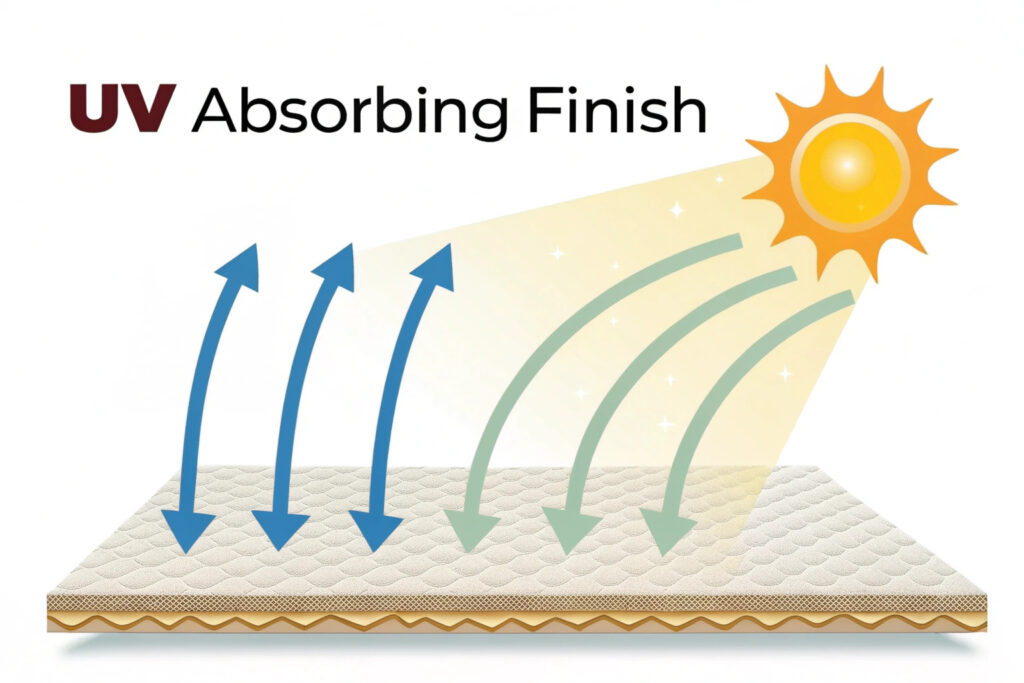
It is possible to apply a UV-absorbing chemical finish to a fabric after it has been woven and dyed. These compounds are colorless and bond with the fabric fibers, effectively making the garment "absorb" UV radiation before it can reach the skin. This method allows you to take a standard cotton twill and significantly boost its UPF rating from a modest 5-10 up to 50+.
How Does the Treatment Work?
The treatment involves immersing the fabric in a solution containing specialized UV absorbers, often based on benzotriazole or other organic compounds. These molecules are designed to absorb high-energy UV radiation and dissipate it as low-level heat. The process is done at the textile mill as one of the final finishing steps.
What Are the Downsides to Consider?
The primary downside of a fabric finish is that its effectiveness can diminish over time with repeated washing and exposure to the elements. While a high-quality finish from a reputable mill will be durable for a reasonable number of washes (e.g., 30-50), it is not as permanent as using an inherently UV-protective fiber. For a product intended for heavy, long-term use, relying on inherent fabric properties (Method 2) is often the more durable solution.
How Do You Verify and Market the UPF Rating?
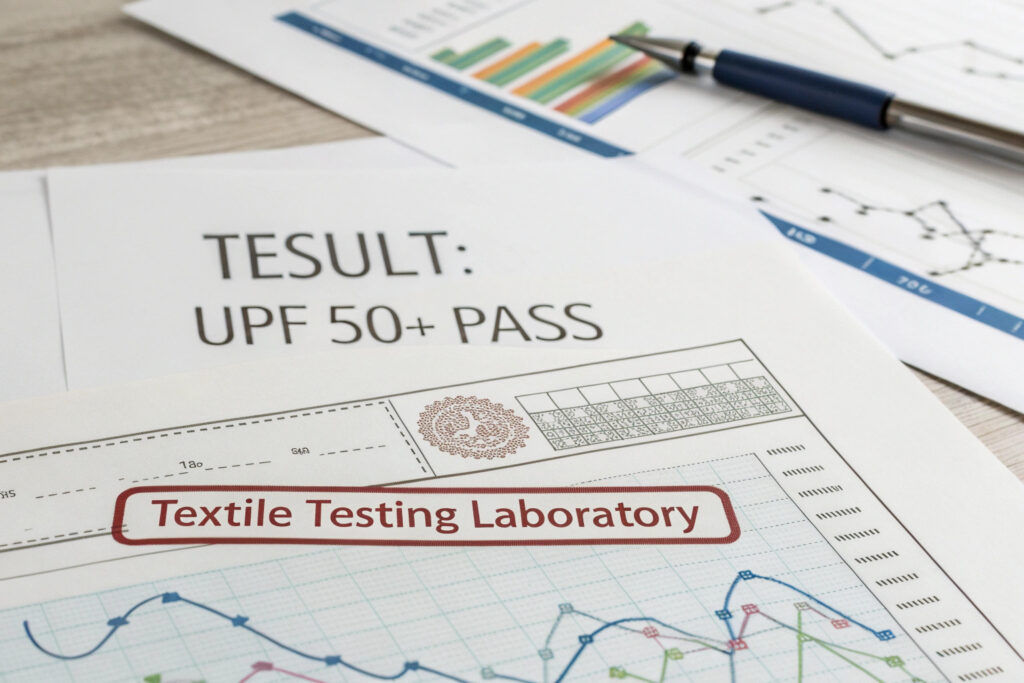
You've chosen your method and produced a hat. Now comes the most important step for marketing to health-conscious consumers: third-party lab testing and certification. You cannot simply claim a UPF rating; you must prove it.
A manufacturer should send a finished hat from the production run to an accredited laboratory. The lab will test the fabric according to established standards (like the AATCC 183 standard in the US) using a spectrophotometer. This machine measures exactly how much UV radiation passes through the fabric. Based on the results, the lab issues an official report and assigns the product its UPF rating.
How Do You Market the UPF Rating Effectively?
Once you have the lab report, you have earned the right to market the rating. This is a powerful selling tool.
- On the Product: The UPF 50+ rating should be prominently displayed on the hat's hang tag and on a woven label inside the hat.
- On Your Website: Feature the UPF rating in your product titles and descriptions. Create a dedicated page or section on your site that explains what UPF means and why it's important.
- In Your Marketing: Use the UPF rating in your social media posts, email newsletters, and ads. Phrases like "Lab-Certified UPF 50+ Protection" and "Recommended by the Skin Cancer Foundation" (if you pursue their seal) build immense trust and credibility.
What Is the Skin Cancer Foundation's Seal of Recommendation?
For the ultimate mark of credibility, you can submit your UPF 50+ certified product to The Skin Cancer Foundation for their Seal of Recommendation. This is a highly recognized and trusted symbol among health-conscious consumers. Earning this seal demonstrates that your product meets their stringent criteria for safe and effective sun protection and can be a major differentiator in a crowded market.
Conclusion
Adding verifiable UV protection to your wholesale bucket hats is a strategic move that elevates your product from a simple accessory to a trusted piece of health and wellness gear. The most reliable path is to use inherently protective technical fabrics like polyester or nylon, which offer permanent, high-level protection. Whichever method you choose, the non-negotiable final step is obtaining a certified UPF rating from an accredited lab. By prominently and honestly marketing this rating on your products and in your campaigns, you provide health-conscious consumers with the scientific proof they need to trust in your brand and invest in your products for their sun-safe lifestyle.
If you are ready to develop a line of high-performance bucket hats with certified UPF 50+ protection, my team has the technical expertise and sourcing capabilities to guide you through the entire process. Please contact our Business Director, Elaine, at elaine@fumaoclothing.com to create a product your customers can depend on.