I received a frustrated email from a boutique owner in California last May. She had designed a stunning summer collection of pastel bucket hats. The hats were selling fast. Her customers kept asking for matching headbands. She had spent three weeks contacting headband suppliers. Every sample she received was a slightly different shade. The pink headband was salmon. The hat was peach. The yellow headband was mustard. The hat was butter. She could not launch the matching set because she could not find a single supplier who could execute both products in the exact same fabric batch. Her customers were asking. She had no answer.
You buy wholesale terry cloth headbands that perfectly match your summer bucket hat line from the same manufacturer that produces your bucket hats, using the same dye lot of terry cloth fabric. This is not a sourcing problem that can be solved by finding a separate headband supplier. A separate supplier uses a different fabric source, a different dye house, and a different production timeline. The color will never be a perfect match. The texture will never be identical. The solution is to consolidate your bucket hat and headband production with a single factory that has in-house terry cloth cutting and sewing capability. The factory cuts your bucket hat panels and your headband strips from the same roll of fabric, dyes them in the same dye bath, and ships them as a coordinated collection. The color match is exact because the fabric is identical. The quality is consistent because the production standards are unified. The pricing is better because the material is purchased in a single, larger quantity.
I manufacture both bucket hats and terry cloth headbands at Global-Caps. I keep them on the same production line specifically to solve this color-matching problem for my clients. I want to share the technical reasons why color matching fails across different suppliers, the production process for a unified terry cloth collection, and the specific questions you should ask a factory to confirm they can deliver a perfect match. This is how you turn a matching set from a sourcing headache into a best-selling collection.
Why Does Color Matching Fail When You Source Headbands and Hats Separately?
The color matching problem is not a supplier competence issue. It is a physics and supply chain issue. Two different factories, buying terry cloth fabric from two different textile mills, dyeing that fabric in two different dye houses, will never produce the exact same color. The variables are too numerous to control across separate supply chains. Even if both factories specify the same Pantone TPX color code, the dye recipe, the water quality, the dyeing temperature, the drying method, and the post-dye finishing process all shift the final color. The result is a visible mismatch that consumers notice immediately when the two products are displayed together.
The first variable is the fabric base. Terry cloth is a looped pile fabric. The pile height, the yarn twist, and the fiber blend ratio all affect how the fabric absorbs and reflects dye. A headband factory might use a 400 GSM cotton terry with a dense, short pile. A hat factory might use a 350 GSM cotton-polyester blend terry with a looser, longer pile. Even if both factories use the exact same dye formula, the finished color will be different because the fabric substrates are different. The second variable is the dye house. Different dye houses use different water sources with different mineral contents. The minerals in the water interact with the dye chemistry and shift the color. A dye house in one province of China uses mountain water with a specific mineral profile. A dye house in another province uses treated municipal water with a different profile. The same dye recipe produces a different color in each location. The third variable is the dye lot. Even within the same dye house, different production runs produce slightly different results. A dye lot is a single batch of fabric dyed in a single process. Fabric from the same dye lot is color-matched. Fabric from different dye lots is color-similar but not color-identical. When you buy hats from one factory and headbands from another, you are buying from different dye lots, from different dye houses, applied to different fabric bases. The statistical probability of a perfect match is near zero. The textile color matching science confirms that dye lot consistency is the foundation of color accuracy.
The fabric base, the dye house, and the dye lot are the macro variables. The micro variable is the dye chemistry itself. Cotton terry cloth is typically dyed with reactive dyes. Reactive dyes form a chemical bond with the cotton fiber. The bond formation is sensitive to temperature, pH, and salt concentration. Small variations in these process parameters, which are normal between different production runs at different factories, produce measurable color differences.
What Is the Delta E Tolerance for a Perceived Color Match Between Hat and Headband?
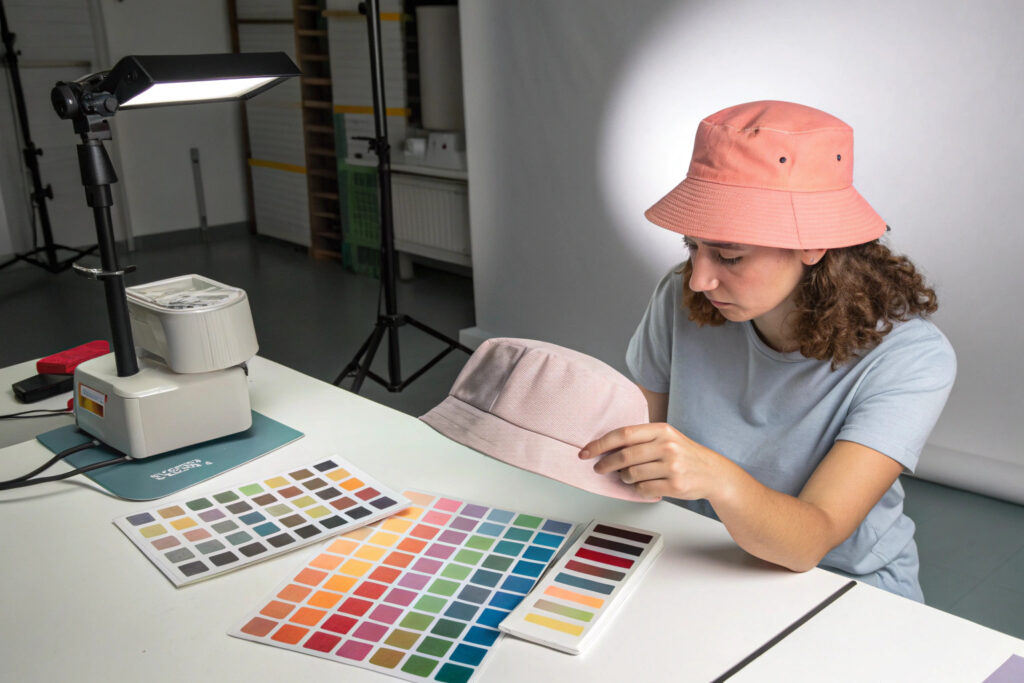
Delta E is the numerical measurement of color difference in the CIELAB color space. A Delta E of less than 1.0 is imperceptible to the human eye. A Delta E between 1.0 and 2.0 is perceptible only to a trained observer under controlled lighting. A Delta E between 2.0 and 3.0 is a visible but possibly acceptable difference for separate items worn on different parts of the body. A Delta E above 3.0 is a clear, unacceptable mismatch when the items are displayed together. For a coordinated bucket hat and headband set that will be displayed side by side on a retail shelf and worn together by a consumer, the maximum acceptable Delta E is 2.0, with a target of less than 1.0. This tolerance is achievable only when both products are cut from the same dye lot and sewn under the same roof. A separate supplier can rarely achieve a Delta E below 3.0 consistently. The Delta E color tolerance standard is the objective measurement that confirms what the consumer's eye perceives.
How Do Different Fabric Bases Create Different Color Perceptions?
Terry cloth has a pile surface. The pile loops create a textured, three-dimensional surface that scatters light. A longer pile scatters more light and makes the color appear lighter and softer. A shorter, denser pile reflects less scattered light and makes the color appear slightly darker and more saturated. A cotton-rich terry absorbs dye differently than a polyester-blend terry. The cotton fibers take the reactive dye deeply and uniformly. The polyester fibers do not take reactive dye at all. In a cotton-polyester blend, the dye only bonds to the cotton portion, leaving the polyester fibers undyed or lightly stained. The result is a heathered, less saturated color. If the hat uses a 100% cotton terry and the headband uses a cotton-polyester blend terry, the colors will look fundamentally different even if the dye formula is identical. The fabric substrate effect on color is a well-documented phenomenon in textile chemistry.
How Does Single-Factory Production Ensure a Perfect Color Match?
The single-factory solution eliminates every variable that causes color mismatch. The fabric is purchased from one mill in one production lot. It is dyed in one dye house in one dye lot. It is cut and sewn on one production floor under one quality control system. The bucket hat and the headband are not just color-matched. They are material-identical. The consumer cannot perceive a difference because no difference exists. This is the only reliable method for producing a perfectly coordinated collection.
At Global-Caps, I consolidate terry cloth bucket hat and headband production as a single purchase order with two product lines. The process begins with a single terry cloth fabric order. I calculate the total yardage required for the hats plus the headbands and purchase the entire quantity as one lot from the mill. The mill dyes the entire lot in a single dye bath. The dyed fabric arrives at my factory as a single, color-consistent batch. The cutting department lays the fabric on the cutting table and places the bucket hat pattern pieces and the headband pattern strips on the same fabric layer. They are cut simultaneously from the same roll. The sewing department assembles the hats and the headbands on adjacent production lines. The QC department inspects the hats and the headbands as a coordinated set, checking the color consistency under the same daylight lamp. The finished products are packed together in the same shipment, often in the same carton. The client receives a collection that is color-perfect by physical necessity, not by luck. This unified production process is the supply chain strategy behind every successful matching accessory collection.
The single-factory process controls the fabric and the color. But it also controls the construction quality. A terry cloth headband has specific construction requirements. The seam placement, the elastic type, and the finishing method must be consistent with the hat's construction standards. A separate headband supplier may use a different construction approach that results in a different quality perception.
What Is the Production Sequence for a Coordinated Terry Cloth Collection?
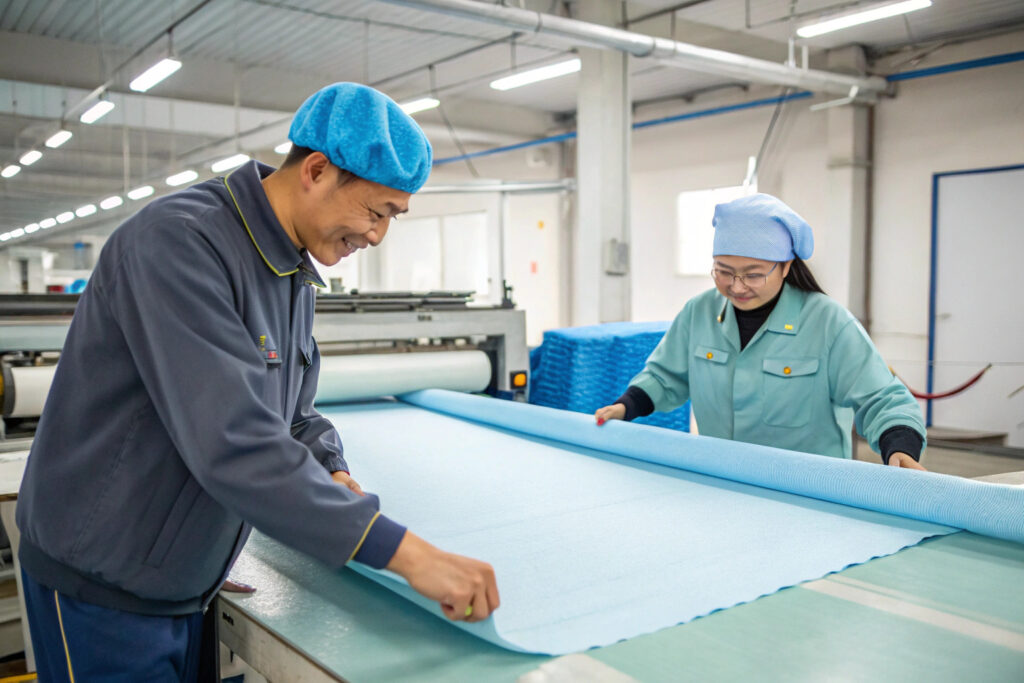
The production sequence has seven integrated steps. Step one: the client approves a single terry cloth fabric specification for both products. Step two: the client approves the color lab dip from a single dye lot sample. Step three: the factory orders the total fabric quantity as one purchase order to the mill. Step four: the mill dyes the entire quantity in one dye lot and ships it to the factory. Step five: the factory cuts the hat panels and the headband strips from the same fabric roll in the same cutting session. Step six: the factory sews the hats and the headbands on coordinated production lines, using the same thread color and the same elastic specification where applicable. Step seven: the factory inspects the hats and headbands as a set, verifying color match and construction quality, and packs them for shipment. This production planning sequence is designed to eliminate batch-to-batch variation.
How Does Bulk Fabric Purchasing Reduce the Per-Unit Cost of Both Products?
When the bucket hat and the headband are ordered from the same factory, the fabric for both products is combined into a single purchase order. The total yardage is larger. The larger yardage often qualifies for a volume discount from the fabric mill. The discount applies to the fabric for both products. The per-unit fabric cost for the bucket hat decreases. The per-unit fabric cost for the headband decreases. The combined fabric order is more cost-effective than two separate fabric orders placed by two different factories. This fabric cost synergy partially offsets the production cost of the headbands, making the coordinated collection more profitable for the brand. The bulk purchasing economies are a standard benefit of consolidated supply chain management.
What Should You Look for in a Factory That Offers Both Hats and Headbands?
A factory that offers both bucket hats and terry cloth headbands is a factory that has invested in the specific machinery, patterns, and material sourcing for terry cloth accessories. Not every hat factory can sew a terry cloth headband. The headband requires a specific sewing machine setup, a specific elastic insertion technique, and a specific pattern for the turban-style twist or the flat-band style. A factory that has this capability will display it openly in their product catalog and sample room. A factory that does not have it will claim they can "figure it out," which means they will outsource the headbands to a local workshop and you will have the color matching problem all over again.
I identify a genuine dual-capability factory by four criteria. First, the factory has physical samples of terry cloth headbands in their sample room, not just photos. A physical sample proves they have produced the item before. Second, the factory can show you a color matching example. Ask them to show you a bucket hat and a headband in the same color, made from the same terry cloth. If they can produce this pair immediately, they have done it before. Third, the factory has the terry cloth fabric sourcing capability. Ask them to show you their terry cloth fabric swatch book. A factory that has a terry cloth swatch book with multiple weights, colors, and pile heights has an established terry cloth supply chain. Fourth, the factory can produce the headband in the specific style you want. Terry cloth headbands come in several styles: the classic turban twist, the flat band with an elastic back, the knotted top, and the wide yoga style. A factory that offers multiple styles has the pattern library and the sewing expertise for terry cloth accessories. These four criteria distinguish a genuine dual-product manufacturer from a hat factory that is willing to subcontract headbands.
The physical samples and the fabric swatch book are the static evidence. The more dynamic evidence is the factory's ability to discuss the specific construction details of a terry cloth headband. A factory that understands headband construction knows about elastic types, seam placement, and twist techniques. A factory that does not will give vague answers.
What Types of Terry Cloth Headbands Can a Hat Factory Typically Produce?
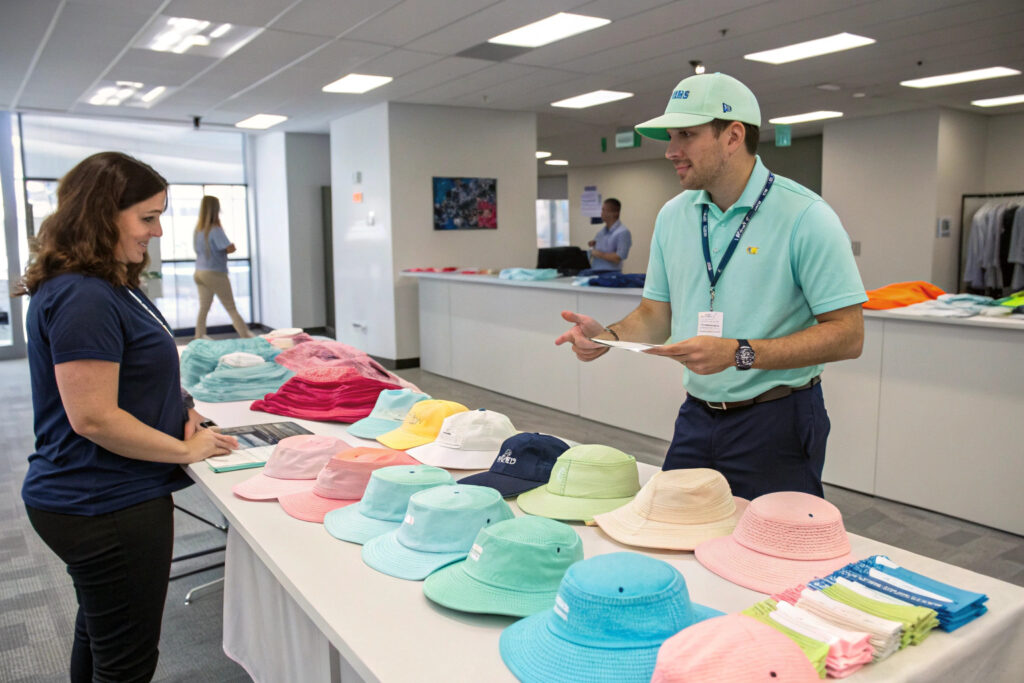
A hat factory with terry cloth capability can typically produce four headband styles. The classic turban twist style features a twisted front knot that adds volume and texture. This style requires a specific twist-and-stitch technique that creates the gathered knot. The flat elastic-back style features a smooth, wide front panel with an elasticized back section. This style is simpler to sew but requires a specific elastic insertion machine. The knotted top style features a longer fabric strip that is tied into a knot on top of the head. This style is often worn as a fashion statement. The wide yoga or spa style is a simple, wide band with an internal elastic. This style is functional and often used for sports or skincare routines. Each style requires a different pattern, a different elastic specification, and a different sewing sequence. A factory that can explain these differences has genuine headband expertise. The headband construction styles are well-established in the accessory manufacturing industry.
Why Is In-House Terry Cloth Cutting Capability Important for Headbands?
Terry cloth is a stretchy, bulky, looped fabric. It behaves differently on the cutting table than a flat-woven cotton twill. It requires a specific cutting blade speed, a specific vacuum pressure on the cutting table to hold the fabric in place, and a specific pattern layout that accounts for the fabric's stretch direction. A factory that has in-house terry cloth cutting capability has the equipment and the experience to cut headband strips accurately and consistently. A factory that outsources cutting to a third-party workshop loses quality control over the cutting precision. The headband strips may be cut off-grain, which causes the finished headband to twist and not lie flat. In-house cutting is a critical control point. The fabric cutting capability for specialty textiles like terry cloth is a specific manufacturing competency.
How Should You Specify and Order a Matching Hat and Headband Collection?
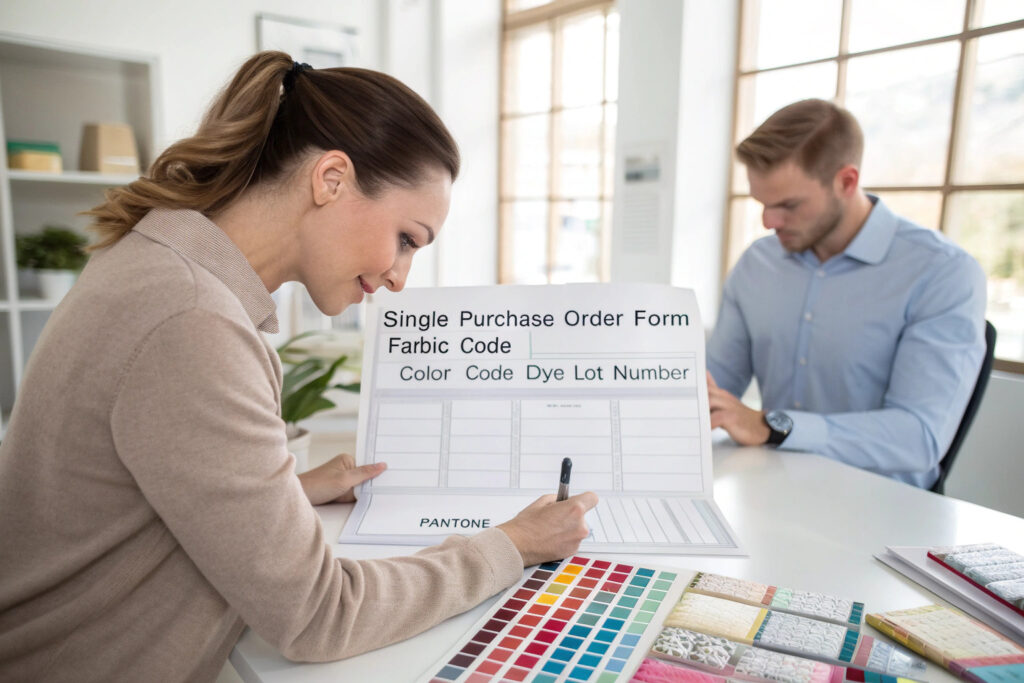
The ordering process for a coordinated collection must enforce the single-dye-lot requirement in the purchase order documentation. A verbal agreement that the colors "should match" is not sufficient. The purchase order must specify that both products are to be cut from the same fabric lot, reference a single fabric code and a single color code, and be subject to a coordinated QC inspection. The specification must be written into the commercial document that governs the production.
I structure a coordinated collection purchase order with a header section that specifies the common fabric. The header states: "Fabric: 380 GSM 100% Cotton Terry Cloth, Color: Butter Yellow, Pantone 11-0617 TCX, Fabric Lot: To be dyed as a single lot for this PO." The line items then reference this header. Line item one: "Style BCK-001, Terry Cloth Bucket Hat, Quantity 500, Fabric per Header." Line item two: "Style TCH-002, Terry Cloth Turban Headband, Quantity 500, Fabric per Header." The purchase order also includes a color matching clause in the quality section: "Both products must be cut from the same dye lot. A color match between the hat and the headband with a Delta E of less than 2.0 is required. The QC inspection will verify color match under D65 daylight." This purchase order structure legally binds the factory to the single-dye-lot process. The factory cannot outsource the headbands to a different supplier without breaching the fabric lot and color match clauses. The purchase order specification for coordinated products must be explicit about the color match requirement.
The purchase order is the contractual protection. The practical protection is the pre-production sample approval. The pre-production sample must include both the hat and the headband, made from the same fabric, approved as a set. The approval is for the color match as much as for the individual product quality.
What Should a Coordinated Collection Pre-Production Sample Include?
The pre-production sample package for a coordinated collection must include three items. Item one is the bucket hat, made from the actual production fabric with all labels and trims attached. Item two is the headband, made from the exact same fabric roll as the hat. Item three is a fabric swatch card with a piece of the fabric attached, labeled with the dye lot number and the date. The buyer evaluates the hat and the headband side by side under a daylight lamp. The buyer checks the color match, the fabric texture consistency, and the overall aesthetic coordination. The buyer approves the set as a set, not as individual products. The approved sample set is sealed, signed, and retained as the color reference standard for bulk production. The pre-production sample approval for a coordinated collection is a set-level approval, not an item-level approval.
What Minimum Order Quantities Apply to a Combined Hat and Headband Order?
A combined order typically qualifies for the factory's standard MOQ for the primary product, the hats, with a lower MOQ for the secondary product, the headbands. For example, if the standard MOQ for custom bucket hats is 300 units per color, and the standard MOQ for custom headbands as a standalone product would be 500 units, the combined order might allow 300 hats and 200 headbands, or 300 hats and 300 headbands, depending on the factory's policy. The headband MOQ is reduced because the primary cost driver, the custom fabric dye lot, is already covered by the hat order. The factory only needs to cover the sewing labor cost for the headbands. I typically offer a combined MOQ of 300 hats plus 150 headbands per color for a coordinated terry cloth collection. The minimum order quantity negotiation for combined products should recognize the shared material cost.
Conclusion
A matching terry cloth bucket hat and headband collection is a powerful retail concept. The coordinated set increases the average order value, creates a compelling visual display, and meets the consumer demand for complete, styled looks. But the color match must be perfect. A mismatched set is worse than no set at all. The perfect match is achieved by sourcing both products from a single manufacturer that cuts the hats and the headbands from the same dye lot of fabric on the same production floor. Separate suppliers cannot achieve this consistently. The color matching problem is a supply chain structure problem, not a supplier effort problem.
I have built our terry cloth production capability specifically to serve brands that want to launch coordinated summer collections. Our fabric library includes terry cloth in multiple weights and a full color palette. Our pattern library includes multiple bucket hat silhouettes and multiple headband styles. When a client orders both products together, they receive a single-dye-lot, color-perfect collection that is ready to sell as a set. The quality is consistent. The color is exact. The production is unified.
If you are designing a summer bucket hat line and want to add matching terry cloth headbands without the color-matching frustration, let us prepare a coordinated sample set for your review. Our Business Director, Elaine, can send you our terry cloth fabric swatch book, our headband style options sheet, and a sample bucket hat with a matching headband in a color of your choice. Email her at elaine@fumaoclothing.com and ask for the Terry Cloth Collection Starter Kit. We will help you build a collection that matches perfectly, sells together, and keeps your customers coming back for the complete look.