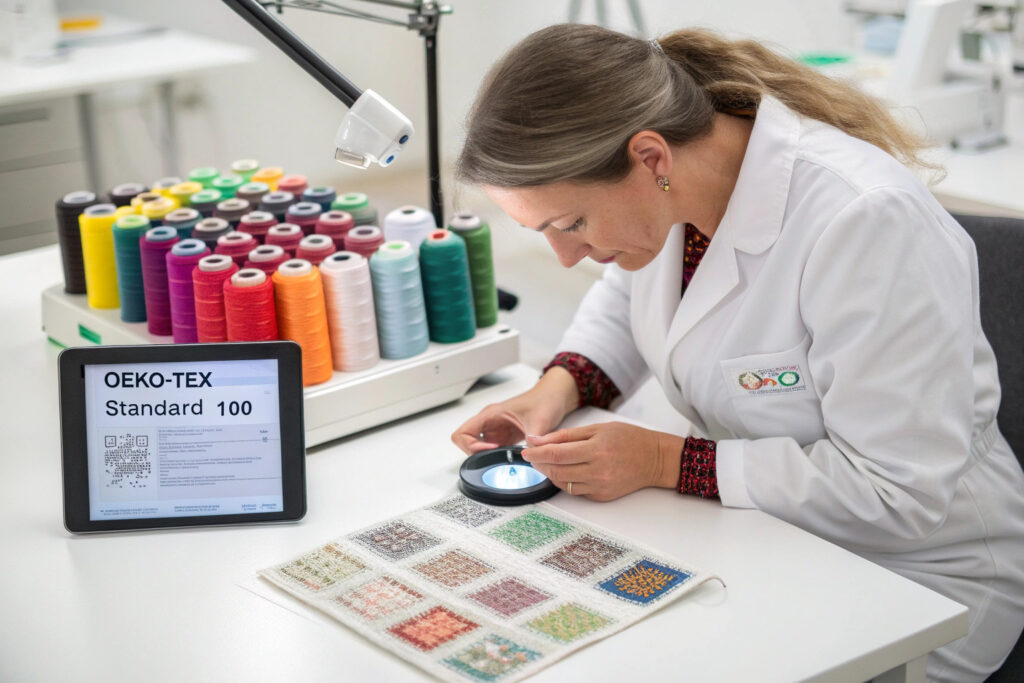
I received a panicked email from a Dutch children's wear brand owner last November. She had been proudly selling her "OEKO-100 certified" organic cotton baby caps for six months. Then a competitor tipped her off. The shell fabric was certified. The sweatband was certified. But the bright yellow embroidery thread that formed her cute duck logo was never checked. She had assumed the factory's certification covered everything. It did not. The thread was a cheap, uncertified polyester with a heavy metal dye. Her entire "safe for baby" marketing claim was compromised.
You verify your supplier's embroidery thread is OEKO-100 certified by demanding a thread-specific certificate, not a general factory certificate. Ask your supplier for the thread brand name, the lot number, and a valid OEKO-TEX certificate number that specifically lists "sewing and embroidery threads" in its product scope. Enter that certificate number into the free public OEKO-TEX Label Check database online. If the factory hesitates, provides a generic document that only lists "textiles," or claims the thread is "the same as the fabric," do not ship the order. The thread is a separate component from the shell fabric and the sweatband. It sits on the outside of the hat, directly against a baby's sensitive forehead or a runner's sweaty skin. Its chemical safety must be independently proven.
I have made this thread verification process a standard operating procedure at Global-Caps. We do not rely on a thread supplier's verbal promise. We collect certificates, scan QR codes, and occasionally send spools to a lab for a random azo dye check. I want to show you exactly how to do this, what documents to demand, and what traps to avoid. Your product's safety claim is only as strong as its weakest certified component.
Why Does Embroidery Thread Require Its Own OEKO-100 Certificate?
A factory's OEKO-100 certificate for "headwear" covers the fabrics, the sweatband, and the sewing thread used for construction seams if all those items were part of the tested sample. But the decorative embroidery thread is a completely different material stream. It enters the factory on separate spools, from a different supplier, with a different dye chemistry. A factory certificate that does not explicitly list "embroidery threads" in the annex is not a valid certification for your logo.
The chemistry of embroidery thread is uniquely risky. To achieve the high tensile strength and sheen required for machine embroidery, the thread is often a continuous filament polyester or rayon. The dye must be intensely saturated to create a crisp, visible logo. That intense color often requires heavy metal mordants or azo dye compounds, some of which are carcinogenic or allergenic under skin contact and sweat exposure. A standard polyester sewing thread might be a low-risk natural color. Your bright red logo thread is the highest-risk item on the entire hat. It sits on the front panel, rubbing against the wearer's forehead. It demands its own certificate. This is not bureaucratic overkill. It is targeted risk management.
The thread's chemical risk is not theoretical. It is concentrated in the dye bath. Understanding the difference between a fiber certificate and a thread certificate is essential to closing the safety gap in your final product.
What Is the Difference Between a Fabric OEKO-100 and a Thread OEKO-100?
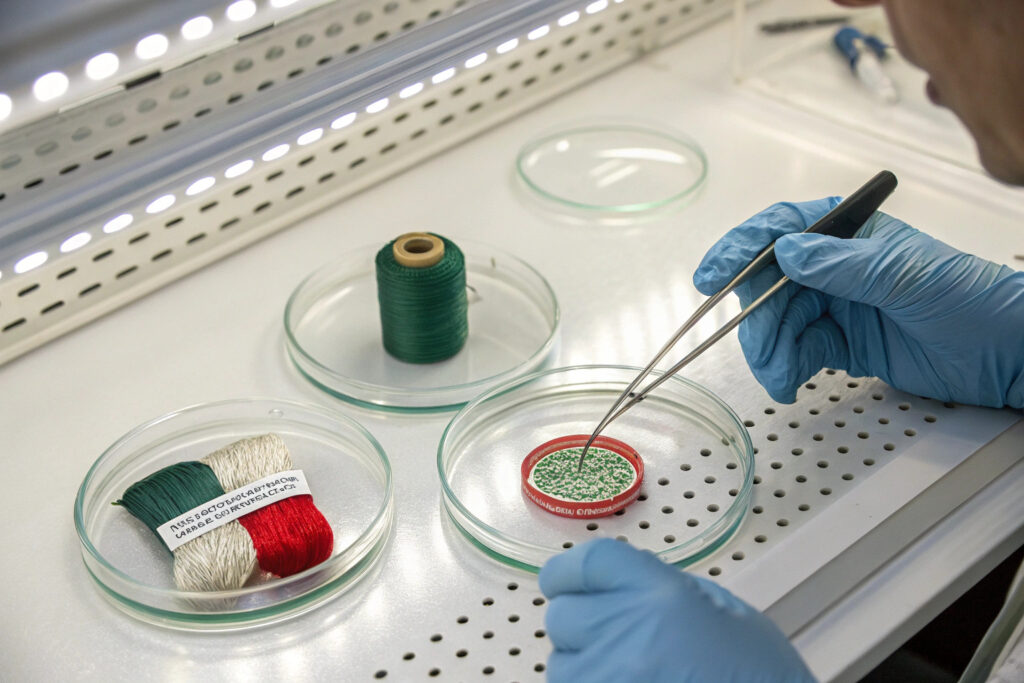
The standard is the same. The testing criteria are the same. But the product scope listed on the certificate is different. A fabric certificate lists "woven cotton fabrics" or "knitted polyester fabrics." A thread certificate lists "sewing and embroidery threads." You cannot use one to cover the other.
The annex to the certificate is the critical page. It lists every product category that was tested and passed. I have seen factories present a beautiful certificate for "textile piece goods" and claim it covers the entire hat. When we pushed and looked at the annex, the thread was not listed. The factory had not lied, but they had not disclosed the gap. A buyer who does not read the annex buys a false sense of security. The OEKO-TEX label check tool shows the product scope in the detailed view. Compare it with the supplier's claim.
Why Are Bright and Neon Thread Colors Higher Risk?
Bright pinks, neon greens, and deep reds require complex dye formulations. Some of these formulations historically used disperse dyes that can cause allergic contact dermatitis. The OEKO-100 standard bans a specific list of these harmful colorants. A certified thread has been tested for that exact banned list.
Neon colors also sometimes use optical brighteners. These are fluorescent whitening agents that make the color appear to glow. The OEKO-100 standard restricts certain optical brighteners because their skin sensitization potential is not fully understood. A thread mill that specializes in certified threads will use alternative, safer brightener chemistries. If your logo design includes a neon or bright color, the thread certification is even more critical. A textile dye safety resource from a dermatological society can provide the medical context for why this matters.
How Do I Request Thread Certification Documents from My Supplier?
The request must be specific. A vague "please send all your certificates" email will get you a folder full of irrelevant paper. You need to ask a precise question that the factory's compliance officer can answer with a single document. The precision of your request signals that you are not a naive buyer who will accept a hand-waving explanation.
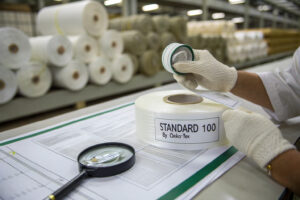
Write this exact sentence to your supplier: "For our purchase order, please provide the OEKO-TEX Standard 100 certificate for the specific embroidery thread you will use on our logo. We require the certificate number, the product scope listing 'embroidery threads,' the thread brand name, and the lot number of the current spools in your inventory." This sentence leaves no room for misinterpretation. If the factory responds with a general factory certificate, repeat the request and emphasize that a general certificate without a thread scope is not acceptable. I also recommend asking for a photograph of the thread spool with its label visible, showing the brand name and the color code. The certificate should match that brand name. If the certificate is from Madeira, the spool label must say Madeira. If the spool label says a different brand, the certificate is not for that thread. This is simple cross-referencing that takes two minutes.
A verbal or email confirmation that the thread is "certified" is not enough. You need a document that you can independently verify on a public database. The supplier's sales representative may genuinely believe the thread is certified without having checked the paperwork.
What Specific Thread Information Should Be Listed on the Certificate?
The certificate must contain the certificate number, the issuing institute's name, the certificate holder's name, the valid until date, and the product class. For baby items, the product class must be "Product Class I." The annex or appendix must list "embroidery threads" or "sewing threads" as a product description.
Compare the certificate holder's name with the thread brand name. If the certificate holder is "ABC Thread Mill GmbH" and your spool label says "XYZ Thread Co," the certificate is not connected to that spool. The chain of custody is broken. A valid embroidery thread certificate forms a direct link from the testing lab to the mill to the spool in the factory.
How Do I Ask for a Lot-Specific Test Report?
A certification is valid for one year. It proves the thread product line is generally safe. But a specific dye lot can be contaminated. For the highest risk products, like baby hats or medical headwear, I recommend asking for a lot-specific test report for the azo dye and heavy metal content.
Write: "In addition to the annual certificate, please provide a batch test report from an ISO 17025 accredited lab for the specific dye lot used on our spools. The report must test for the 24 carcinogenic aromatic amines and extractable heavy metals." This request is more expensive and the factory may pass the cost through. But for a large order of certified children's products, the lab test report is the definitive proof that the specific spools on your production line are safe.
How Can I Independently Verify a Thread Certificate Online?
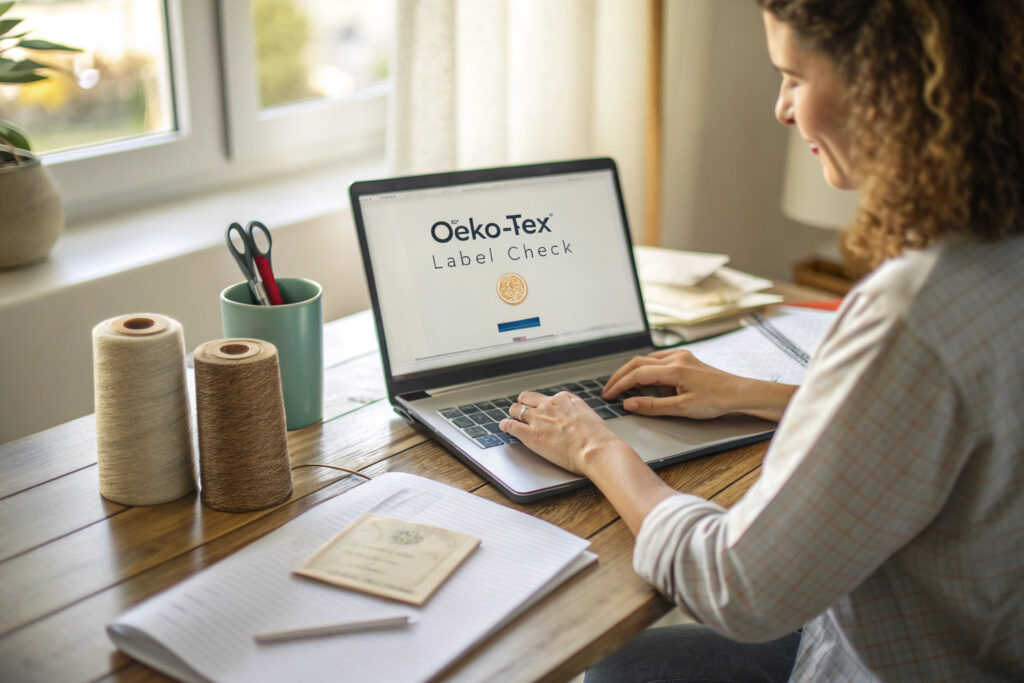
The beauty of the OEKO-TEX system is its public verification tool. You do not need to trust the supplier's PDF. You can check the certificate yourself in under two minutes. A PDF is easy to forge. The live database record is not. A supplier who provides a certificate number that fails to appear in the database is either disorganized or dishonest. Neither is acceptable.
Go to the OEKO-TEX website and find the "Label Check" page. Enter the certificate number exactly as it appears on the document, with no spaces. Click search. The database will return the certificate holder's name, the product scope, the valid date range, and the issuing institute. Check four things immediately. One: does the company name match the supplier's name on the invoice? Two: does the product scope include "embroidery threads" or "sewing threads"? Three: is the certificate still valid? Four: is the product class the correct one for your end user? If you are making baby hats, the class must be Product Class I. If the database shows Product Class II, the thread is only certified for adult skin contact, not infant mouth contact. Do not accept a Class II thread for a Class I product. The legal liability risk is too high.
The online check is the quick filter. But a certificate is a snapshot in time. A factory that holds a valid certificate for one brand of thread can switch to a cheaper, uncertified brand the next day without telling you. You need a physical verification method during a factory audit.
What Should I Do If the Certificate Number Is Invalid or Expired?
Stop the production. Do not let the factory apply the thread to your hats under any verbal promise to "update the certificate next week." An expired certificate means the thread mill has not been re-audited. The safety status of their current production is unknown.
Tell the supplier: "We are pausing our order until you provide a valid, in-date certificate for the specific thread brand and lot. If you cannot source a certified thread, we will provide our own certified thread from an approved supplier." This last option is the nuclear solution. You buy the thread yourself from a known certified thread supplier and ship it to the factory. You control the safety chain completely. The factory's only job is to stitch it. This costs more in logistics but guarantees purity.
Can I Use a Barcode or QR Scanner for Instant Verification?
Yes. Many modern OEKO-TEX certificates now include a QR code that links directly to the verification page. I ask our thread suppliers to include this QR code on the spool label itself or on the box.
During a video call with the factory, ask the person to point their phone camera at the QR code and show you the screen. The link should open the OEKO-TEX database entry for that exact thread. This real-time verification during a video call is the closest thing to being physically in the warehouse. A QR code verification system makes counterfeiting extremely difficult because the code is dynamically linked to the live database.
How Do I Audit the Embroidery Thread During a Factory Visit?
A factory visit is your opportunity to physically trace the thread from the certificate to the spool to the machine. Paperwork can be filed neatly in an office while the production floor uses a different, cheaper thread. This bait-and-switch is rare but devastating. An on-site audit catches it. You do not need to be a chemist to perform a meaningful audit. You need eyes, a phone camera, and a systematic checklist.
Walk directly to the embroidery machine that is stitching your logo. Do not let the factory manager lead you to a demonstration machine set up with the certified thread. Go to the actual production line for your order. Look at the thread spool actively feeding into the needle. Photograph the spool label. The brand name, the color code, and the lot number must match the certificate information you received. Open the storage cabinet where the bulk thread spools are kept for your order. Pick three random spools from different boxes and photograph their labels. Check for consistency. If one spool is a different brand, the factory is mixing certified and uncertified thread. This is a critical failure. Also, feel the thread. A certified polyester thread feels smooth and consistent. A cheap, uncertified thread may feel slightly sticky, uneven in thickness, or have a strong chemical odor. That odor is a red flag for residual solvents from an uncontrolled dye process. Finally, ask to see the thread inventory log. A factory that manages certified thread seriously will have a log showing the incoming spool quantity, the certificate cross-reference, and the current stock. A blank look from the supervisor means the certification was a paperwork exercise, not a production reality.
The physical spool check is the most reliable verification method. But the storage environment also tells a story. How the factory treats its certified thread inventory reveals how seriously it takes contamination control.

What Are the Physical Signs of a Switched or Counterfeit Thread Spool?
A branded certified thread spool like Madeira or Gunold has a specific label design with security features. The label is not a cheap paper sticker that peels off. It is often a heat-shrunk film wrap around the spool core. The print quality is high. A counterfeit spool may have a photocopied label, a misspelled brand name, or a different core color.
The thread itself has a consistent twist and luster. Unroll a meter of thread and hold it against a white sheet of paper. Look for thick and thin spots. Check if the color is perfectly uniform. A cheap, uncertified thread often has dye pooling, where the color is darker in some spots. This indicates poor dye process control, which correlates with higher chemical residue risk. A thread quality standard is visibly different from a commodity thread.
How Do I Verify the Thread Color Matches the Lab Dip Approval?
The certification proves the thread is chemically safe. The lab dip approval proves the thread color is visually correct. These are two separate checks. During the factory audit, ask the embroidery supervisor to show you the approved lab dip thread sample that was signed off during the pre-production stage.
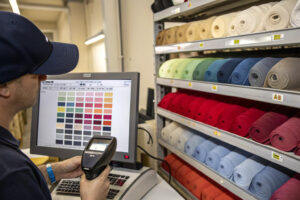
Place the approved lab dip spool next to the bulk production spool on the machine. Photograph them side by side. The color must be a visual match under daylight lighting. A different dye lot will look slightly different. If the bulk spool is a noticeably different shade, the factory may have run out of the certified lot and substituted a non-certified lot without approval. This substitution voids both the color approval and potentially the chemical safety. The color matching process is a critical part of thread quality control.
Conclusion
Verifying that your embroidery thread is OEKO-100 certified is a simple, definable process. You ask for a thread-specific certificate with a valid number and a product scope that includes embroidery threads. You enter that number into the public OEKO-TEX Label Check database and verify the company name, the product class, and the expiration date. You cross-reference the certificate brand name with the label on the physical thread spool. And during a factory visit, you walk to the embroidery machine and photograph the spool in use. These four steps close the loop between a paper promise and a physical product.
I have built our Global-Caps thread sourcing around the principle that every component carries its own safety burden. Our thread inventory is segregated by certification status. Certified spools are stored in a marked section and tracked by lot number. We voluntarily run random azo dye spot-checks on our high-volume colors because we know a single bad spool of thread can destroy the trust of a brand that spent years building its reputation. Your logo thread is not a minor detail. It is the most visible and highest-risk chemical point on the hat.
If your current supplier is struggling to provide transparent thread certification documentation, or if you simply want to work with a factory that has built this verification into its standard operating procedure, let us discuss your next order. Our Business Director, Elaine, can send you a sample of our certified thread range and the corresponding OEKO-TEX documentation before we cut a single panel. Email her at elaine@fumaoclothing.com and ask for our Thread Certification Package. We will show you the proof before we ask for the deposit.