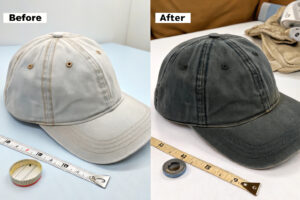
As a hat maker for over two decades, I've seen the cowboy hat evolve from a symbol of the American West to a global icon of style and utility. It's a question I get from all types of clients, from high-fashion brands to rugged outdoor retailers: "What makes a good outdoor cowboy hat?" It's a fantastic question because the answer isn't just about looks; it's about performance.
The wrong hat can be a real problem. Imagine you're out on a long trail ride, and your felt hat gets soaked in a surprise downpour, losing its shape and becoming a heavy, soggy mess. Or you're working under the hot sun, and your so-called "sun-proof" hat leaves your neck and ears exposed and sunburned. These are common pain points that can turn a great day outdoors into a miserable one.
The perfect outdoor cowboy hat is a blend of form and function. It needs to protect you from the elements, be durable enough to handle rough use, and comfortable enough to wear all day. At Shanghai Fumao Clothing,, we've spent years perfecting this balance, developing hats for clients worldwide who demand both authenticity and performance. In this guide, I'll walk you through the critical factors to consider—material, crown shape, brim style, and fit—so you can choose an outdoor cowboy hat that works as hard as you do.
What Material is Best for the Outdoors?
Choosing the right material is the single most important decision you'll make. I've seen clients fixate on style but overlook the fabric, only to find their hats aren't suited for their customers' needs. An outdoor hat is a piece of gear, and the material determines its performance in sun, rain, heat, and cold.
The choice between straw, felt, or leather isn't just about aesthetics; it's about function. A lightweight straw hat that's perfect for a scorching summer day will offer little protection in a cool-weather drizzle. Conversely, a warm wool felt hat can be unbearable in high-humidity heat. This mismatch between material and environment is a classic problem for buyers who don't consider the end-use.
The solution is to match the material to the primary climate and activity. At Shanghai Fumao Clothing,, our development process always starts with this question: "Where and when will this hat be worn?" Answering this allows us to recommend the perfect material. Let's break down the pros and cons of the most common options for outdoor use.
When should you choose a straw hat?
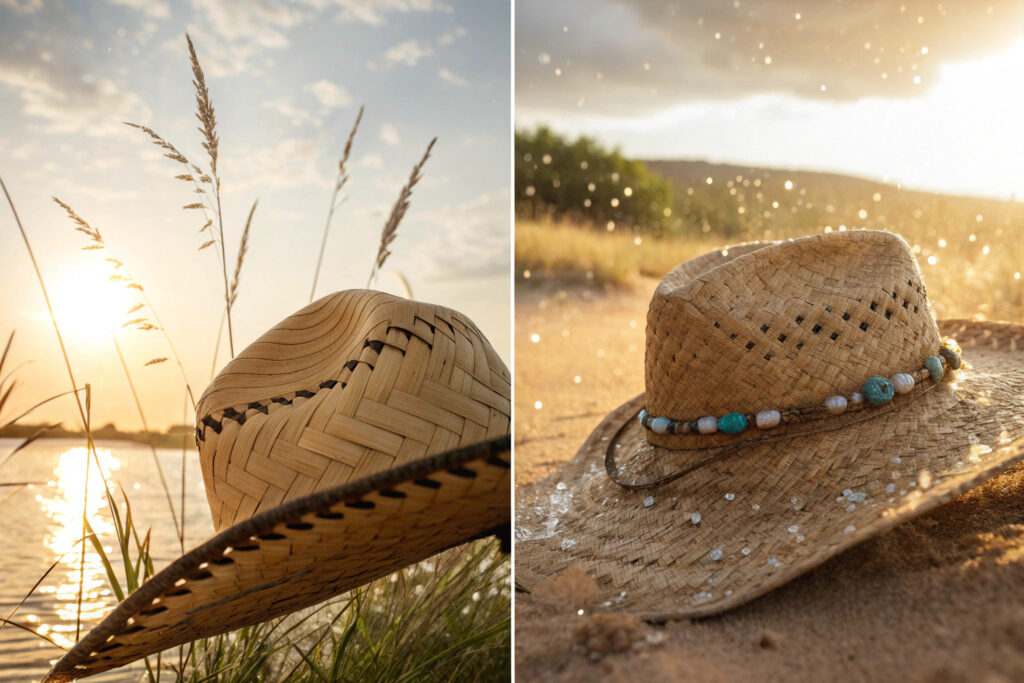
Straw is the undisputed king of hot-weather headwear. Its primary advantage is breathability. The woven construction allows air to circulate freely, keeping your head cool and comfortable even on the hottest days. This is crucial for preventing overheating during strenuous outdoor work or recreation. We often recommend tightly woven straw, like our Panama hat selections, as they provide a better UPF (Ultraviolet Protection Factor) rating, blocking more harmful UV rays than looser weaves. While incredibly comfortable in the heat, most natural straws are not meant for rain, as moisture can cause them to swell, warp, and lose their shape. For brands targeting summer activities or warm climates, straw is the top choice, a trend confirmed by outdoor gear analysts at publications like Outside Magazine.
Is felt a good option for all-weather use?
Felt, typically made from wool or fur, is the more traditional and versatile all-weather option. High-quality felt has excellent water-resistant properties; the dense fibers cause water to bead up and roll off, keeping your head dry in a light to moderate rain. Felt also provides superior insulation, making it ideal for cooler temperatures. The quality of felt is often denoted by an "X" rating—the higher the X's, the more fur content (usually beaver or rabbit) and the better its durability and weather resistance. This rating system is a standard in the hat making industry. While it's heavier and less breathable than straw, a good felt hat is a year-round workhorse. For clients needing a durable, multi-season hat, we often recommend a quality wool felt, which offers a great balance of performance and value, a topic well-covered by western wear authorities like Cowboys & Indians Magazine.
How Does Crown and Brim Shape Affect Function?
Beyond material, the physical shape of your cowboy hat—the crown and the brim—plays a huge role in its functionality. New buyers often see these features as purely stylistic, but each crease and curve was originally developed for a practical purpose. Getting these details right is key to creating a truly effective outdoor hat.
A common mistake is choosing a fashionable but impractical shape. For example, a very narrow brim might look sleek, but it will offer minimal protection from the sun and rain, leaving your face and neck exposed. Similarly, a very low-profile crown might be trendy, but it won't provide the same ventilation or rain-shedding capabilities as a taller, more traditional shape.
The key is to understand the functional heritage behind the different styles. At Global-Caps, we educate our clients on how these shapes perform in the real world. A hat's geometry is a piece of technology perfected over generations. Let's examine how the crown and brim contribute to a hat's performance.
What is the purpose of the crown's shape?
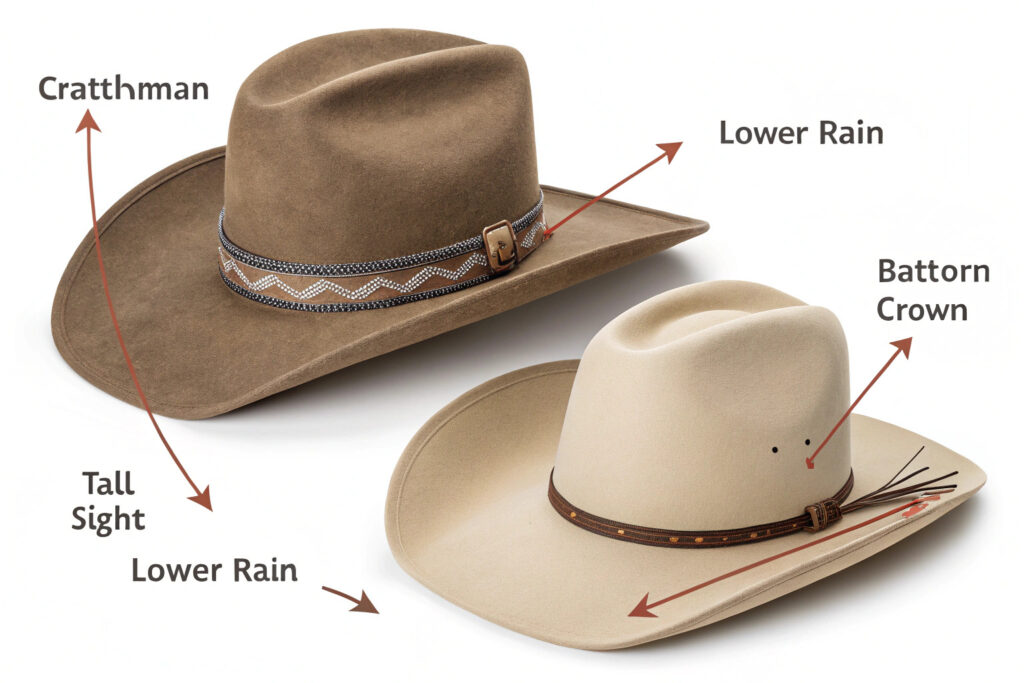
The creases in a cowboy hat's crown, known as the "bash," are not just for show. The traditional high-crowned, creased styles like the "Cattleman" or "Gus" serve several purposes. Firstly, the height of the crown creates a pocket of air above your head, providing insulation against both heat and cold. Secondly, the creases add structural integrity to the crown, helping it maintain its shape. They also act as channels, helping to shed rain away from your face. Finally, the creases provide a natural and secure place to grip the hat when putting it on or taking it off, which reduces wear and tear on the brim. The study of how shape affects function is a core principle of industrial design, and it's fully on display in the classic cowboy hat. Understanding this history, often preserved by institutions like the ProRodeo Hall of Fame, helps in designing authentic and functional headwear.
How wide should the brim be for sun protection?
The brim is your personal patch of shade. For maximum sun protection, a wider brim is always better. A brim of at least 4 inches is generally recommended for serious outdoor use. This width is effective at shielding not just your face, but also your ears and the back of your neck—areas highly susceptible to sunburn. The shape of the brim also matters. A brim that is flat or turned down slightly (as opposed to being sharply curled up on the sides) will cast a larger shadow. When we design custom hats, we often discuss the "brim flange," or the shape of the brim's edge, to optimize its protective qualities. This focus on sun safety is a critical aspect of functional apparel, with standards and testing methods well-defined by organizations like the International UV Testing Laboratories. For any brand serious about outdoor gear, providing adequate sun protection is a non-negotiable feature, a standard promoted by health organizations like the American Academy of Dermatology.
Why is a Secure Fit So Critical?
You can have the best material and the perfect shape, but if the hat doesn't stay on your head, it's useless. This seems obvious, but it's a detail that is frequently overlooked. An outdoor environment is unpredictable; you'll face wind, sudden movements, and the need to look up and down frequently. A loose hat is a constant annoyance and a liability.
I've heard stories from clients' customers about losing their favorite hat to a gust of wind on a boat or having it fall off while leaning over a fence. It's a frustrating experience that can be easily avoided. A proper fit isn't about being uncomfortably tight; it's about being secure.
A secure fit comes from two things: correct sizing and a quality sweatband. The sweatband is the interface between the hat and your head, and its role is crucial for both comfort and stability. At our manufacturing facility, the sweatband is one of the most important components we install, as we know it's the key to a hat the customer will love to wear.
How should a cowboy hat fit on your head?
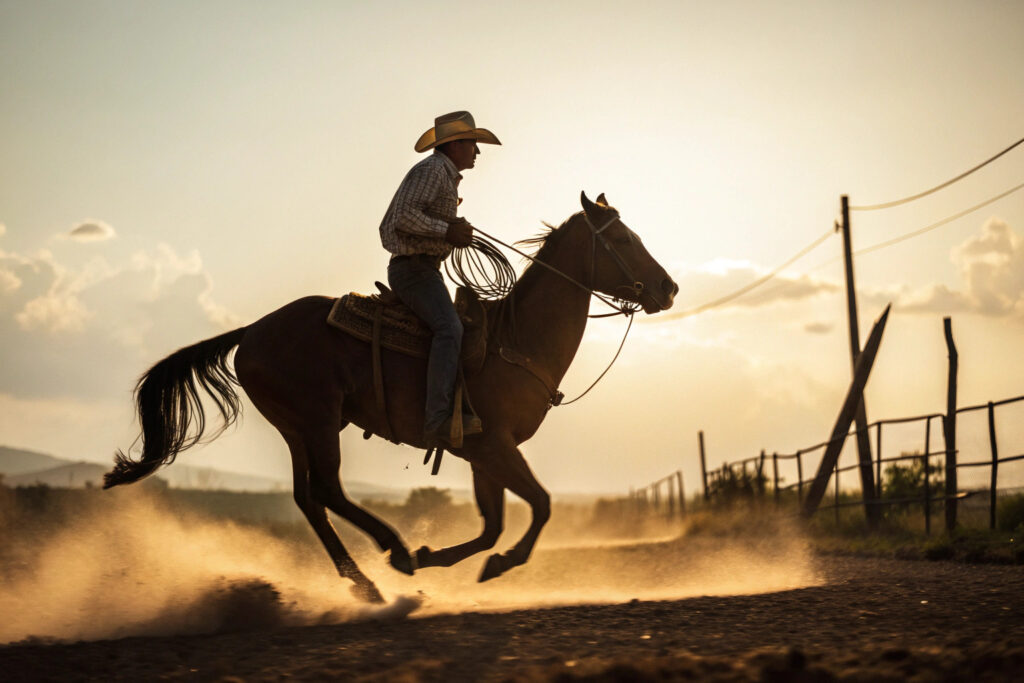
A well-fitted cowboy hat should feel snug all the way around your head without being uncomfortably tight. You should be able to feel light, even pressure. A good test is the "shake test": put the hat on and shake your head from side to side and front to back. The hat should stay securely in place without wobbling. It should sit about 1-2 fingers' width above your eyebrows and ears. If it sits too high, it's too small; if it covers your eyebrows, it's too big. Getting this right starts with an accurate head measurement, a process detailed by expert hatters and retailers like Stetson. This snug, correct fit ensures the hat becomes a natural extension of you, not a distraction. This principle of ergonomic fit is a key area of study in wearable technology and apparel design.
What is the role of the sweatband and stampede strings?
The sweatband is the unsung hero of a good hat. A high-quality leather or moisture-wicking fabric sweatband does two things: it provides a comfortable cushion against your skin, and it helps the hat conform to the unique shape of your head over time, improving the fit. A genuine leather sweatband is the traditional choice and is known for its durability and custom-molding properties. For added security, especially in very windy conditions or during high-impact activities like riding, a "stampede string" or "chin strap" is essential. This cord, which can be made of leather or horsehair, runs under the chin or the back of the head to physically tether the hat to you. It's a simple but indispensable feature for anyone who can't afford to lose their hat. This focus on practical, user-centric features is a core tenet of good outdoor gear design.
Conclusion
Choosing the right outdoor cowboy hat is a thoughtful process that balances tradition with practical performance. It's about looking beyond simple aesthetics and understanding how material, shape, and fit combine to create a functional piece of gear. By matching the material to the climate, selecting a crown and brim shape that offers real protection, and ensuring a secure, comfortable fit, you can choose a hat that will serve you well for years of adventure. It's an investment in comfort, protection, and timeless style.
As a manufacturer, our greatest satisfaction comes from creating products that perform flawlessly in the real world. We take pride in helping our clients navigate these choices to develop hats that build a loyal following.
If you are looking to create your own line of authentic, high-performance outdoor cowboy hats, my team at Shanghai Fumao Clothing, has the expertise to bring your vision to life. We can guide you through every decision, from material sourcing to the final stitch.
Please reach out to our Business Director, Elaine, at elaine@fumaoclothing.com to get started. Let's build something durable and iconic together.