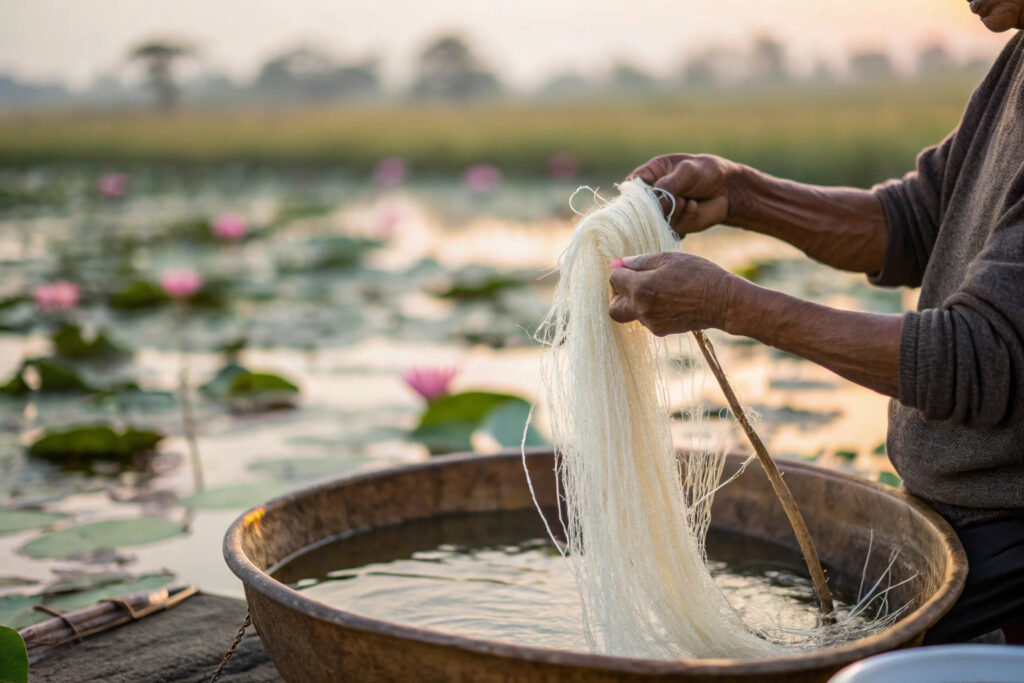
In the competitive world of luxury accessories, differentiation is key. The most discerning customers seek more than just a brand name; they seek a story, unparalleled craftsmanship, and a tangible connection to nature and ethics. For sun hats, this means transcending conventional materials like fine straw or premium cotton. The ultimate choice for brands aiming for the absolute pinnacle is lotus fiber, a rare textile hand-harvested from lotus plant stems.
Lotus fiber stands alone as the definitive luxury material due to its extreme rarity, its unique and superior physical properties, its compelling cultural and ethical narrative, and its inherent, verifiable sustainability. It transforms a sun hat from a mere accessory into a wearable masterpiece with an extraordinary provenance, justifying a position in the ultra-luxury market segment.
Let's explore the four foundational pillars that make lotus fiber the most compelling choice for redefining luxury headwear.
What Makes Lotus Fiber the Epitome of Rarity and Exclusivity?
True luxury is defined by scarcity. In an era of mass production, genuine exclusivity is a product's most powerful asset. Lotus fiber's value is rooted in limitations imposed by nature and traditional craft, creating a supply chain that cannot be artificially expanded to meet mass demand.
Its exclusivity is guaranteed by a combination of geographical, seasonal, and artisanal constraints. The entire production process, from harvest to thread, resists industrialization, ensuring that every meter of fabric carries the imprint of dedicated human hands and a specific, irreplaceable ecosystem.
Why is the Supply Chain Naturally Limited and Non-Scalable?
The limitations are intrinsic and form the core of its luxury status:
- Geographic and Seasonal Specificity: The finest long-filament lotus fiber comes from specific varieties of lotus grown in pristine freshwater environments, primarily in regions like Myanmar's Inle Lake and parts of Cambodia. The harvesting window is incredibly brief, limited to the early morning hours during the rainy season when the stems contain the most pliable filaments.
- Irreplaceable Artisanal Labor: Mechanization is impossible at the source. Skilled harvesters must wade into ponds, select mature stems, and perform the exacting task of snapping, twisting, and rolling filaments on a wet surface to create a continuous thread. This knowledge is passed through generations, and the artisan community remains small.
- Astounding Resource Intensity: The numbers tell the story: it takes approximately 20-30 lotus stems to yield just one gram of spinnable thread. To produce enough thread for a single shawl requires over 10,000 stems and two months of labor. This extreme resource-to-output ratio creates a natural ceiling on global production volume, making it one of the world's rarest textiles.
How Does This Rarity Translate into Tangible Brand Value?
For a luxury brand, these constraints are strategic advantages:
- Authentic Limited Editions: Brands can legitimately produce and market numbered or named editions, with production quantities dictated by the availability of raw fiber, not marketing whims.
- Premium Pricing Power: The astronomical labor and material input directly justify a price point that sits at the very top of the luxury market, alongside rare silks and custom wovens.
- Barrier to Entry: The complexity of sourcing and working with the material creates a significant barrier for competitors, protecting the exclusivity of brands that master it first. For a forward-thinking manufacturer like Shanghai Fumao Clothing, establishing a reliable partnership with a lotus fiber cooperative becomes a unique competitive moat.
How Do Its Unique Properties Enhance Luxury Product Performance?
A luxury material must deliver an exceptional sensory and functional experience. It must justify its price through tangible benefits in feel, appearance, and performance. Lotus fiber excels by offering a distinctive combination of aesthetic character and physical properties that are perfectly suited to high-end sun hats.
It provides a unique dry, crisp hand-feel, inherent climate comfort, and a visual texture that communicates its natural, artisanal origin. These properties cannot be replicated by machine-made synthetic alternatives, offering a genuine point of differentiation.
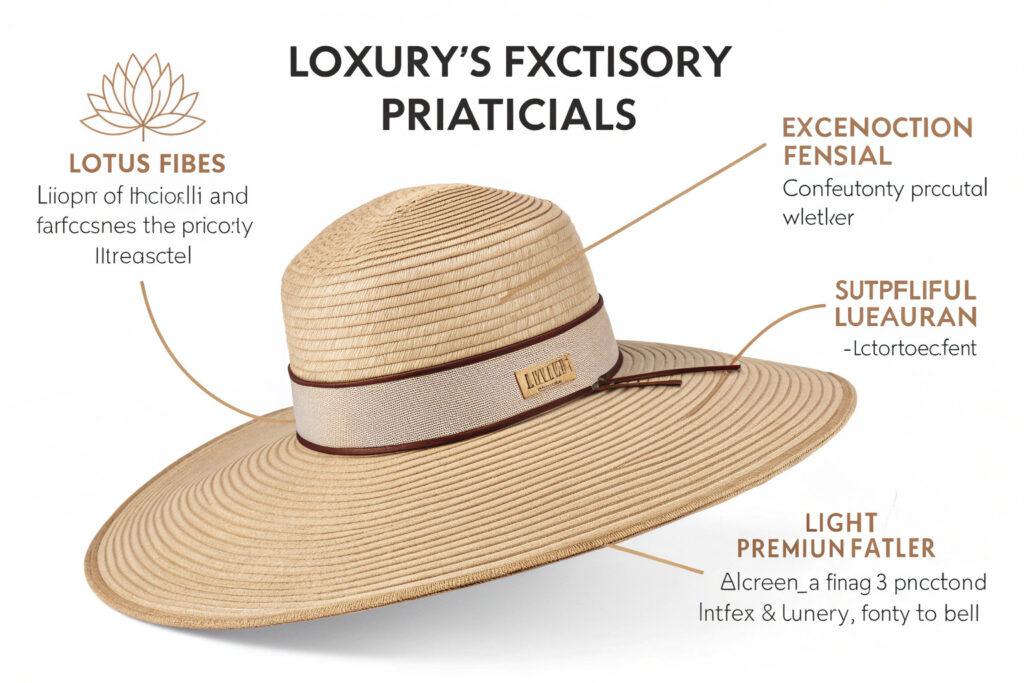
What Are Its Distinct Aesthetic and Tactile Qualities?
Lotus fiber fabric possesses a character all its own:
- Visual Texture and Sheen: Woven lotus fiber has a beautiful, matte-luxe appearance with a subtle, natural luster akin to raw silk. The fabric exhibits a gentle, organic slub and texture that reveals its handmade origin, moving away from the sterile perfection of industrial textiles.
- Unique Hand-Feel: It is famously "cool to the touch" and has a distinctive dry, crisp, paper-like quality that is both lightweight and surprisingly durable. This crispness provides excellent structure for hat brims, allowing them to hold elegant shapes without becoming stiff or heavy.
- Natural Color Palette: The fiber requires no bleaching; it spins into threads in a range of beautiful, natural hues from soft ivory and ecru to delicate pinks and greys, depending on the part of the stem used. This allows for deeply organic, low-impact color stories.
How Does It Function Superiorly for Sun Hat Applications?
Beyond aesthetics, lotus fiber performs exceptionally in real-world conditions:
- Natural Climate Regulation: The microscopic structure of the fiber makes it highly breathable and naturally moisture-wicking. It draws perspiration away from the skin and allows for rapid evaporation, keeping the wearer's head cool and dry in hot weather—a critical functional advantage for a sun hat.
- Lightweight Durability: Despite its delicate appearance, the woven fabric is strong and resilient. It is naturally wrinkle-resistant and holds its shape well, meaning a lotus fiber hat maintains its elegant silhouette through travel and wear.
- Hypoallergenic and Skin-Friendly: The chemical-free, aqueous processing results in a pure fiber free from residues. It is naturally hypoallergenic and gentle on sensitive skin, aligning with the wellness-focused values of modern luxury consumers.
What is the Power of Its Cultural and Ethical Narrative?
In today's luxury market, provenance and purpose are as valuable as the product itself. Consumers invest in stories that reflect their values. Lotus fiber carries a narrative rich with cultural depth, spiritual symbolism, and positive social impact, providing brands with an authentic, multifaceted story that resonates on an emotional level.
The narrative spans from ancient Buddhist traditions to contemporary support for artisan communities, offering a compelling alternative to the often opaque supply chains of conventional luxury.
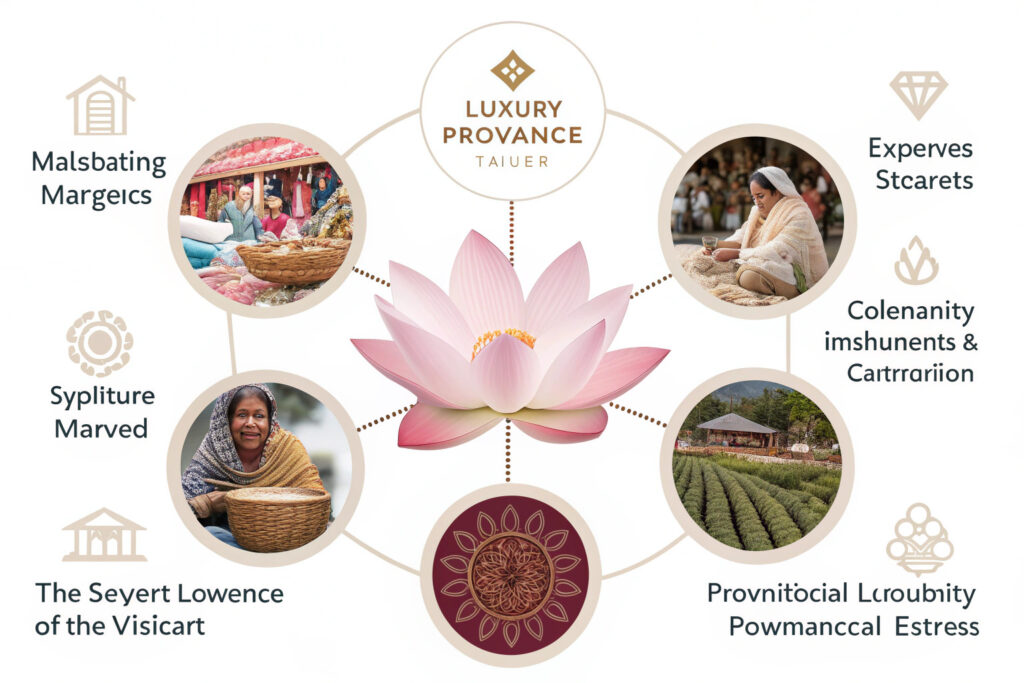
How Does Its Heritage and Symbolism Elevate Brand Storytelling?
The lotus plant is a powerful global symbol:
- Deep Cultural Roots: The use of lotus fiber dates back centuries in Buddhist cultures, where it was used to weave robes for high-ranking monks as a symbol of purity and detachment from material desire. This heritage imbues the material with a sense of sanctity and timeless tradition.
- Universal Symbolism: The lotus flower's journey—rising pristine from muddy waters—is a universal metaphor for beauty, resilience, enlightenment, and rebirth. A brand can align itself with these aspirational values, positioning its products as symbols of personal growth and refined taste.
- The Artisan Story: Each hat carries the narrative of the harvesters and spinners. Marketing can focus on the names, faces, and skills of the artisans, creating a human connection that mass-produced goods cannot replicate. This storytelling transforms a purchase into an act of cultural appreciation.
What is the Ethical and Social Impact for Modern Brands?
Partnering with lotus fiber production supports a positive economic model:
- Preservation of Cultural Heritage: By creating a sustainable commercial outlet, brands directly contribute to keeping ancient crafting traditions alive and viable for a new generation.
- Community Empowerment: Lotus fiber production provides fair-wage, skilled employment in rural communities, often offering a valuable source of income for women artisans. This enables brands to build authentic Corporate Social Responsibility (CSR) initiatives into their core product line.
- Transparent Provenance: The traceability of the fiber—from a specific pond to a known artisan group—offers total supply chain transparency, a key demand from ethically-conscious luxury consumers. This allows a brand like Shanghai Fumao Clothing to offer clients a fully documented, ethical sourcing journey.
Why is It the Ultimate Choice for Verifiable Sustainability?
Sustainability is no longer optional in luxury; it is a baseline expectation. However, "greenwashing" has led to consumer skepticism. Lotus fiber cuts through this by offering sustainability that is inherent, obvious, and verifiable from harvest to end-of-life, requiring no complex certifications to prove its credentials.
It represents a closed-loop, zero-waste system that aligns perfectly with the principles of circular economy and regenerative design.
How is Its Production Inherently Low-Impact and Circular?
The environmental benefits are embedded in the traditional process:
- Regenerative Agriculture: Lotus plants are cultivated without pesticides or fertilizers in natural freshwater ponds. They actively improve water quality by absorbing excess nutrients. This is a regenerative, polyculture farming system.
- Zero-Waste Processing: After the filaments are extracted for fiber, every other part of the plant is used: seeds for food, flowers for religious offerings or tea, roots for cuisine, and leaves for packaging. This creates a 100% utilization, zero-waste model.
- Chemical-Free Manufacturing: The transition from stem to thread uses only water. There is no chemical retting, bleaching, or dyeing required for natural shades. This results in no toxic effluent and a pure, biodegradable final product.
What Are Its End-of-Life and Lifecycle Advantages?
Lotus fiber's sustainability extends to the end of its long life:
- Complete Biodegradability: At the end of its use, a lotus fiber hat can be composted, returning naturally to the earth without leaving behind microplastics or toxic residues. This contrasts sharply with synthetic luxury materials.
- Longevity and Timelessness: The durability and classic aesthetic of the material encourage long-term use and cherishing, countering fast-fashion disposal cycles. It is designed to be a heirloom piece.
- Authentic Green Claims: Brands can make straightforward, undeniable claims: "Grown in water, made by hand, returns to earth." This simplicity and honesty are incredibly powerful in a market saturated with complex and often misleading environmental labels.
Conclusion
Choosing lotus fiber for luxury sun hat production is a definitive statement. It is a commitment to operating at the zenith of rarity, craftsmanship, storytelling, and environmental integrity. This material offers an unparalleled value proposition: a product that is as ethically compelling and sensorially unique as it is beautiful.
It allows visionary brands to transcend traditional luxury categories and create legacy pieces that carry a profound narrative of nature, culture, and human artistry.
If you are prepared to pioneer a truly exclusive collection that defines the future of conscious luxury, let's collaborate. Our expertise in material innovation and precision manufacturing is perfectly suited to bring the extraordinary potential of lotus fiber to life. For a detailed consultation on developing a groundbreaking sun hat line, please contact our Business Director, Elaine, at Shanghai Fumao Clothing. You can reach her at: elaine@fumaoclothing.com.