You've done everything right. You've designed a great line of hats, found a reliable manufacturer, and your first big shipment is on its way. You're tracking the vessel, excited for it to arrive. Then, you get the notification that sends a chill down any importer's spine: "Shipment Held by Customs." Suddenly, you're facing delays, unexpected fees, and worst of all, the threat of significant financial penalties. Why? Because the hats were misclassified.
This is a nightmare scenario for any business importing goods. Customs classification is a complex, arcane world, and a small mistake on a document can have massive consequences. The penalties aren't just a slap on the wrist; they can be a percentage of the shipment's total value, potentially wiping out your entire profit margin and flagging you for future inspections.
The only way to avoid customs penalties is through proactive, diligent, and transparent classification using the correct Harmonized System (HS) codes for your specific products. This involves working closely with your manufacturer and a licensed customs broker to ensure that every hat style is accurately identified before it is shipped. It's not about finding loopholes; it's about demonstrating "reasonable care" and getting it right from the start.
As the owner of Shanghai Fumao Clothing, I've seen this happen to importers who cut corners or didn't understand the rules. For over 20 years, we've made it our business not just to manufacture hats, but to help our clients navigate the complexities of international trade. Let me pull back the curtain on customs classification and show you how to ensure your shipments clear customs smoothly and without penalty.
What Is an HS Code and Why Does It Matter So Much?
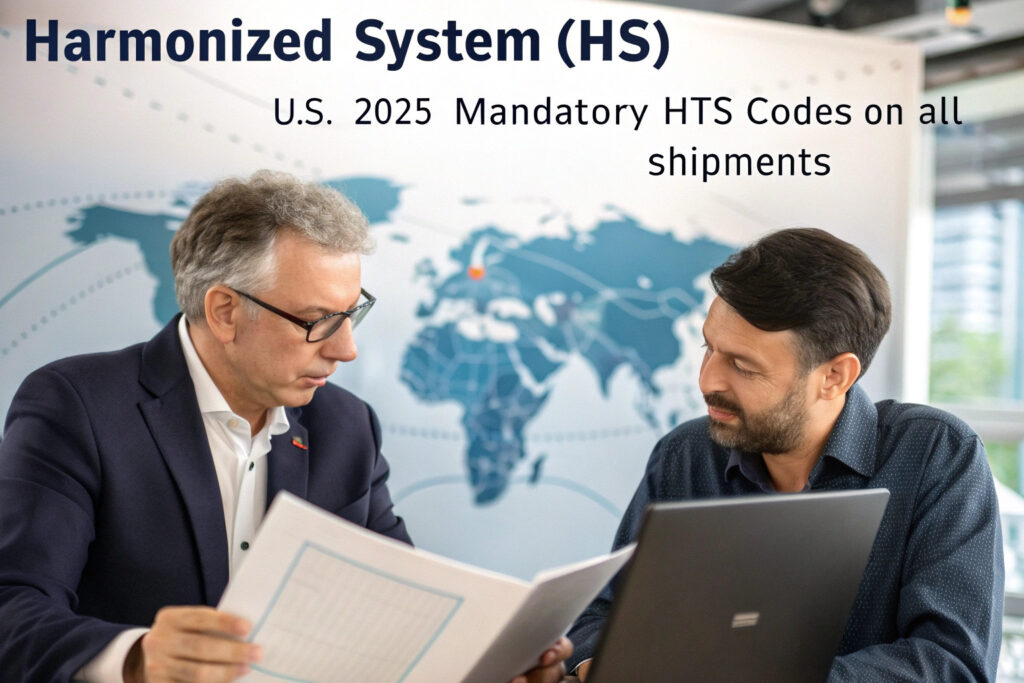
Before we can talk about penalties, we have to understand the system that governs them. The Harmonized System (HS) Code is an internationally standardized system of names and numbers used to classify traded products. It was developed by the World Customs Organization (WCO) and is used by more than 200 countries.
Think of the HS code as a universal language for customs officials. It tells them exactly what is in your box without them even having to open it. The code is a hierarchical structure of up to 10 digits:
- The first 6 digits are universal and come from the international HS Convention.
- The subsequent digits (7-10) are set by individual countries to further refine the classification for their own tariff and statistical purposes. In the United States, this is called the HTS (Harmonized Tariff Schedule) Code.
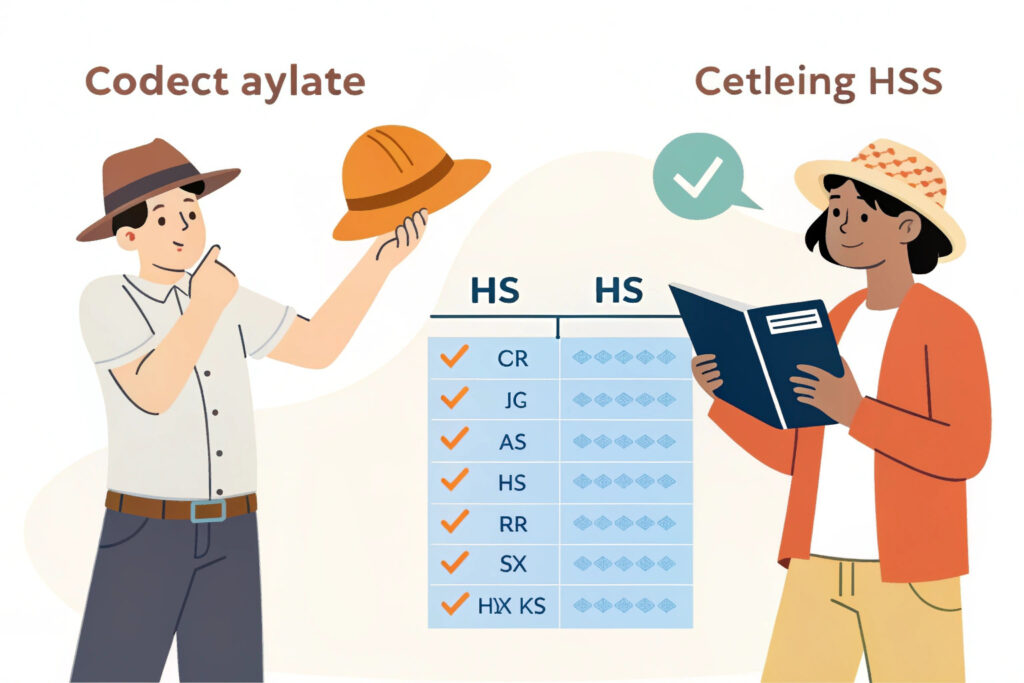
For hats, the primary HS codes fall under Chapter 65. But within that chapter, the classification gets very specific. A felt hat has a different code than a knitted beanie. A hat made from plaited straw is different from a polyester baseball cap. The specific material and construction of the hat determine its HS code. This code is what customs uses to determine the rate of duty (the tax you pay) and to check if the product is subject to any quotas or specific regulations. An incorrect code can mean you're paying the wrong amount of tax, which is a serious compliance violation.
Getting this code right is the single most important step in your import documentation. It's the foundation upon which your entire customs declaration is built. A mistake here is not a simple typo; it's a fundamental misrepresentation of your goods, and it's the primary trigger for the penalties you want to avoid.
Where can I look up HTS codes for the US?
The official Harmonized Tariff Schedule of the United States is published and maintained by the U.S. International Trade Commission. Their official website, hts.usitc.gov, has a searchable database of the entire tariff schedule. This is the ultimate source of truth for US import codes.
Do HS codes ever change?
Yes. The World Customs Organization updates the HS system approximately every five years to account for new technologies and changes in trade patterns. The most recent major update was in 2022. It is crucial for importers and exporters to stay informed about these changes to ensure their classifications remain current.
What Are the Penalties for Misclassification?
So, what actually happens if you get the HS code wrong? The consequences can range from a minor headache to a major financial disaster, depending on the severity of the error and your history as an importer.
The penalties, as enforced by agencies like U.S. Customs and Border Protection (CBP), can include:
- Shipment Delays: At a minimum, your shipment will be held for inspection while customs determines the correct classification. This can take days or weeks, disrupting your supply chain and sales schedule.
- Re-classification and Back-Duties: Customs will issue a new declaration with the correct HS code and bill you for any additional duties you should have paid, plus interest.
- Monetary Penalties: This is where it gets serious. If customs determines the misclassification was due to negligence, gross negligence, or fraud, they can issue penalties. According to CBP regulations (19 U.S.C. 1592), these penalties can be calculated as a multiple of the duties lost or even a percentage of the total value of the merchandise.
- Increased Scrutiny: Once you're flagged for a violation, you can expect your future shipments to be subject to a much higher rate of inspection. This means more potential delays and costs for your business down the line.
- Seizure of Goods: In the most extreme cases of fraud or repeated offenses, customs has the authority to seize and forfeit your merchandise entirely.
The key takeaway is that customs agencies operate on a principle of "informed compliance" and "reasonable care." They expect you, the importer, to do your homework. Claiming ignorance is not a valid defense. This is why a proactive approach to correct classification is so vital.
What is "reasonable care"?
"Reasonable care" is a standard that CBP expects importers to meet. It means you have taken responsible and prudent steps to ensure your import declarations are accurate. This includes things like consulting the official HTS, seeking expert advice from a customs broker, and maintaining good records. CBP provides detailed checklists and guides on their website to help importers understand their responsibilities.
Can I appeal a penalty?
Yes, importers have the right to appeal penalties and decisions made by customs. This usually involves filing a petition with CBP, providing evidence to support your case. However, the appeals process can be long and complex, often requiring the help of a specialized trade lawyer. It is far more effective and less expensive to avoid the penalty in the first place.
How Do You Correctly Classify Different Hat Styles?
This is the practical part: how do you find the right code? The classification of hats under Chapter 65 of the HS is based on a hierarchy of questions, primarily about the material and method of construction.
Here's a simplified logic tree you would follow:
- Is it made of felt? If yes, you go to heading 6505 (for felt hats).
- Is it made by plaiting or assembling strips of any material (e.g., straw, paper yarn)? If yes, you go to heading 6504. This is for Panama hats, sun hats, etc.
- Is it knitted, crocheted, or made up from lace or other textile fabric in the piece (but not in strips)? If yes, you go to heading 6505. This is the most common category and includes:
- Knitted beanies (subheading 6505.00.60 for man-made fibers in the US).
- Fabric baseball caps (subheading 6505.00.20 for cotton in the US).
- Is it a safety headgear (e.g., a hard hat)? If yes, it falls under heading 6506.
Within each of these headings, you then have to answer more questions about the specific fiber (cotton, wool, man-made fibers, etc.) to arrive at the full 8- or 10-digit code. For example, a shipment containing both cotton baseball caps and acrylic beanies requires two different HS codes on the customs declaration. Lumping them all under one code is a classic and costly mistake.
As a manufacturer, we deal with this every day. We provide our clients with a detailed packing list that specifies the exact quantity, material composition, and suggested HS code for each style in the shipment. This detailed documentation is the essential tool your customs broker needs to ensure a smooth clearance process.
What if a hat is made of a blend of materials?
The HS rules have a "principle of essential character." Generally, the hat is classified according to the material that gives it its essential character. For a 60% cotton / 40% polyester baseball cap, it would typically be classified as a cotton hat. However, these rules can be complex, and this is an excellent example of a situation where you should consult with a licensed customs broker.
Does the decoration (e.g., embroidery) change the HS code?
Generally, no. Standard decorations like embroidery or a woven patch do not change the fundamental classification of the hat, which is based on its primary material and construction. However, if the decoration is extremely elaborate and adds significant value (e.g., covered in sequins or beading), it could potentially affect the classification.
How Do You Work with Partners to Ensure Compliance?
You are not alone in this process. Avoiding customs penalties is a team sport that requires clear communication and shared responsibility between you (the importer), your manufacturer, and your customs broker.
Here’s how to build a compliant supply chain:
- You (The Importer of Record): The ultimate legal responsibility for the accuracy of the import declaration rests with you. Your job is to hire a reputable, licensed customs broker. Provide them with all the detailed documentation from your manufacturer and be completely transparent about your products.
- Your Manufacturer (e.g., Global-Caps): Our responsibility is to provide you with accurate and highly detailed product information. This includes a commercial invoice that lists each item separately, a packing list that details the contents of each carton, and, most importantly, a complete breakdown of the material composition for every style. We act as your "eyes and ears" on the ground, providing the raw data your broker needs.
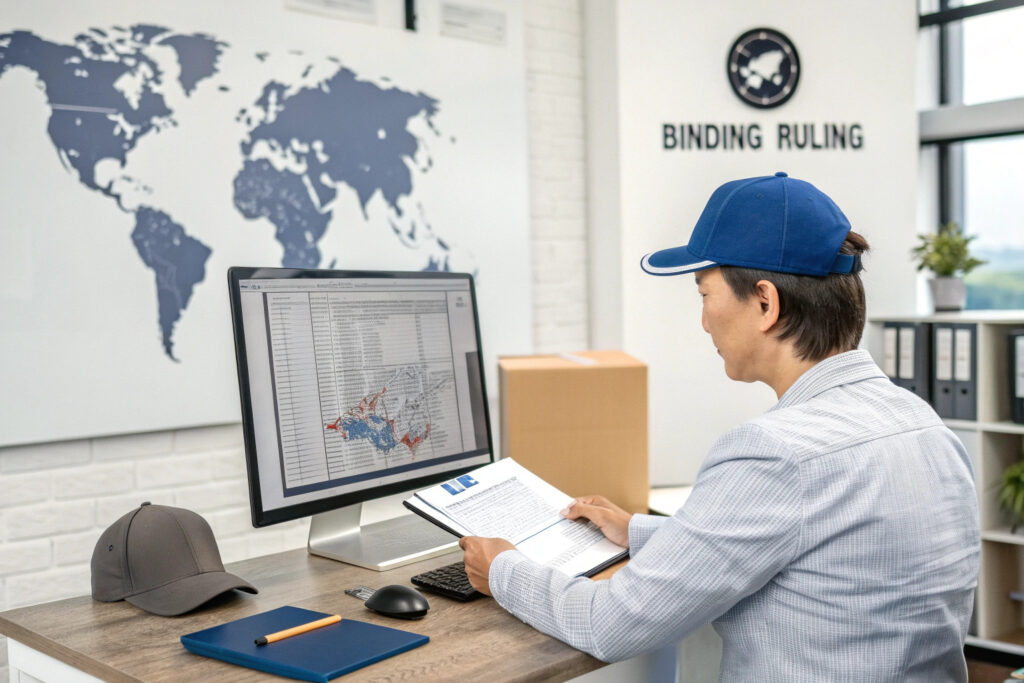
- Your Customs Broker: This is your expert guide. A licensed customs broker is a professional who is trained and certified in all aspects of customs law and procedure. Their job is to take the information you and your manufacturer provide, use their expertise to determine the correct HTS codes, and file the customs entry on your behalf. They are your most important risk management partner.
This three-way partnership, built on a foundation of detailed and accurate documentation, is the best possible defense against customs penalties. It demonstrates "reasonable care" and ensures that everyone in the supply chain is working from the same set of facts.

How do I find a licensed customs broker?
The official website for U.S. Customs and Border Protection, CBP.gov, provides a list of licensed customs brokers, searchable by port of entry. It's a good practice to find a broker who has experience with your specific product category (apparel and headwear).
Should the manufacturer choose the HS code for me?
While an experienced manufacturer like us can suggest the correct HS code based on our experience, the final determination should always be made or confirmed by your licensed customs broker. The legal landscape and tariff rates can be different in your country, and the broker is the certified expert for your specific import jurisdiction.
Conclusion
Navigating the world of customs classification can seem intimidating, but it doesn't have to be a source of fear. By understanding the importance of the Harmonized System, being aware of the significant penalties for misclassification, and embracing a collaborative approach with your manufacturer and customs broker, you can build a compliant and resilient supply chain. It all comes down to a commitment to accuracy and transparency.
At Shanghai Fumao Clothing, we see ourselves as more than just a factory. We are your partner in global trade. We are committed to providing you with the exceptionally detailed documentation you need to make your customs process smooth, predictable, and penalty-free.
If you're looking for a manufacturing partner who understands the importance of getting the details right, both on the production line and on the packing list, my team is here to help. Let's work together to build your brand with confidence. Please feel free to reach out to our Business Director, Elaine, at her email: elaine@fumaoclothing.com to get started.