Ever scored what you thought was an amazing deal on a big-name baseball cap, only to have it fall apart after a few weeks? The stitching comes loose, the color fades, and the logo just looks... off. It’s a frustrating experience. You thought you were buying into the quality and style of a reputable brand, but instead, you were left with a cheap imitation. This problem isn't just disappointing for consumers; it's a massive headache for legitimate businesses and buyers who value authenticity.
The unfortunate truth is that the most beloved and popular brands are also the most targeted by counterfeiters. Brands like New Era, with its iconic on-field presence, and lifestyle giants such as Nike and Adidas, are at the top of the list. Their global recognition and high demand make them prime targets for illegal replication. As a manufacturer at Shanghai Fumao Clothing, we see the downstream effects of this problem every day. It erodes trust in the market and undermines the craftsmanship that goes into creating a quality product.
Understanding which brands are most at risk and, more importantly, how to spot a fake is crucial for any savvy buyer, from individual fans to large-scale importers. For over 20 years, I've been on the front lines of the hat industry, and I've learned to identify the subtle (and not-so-subtle) signs of a counterfeit. Let's pull back the curtain on the world of fake caps and arm you with the knowledge to protect yourself and your business.
Which Brands Top the Counterfeit Hit List?
You see a cap with a familiar logo online for a fraction of the retail price. Is it a lucky find or a red flag? The temptation of a bargain is strong, but it often leads buyers into the counterfeit trap. The counterfeit market thrives on brand recognition, which means the biggest and most desirable names in the industry are the ones you need to be most cautious about.
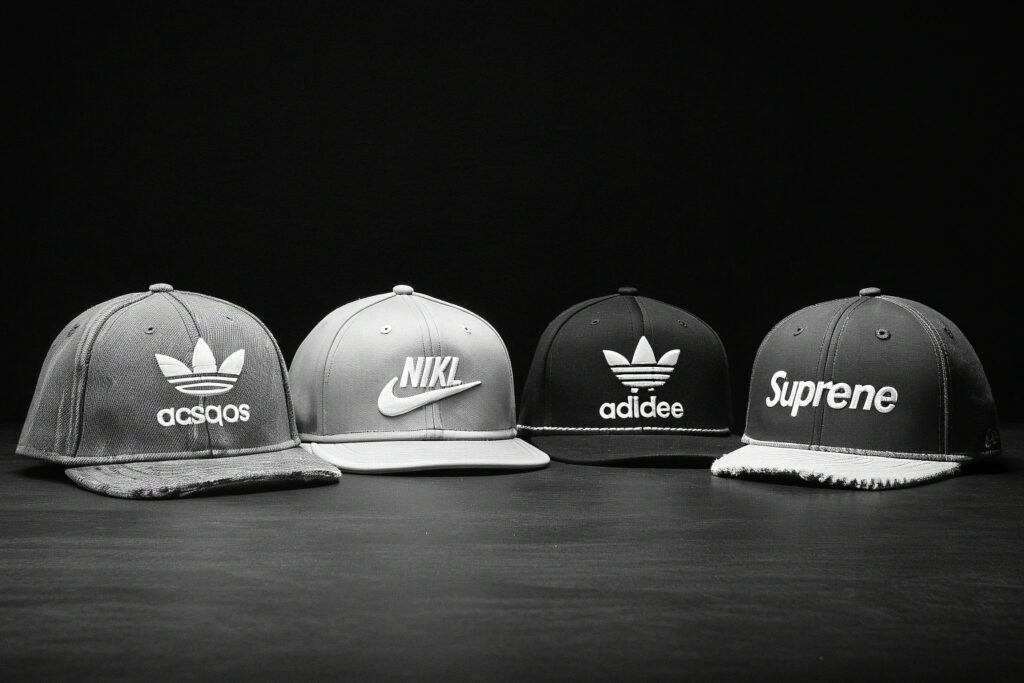
The "hit list" is dominated by brands that have successfully blended sports heritage with mainstream fashion. New Era is arguably the number one target due to its exclusive licensing deals with major sports leagues like MLB and the NFL. Following closely are global sportswear titans Nike and Adidas, whose logos are universally recognized and desired. In the streetwear realm, brands with "hype" and limited releases, such as Supreme and BAPE, are also heavily counterfeited because their products' scarcity drives an intense demand that counterfeiters are eager to exploit.
These brands invest millions in design, quality control, and marketing. Counterfeiters bypass all of that, using cheap materials and labor to churn out visually similar but structurally inferior products. Knowing who they target is the first step in avoiding them.
Why is New Era a prime target?
New Era's position as the official on-field cap provider for Major League Baseball (MLB) and the National Football League (NFL) makes it the undisputed king of sports headwear. This exclusive status means that any fan wanting an authentic team cap is looking for the New Era logo. Counterfeiters exploit this massive, built-in market. They replicate everything from the iconic 59FIFTY fitted cap to the popular 9FORTY adjustable models. The sheer volume of team designs and special editions released each season creates a confusing landscape for consumers, making it easier for fakes to slip through the cracks. The brand's deep connection to American sports culture makes it a perennial favorite for counterfeit operations.
How do sportswear and streetwear brands fare?
Global giants like Nike and Adidas are counterfeited for a simple reason: their logos are status symbols recognized worldwide. The "Swoosh" and the "Three Stripes" are synonymous with athletic performance and street style, and a cap is one of the most accessible ways for consumers to buy into that image. Counterfeiters mass-produce caps with these logos, often selling them in street markets and on dubious websites. Similarly, high-end streetwear brands like Supreme have built their entire business model on exclusivity and hype. Their limited "drops" create a frenzy, and products sell out in seconds, leading to a lucrative resale market. Counterfeiters flood this secondary market with fakes, preying on consumers' desperation to own a piece of the brand. This phenomenon is a well-documented aspect of the modern streetwear economy.
Now that you know the targets, let's learn how to spot the fakes.
How Can You Spot a Fake Baseball Cap?
So you're holding a cap, and the price seems too good to be true. How can you be sure you're not about to buy a dud? It's easy to feel uncertain, especially when some "super fakes" look convincing at first glance. You might worry that you don't have the expert eye to tell the difference, leaving you vulnerable to getting ripped off.
The secret is to become a detail detective. Counterfeiters cut corners to save costs, and these shortcuts are almost always visible if you know where to look. You don't need to be an industry veteran; you just need to train your eye to check a few key areas. The biggest giveaways are almost always in the stitching quality, the material feel, and the details on the tags and labels. An authentic cap is a symphony of quality components; a fake is a collection of compromises.
I've taught my clients and partners these simple checks for years. By developing a systematic inspection routine, you can quickly gain confidence and learn to distinguish a genuine product from a cheap knockoff in minutes. Let's break down the process.
What should you look for in the stitching and logo?
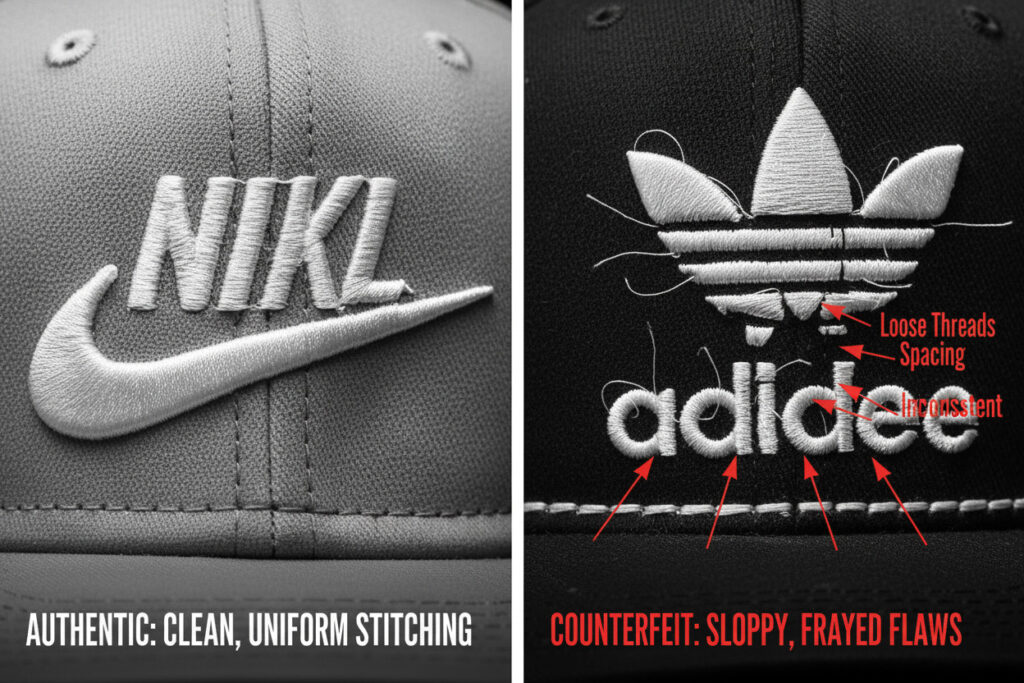
This is your number one checkpoint. On an authentic cap from a brand like New Era or Nike, the logo stitching will be dense, clean, and precise. Run your finger over it; it should feel raised and substantial. The lines should be sharp, with no fuzzy edges or loose threads. Now, look at a fake. The logo will often have a lower stitch count, making it look flat and flimsy. You'll see sloppy, uneven lines, and the letters might be poorly spaced or misshapen. Pay close attention to the small details, like the registered trademark symbol (®)—on a fake, it's often just an unreadable blob. This focus on embroidery quality is a hallmark of a legitimate manufacturer.
Counterfeiters often mess up the inside just as much as the outside. Flip the cap over and inspect the internal tags. An authentic cap will have multiple tags, including a brand tag and a care/materials tag. The printing on these tags should be crisp and clear, with no spelling errors. The stitching holding the tags in place will be neat and secure. On a fake, the tags might be missing entirely, or they'll be made of cheap, papery material with blurry, often misspelled text. Check for the country of origin; while many authentic caps are made in Asia, a tag that says "Made in USA" on a standard Nike cap, for example, is a major red flag. Cross-reference the information with the brand's official product information to be sure.
Knowing the signs is half the battle. The other half is knowing where the fakes are sold.
Where Are These Counterfeits Typically Sold?
You know what to look for, but where are you most likely to encounter these fakes? The counterfeit market is no longer confined to shady back alleys. It has a massive online presence, making it easier than ever for unsuspecting buyers to fall into a trap. You might be browsing what looks like a professional e-commerce site or a popular online marketplace, feeling secure, but these platforms are the new frontier for counterfeit sellers.
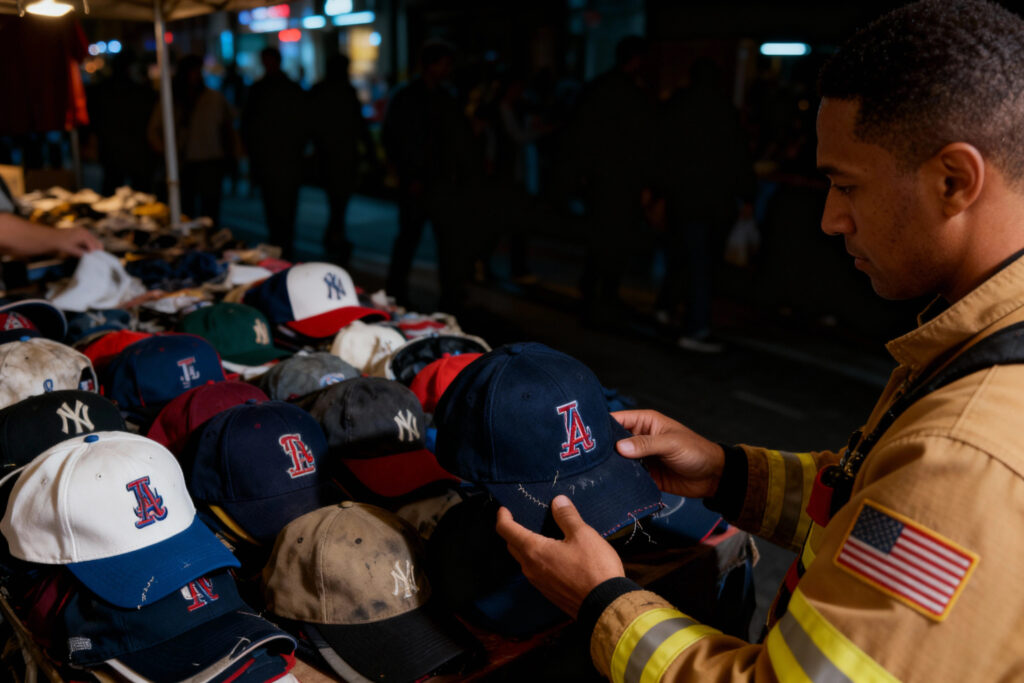
Counterfeits thrive in environments with low regulation and high anonymity. This includes sprawling online marketplaces like eBay and AliExpress, where individual sellers can pop up and disappear overnight. Social media platforms like Instagram and Facebook Marketplace have also become hotspots, with sellers using targeted ads to push their fakes. Offline, they are still prevalent at tourist-heavy street markets, flea markets, and unofficial retail kiosks where bargain-hunting is common.
The common thread is a price that seems too good to be true and a seller who lacks the credentials of an authorized retailer. As a legitimate manufacturer, we at Shanghai Fumao Clothing, only work through official channels, a practice that protects the entire supply chain. Being aware of these high-risk channels is essential for avoiding counterfeit goods.
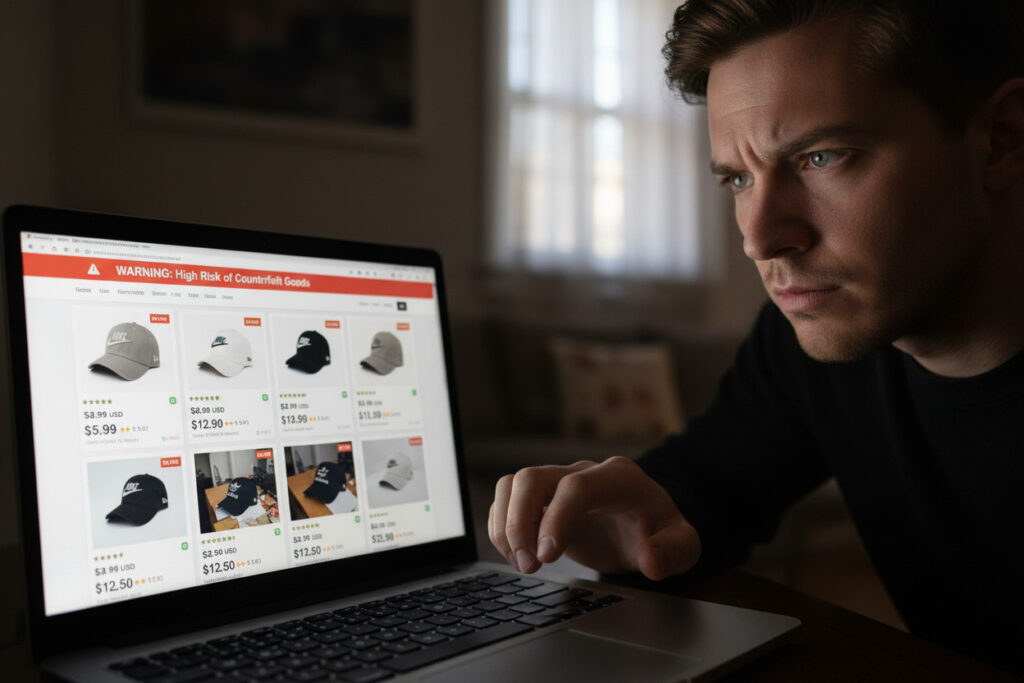
How can you spot fakes on online marketplaces?
Online marketplaces are a minefield. The biggest red flag is the price. If a new-release, $40 cap is being sold for $10 by multiple sellers, they are almost certainly fakes. Scrutinize the product photos. Counterfeiters often use official stock photos stolen from the brand's website, but when you see photos of the actual product, they will be low-quality or inconsistent. Always check the seller's rating and reviews. Look for feedback from previous buyers mentioning poor quality, long shipping times from overseas, or items not matching the description. According to the U.S. Government Accountability Office, online marketplaces are a primary channel for counterfeit goods entering the country, so extreme caution is warranted.
Yes, and they operate on a similar principle of deception. On social media, sellers create temporary accounts or pages, run ads featuring attractive but misleading photos, and direct buyers to make payments through unsecured methods. Once the money is sent, the account often disappears. In physical street markets, the environment is designed to encourage impulse buys. The sheer volume of products can be overwhelming, and sellers may pressure you into a quick purchase. While you can physically inspect the item, you have no recourse once you walk away. The Better Business Bureau frequently warns consumers about these types of scams, which spike during holiday seasons and tourist travel.
So, what can you do to fight back? Let's discuss how to protect yourself.
How Can You Protect Your Business From Fakes?
As a buyer, sourcing agent, or shop owner, the risk of accidentally purchasing and reselling counterfeit goods is a serious threat to your business. It can lead to angry customers, chargebacks, and irreparable damage to your reputation. You're worried about vetting suppliers and ensuring your inventory is 100% authentic. The fear of one bad shipment ruining your business is very real.
The most powerful strategy to protect your business is to establish a rock-solid, transparent supply chain. This means cutting out the middlemen and sourcing directly from the brand, its authorized distributors, or a highly vetted, reputable manufacturer. Due diligence is your best defense. Never make a purchase decision based on price alone. Always verify your supplier's credentials, ask for references, and start with a small test order to evaluate their quality and legitimacy.
At Shanghai Fumao Clothing, we champion this direct-sourcing model. We provide all our partners with complete transparency, from material sourcing to production processes, giving them unshakable confidence in their inventory. Building a secure supply chain isn't just a best practice; it's the only way to operate sustainably in this industry.
Why is supplier verification crucial?
Your supplier is your single most important partner in ensuring authenticity. Before placing a large order, do your homework. Ask the potential supplier for their business license, certifications (like ISO 9001), and proof of any licensing agreements they claim to have. If they say they are an authorized distributor for a major brand, contact that brand directly to verify their status. A legitimate supplier will be happy to provide this information; a fraudulent one will make excuses. This process of supplier qualification is a fundamental step in risk management and should never be skipped, no matter how good the deal seems.
How can a direct manufacturing relationship help?
For those developing their own brand or requiring large volumes of customized headwear, forging a relationship with a direct manufacturer like us is the ultimate form of protection. When you work with us, you are part of the creation process. You have full visibility into the materials used, the production line, and the quality control checks. There is zero risk of counterfeits entering your supply chain because you are at the source. This direct model not only guarantees authenticity but also allows for better quality control, customization, and often, better pricing by eliminating distributor markups. It's about building a strategic partnership based on trust and transparency, which is the most effective antidote to the counterfeit market.
Conclusion
The battle against counterfeit baseball caps is ongoing, but knowledge is your most powerful weapon. By knowing which brands are the primary targets—like New Era, Nike, and Supreme—and by training yourself to spot the tell-tale signs of a fake in the stitching, tags, and materials, you can significantly reduce your risk. Avoiding high-risk sales channels like anonymous online sellers and transient street markets is just as important as inspecting the product itself.
For business owners, the stakes are even higher, and the solution lies in building a secure and transparent supply chain. Protecting your reputation and your customers starts with rigorous supplier verification and, ideally, forging direct partnerships with trusted manufacturers. Don't let the allure of a cheap deal jeopardize the integrity of your business.
At Shanghai Fumao Clothing, we are committed to upholding the highest standards of quality and authenticity. We believe in building long-term partnerships based on trust. If you're looking for a reliable manufacturer to produce your next line of high-quality, authentic headwear, we're here to help. Please reach out to our Business Director, Elaine, at elaine@fumaoclothing.com to start a conversation about how we can build a secure and successful partnership together.