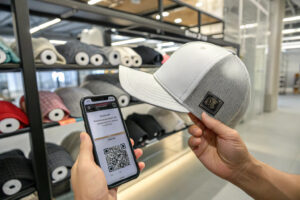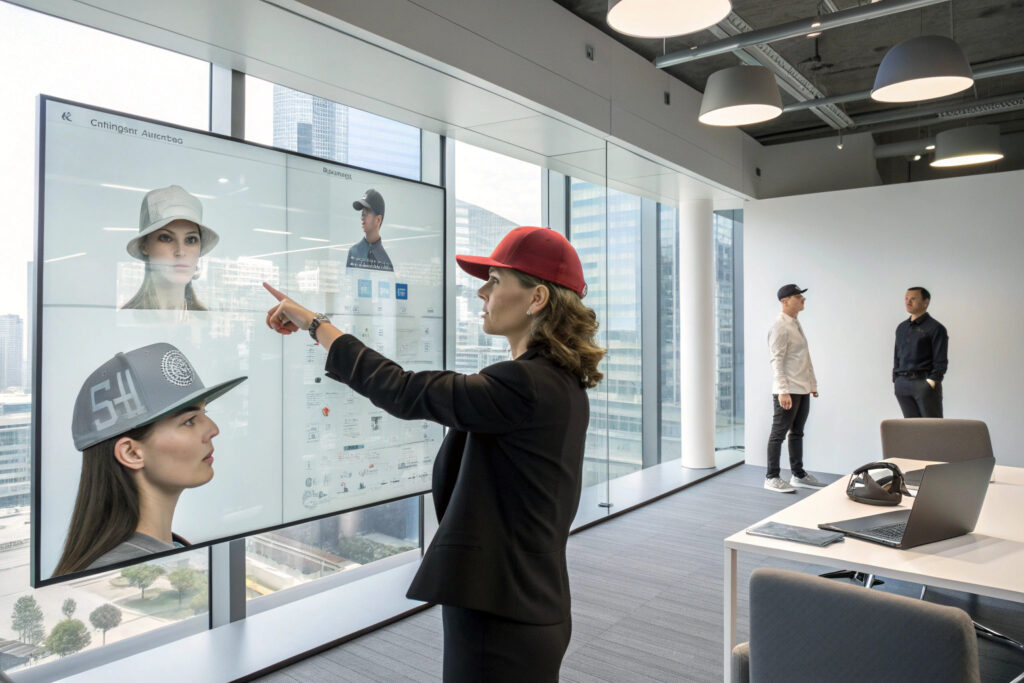
The process of wholesale hat buying, where decisions hinge on visualizing thousands of units on diverse end-consumers, has always been fraught with guesswork. Traditional methods—relying on static photos or physical samples—make it challenging to accurately predict how a style will look across different demographics. This uncertainty can lead to costly misjudgments in bulk orders.
Virtual Try-On (VTO) technology, utilizing AI and Augmented Reality (AR), is revolutionizing wholesale by allowing buyers to visualize hats on digital avatars representing their target market. This enables data-driven style validation, reduces sampling costs, and accelerates the buying cycle. It shifts the purchasing decision from imagination to interactive, visual confirmation.
As a manufacturer at Shanghai Fumao Clothing, integrating this perspective into our service model is crucial.We see virtual fitting rooms not just as a retail gimmick, but as a powerful B2B tool that builds buyer confidence and streamlines collaboration. Let's explore how this technology is changing the game for wholesale hat procurement.
What is Virtual Try-On Technology and How Does It Work for Hats?
For wholesalers, Virtual Try-On moves beyond simple photo filters. It's a suite of technologies that create accurate digital twins of hats and simulate how they fit and look. This process typically involves 3D modeling of the product and AI/AR software to render it onto a digital head or avatar. The core value lies in its ability to provide a realistic, scalable preview without producing a single physical sample.
How Are Digital Hat Models Created?
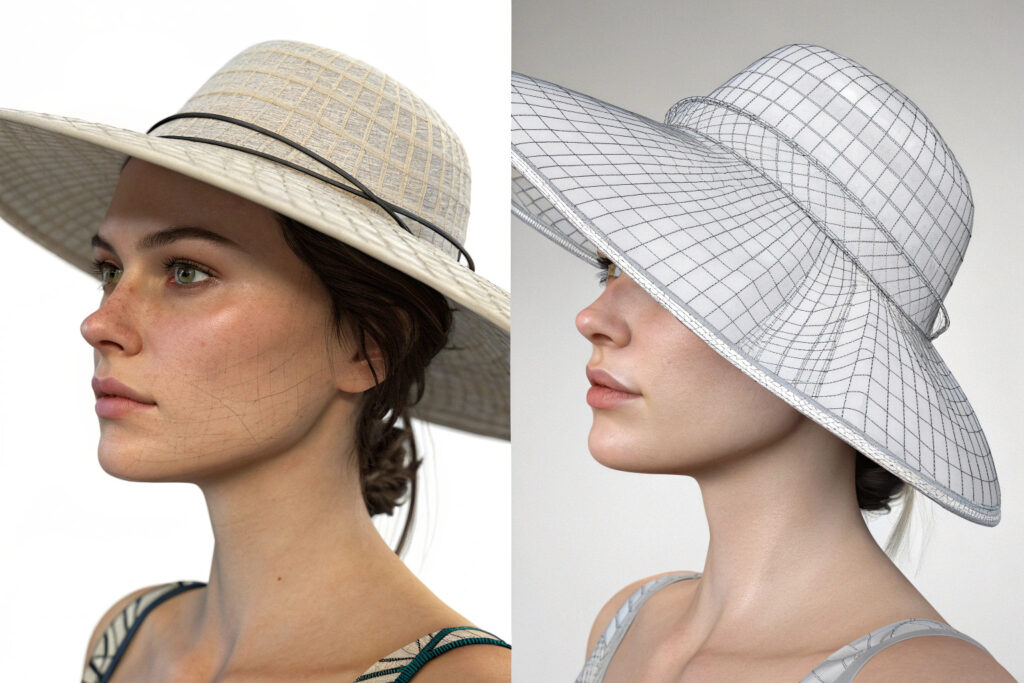
The foundation is a precise 3D model of the hat. This can be achieved through 3D scanning of a physical sample or built from scratch using modeling software. The best models capture intricate details like texture, stitch patterns, the drape of fabric, and the rigidity of a brim. For wholesalers, when a manufacturer like Shanghai Fumao Clothing provides these digital assets, it becomes a powerful sales tool. Buyers can examine the hat from every angle, zoom in on details, and understand its construction long before committing to production, enhancing the product development phase.
What's the Difference Between AI and AR Try-On?
Two main technologies power the experience:
- AR (Augmented Reality) Try-On: Uses a device's camera to map the user's environment in real-time. It overlays the 3D hat model onto a live video feed or photo of a person's head. It's excellent for a real-time, interactive experience, allowing one to move and see how the hat sits from different angles.
- AI (Artificial Intelligence) Try-On: This often uses a single uploaded photo. Advanced AI algorithms, trained on vast datasets of garments and human bodies, understand the body's geometry and the clothing's structure to generate a realistic composite image. It's crucial for accuracy, as commercial-grade AI must preserve the person's exact body proportions and only swap the garment.
For B2B, AI-driven solutions are particularly valuable for generating lifestyle images for marketing, while AR provides an immersive tool for buyers to demo styles during meetings.
What Are the Key Benefits of VTO for Wholesale Buyers?
Adopting Virtual Try-On technology translates into tangible competitive advantages and risk mitigation for wholesale operations. It directly addresses the classic pain points of cost, time, and uncertainty in bulk purchasing.
The primary benefits are significant cost reduction in sampling, faster time-to-market, and data-driven decision-making that leads to more confident buys. For a buyer managing dozens of styles across multiple seasons, these efficiencies compound, improving both profitability and agility.

How Does VTO Reduce Costs and Sampling Time?
The traditional sampling cycle is expensive and slow. Each physical sample requires materials, labor, and shipping. VTO disrupts this by enabling digital sampling. A buyer can review and request changes to a 3D model instantly. For instance, adjusting the brim width or color on a panama hat becomes a matter of clicking a button rather than waiting weeks for a new sample. This slashes development costs and allows for exploring more design variations within the same budget and timeline. It empowers a faster, more responsive supply chain.
Can VTO Improve Buying Accuracy and Reduce Risk?
Absolutely. By visualizing hats on avatars that match a target customer's demographics (age, gender, face shape), buyers can make more accurate predictions about a style's market fit. This reduces the risk of bulk ordering a style that doesn't resonate. Furthermore, leading platforms provide analytics and heatmaps, showing which styles are "tried on" most frequently in digital showrooms. This data offers invaluable pre-production market feedback, moving decisions from gut feeling to informed strategy, thereby enhancing quality control over the buying portfolio itself.
How to Implement VTO in Your Wholesale Buying Process?
Integrating VTO doesn't require rebuilding your entire operation. It's about strategically embedding digital tools into existing workflows, from initial sourcing to final purchase order.
Successful implementation starts by collaborating with tech-forward suppliers and adopting platform-based tools that facilitate digital collaboration. The goal is to create a seamless loop between design intent, digital validation, and physical production.
What Should You Look for in a Manufacturer's VTO Capability?
When evaluating suppliers like Global-Caps, inquire about their digital asset creation process. Forward-thinking manufacturers are investing in 3D design capabilities and can provide:
- High-fidelity 3D models of their products.
- Access to digital showrooms or catalogs.
- The ability to make quick digital modifications (color, trim) for review.
Partnering with such a manufacturer turns them from just a producer into a product development partner. It also streamlines communication, as feedback can be given directly on the digital asset, minimizing misunderstandings.
What Tools and Platforms Can Facilitate B2B VTO?
Several avenues exist:
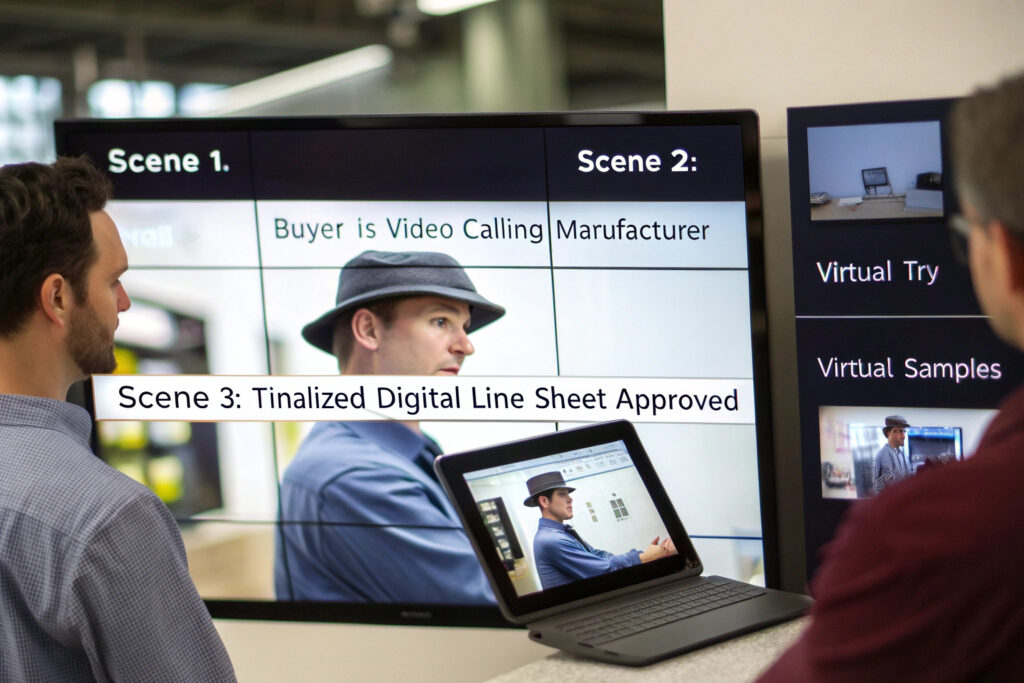
- B2B Digital Showrooms: Specialized platforms allow suppliers to host entire collections online. Buyers can log in, try styles on standard or custom avatars, create line sheets, and even place orders. These platforms function as a virtual trade show available year-round.
- API Integrations: For larger buyers, some AI try-on services offer APIs that can be integrated into a company's internal product selection or ERP systems. This allows for a customized, branded experience.
- AR Apps for Sales Teams: Equip your sales representatives with tablet-based AR apps. During market weeks or sales calls, they can instantly show retailers how new hat styles will look, making presentations more engaging and effective.
What Are the Current Limits and Future Trends of VTO?
While powerful, VTO technology is still evolving. Understanding its limitations ensures realistic expectations, while tracking its trajectory helps prepare for the future.
The current limits primarily relate to the tactile experience and fabric drape, but rapid advancements in AI and computing are closing this gap. The future points toward hyper-realistic simulation and deeper integration across the supply chain.
What Can't Virtual Try-On Replicate (Yet)?
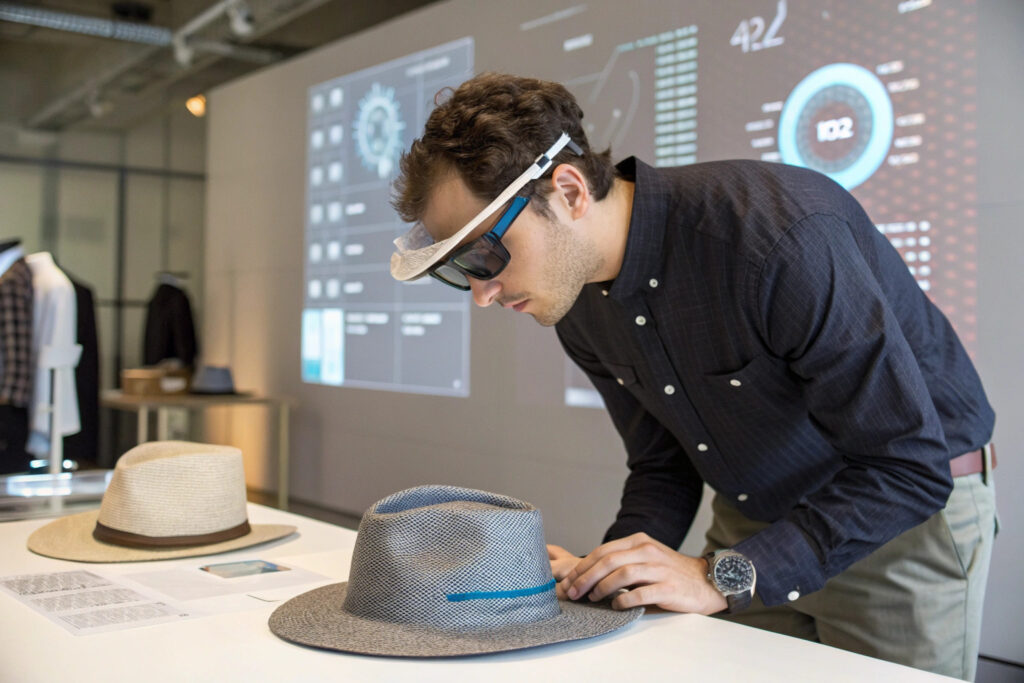
The most significant gap is the tactile sensation—the feel of a soft beanie, the weight of a wool fedora, or the stiffness of a structured baseball cap. While visual accuracy is high, understanding material hand-feel still requires physical samples. Additionally, simulating the complex, dynamic drape of very soft fabrics on a moving person can be challenging, though physics simulation engines are making strides. For now, VTO is best used to down-select styles, with final validation on key physical samples.
How Will AI and Metaverse Trends Shape B2B VTO?
The future is interconnected and intelligent:
- AI-Powered Design & Forecasting: Beyond trying on, AI will analyze try-on data and social trends to suggest new designs or predict best-sellers, informing the product development cycle.
- Digital Twin of the Supply Chain: The 3D hat model (the digital twin) will be used from design and sales all the way through to automated manufacturing, ensuring absolute consistency.
- Immersive B2B Spaces: Virtual showrooms will evolve into persistent, shared digital spaces where global buyers and suppliers can meet, interact with products, and collaborate in real-time, redefining the wholesale buying experience.
Conclusion
Virtual Try-On technology is transforming wholesale hat buying from a speculative art into a precise, data-informed science. It offers undeniable benefits: slashing sampling costs, compressing development timelines, and providing visual validation that reduces inventory risk. For forward-thinking buyers, partnering with manufacturers who embrace this digital shift is no longer optional; it's a strategic imperative to stay competitive.
The journey begins with a single step—often just a conversation with your supplier about their digital capabilities. If you are ready to explore how digital sampling and virtual try-on can streamline your hat procurement process, Shanghai Fumao Clothing is equipped to guide you. We are integrating these very technologies to serve our partners better. For a practical discussion on how to apply this to your next collection, please reach out to our dedicated team. You can contact our Business Director, Elaine, directly at elaine@fumaoclothing.com to explore the possibilities for your brand.