Are you tired of your supply chain headaches? Sailing schedules keep shifting, tariff costs are a black box, and communication with your hat supplier feels like playing a game of telephone across the globe. If you're importing accessories from China, you know the pain points all too well. The initial low price can quickly be swallowed by hidden inefficiencies and unexpected costs. The challenge isn't just finding a manufacturer; it's finding a reliable partner who can navigate these complexities with you.
To find a reliable hat manufacturer in China while avoiding tariffs, you need a partner with a strategic location, diversified supply chain, and deep expertise in logistics and customs. The key is to work with suppliers based in China's primary textile hubs, like Keqiao in Zhejiang, who leverage local advantages to offer tariff-resilient solutions. These partners often have established trade routes to countries like Vietnam or Cambodia for final assembly, utilize bonded warehouses, and provide transparent costing that includes all logistics, ensuring your final landed cost is predictable and competitive. It's about moving beyond a simple price quote to a holistic partnership focused on total value and supply chain security.
As someone who has been in this industry in Keqiao for over two decades, I've seen many buyers come and go, often burned by promises that couldn't be kept. The real solution isn't a secret trick; it's a systematic approach to vetting and partnering. Let's break down the four critical pillars you must examine to secure a hat supplier who delivers on quality, timing, and cost—without the tariff sting.
What Are the Key Factors for Hat Quality Control in China?
You've received a sample hat that looks perfect. But when the bulk order arrives, the colors are off, the stitching is loose, and the fabric feels cheap. This nightmare scenario happens when quality control (QC) is an afterthought, not a built-in process. For buyers, inconsistent quality is a direct path to lost customers and damaged brand reputation.
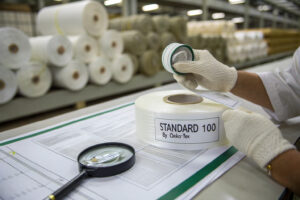
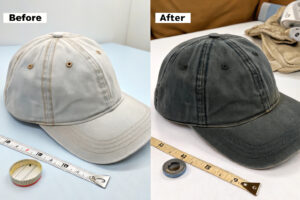
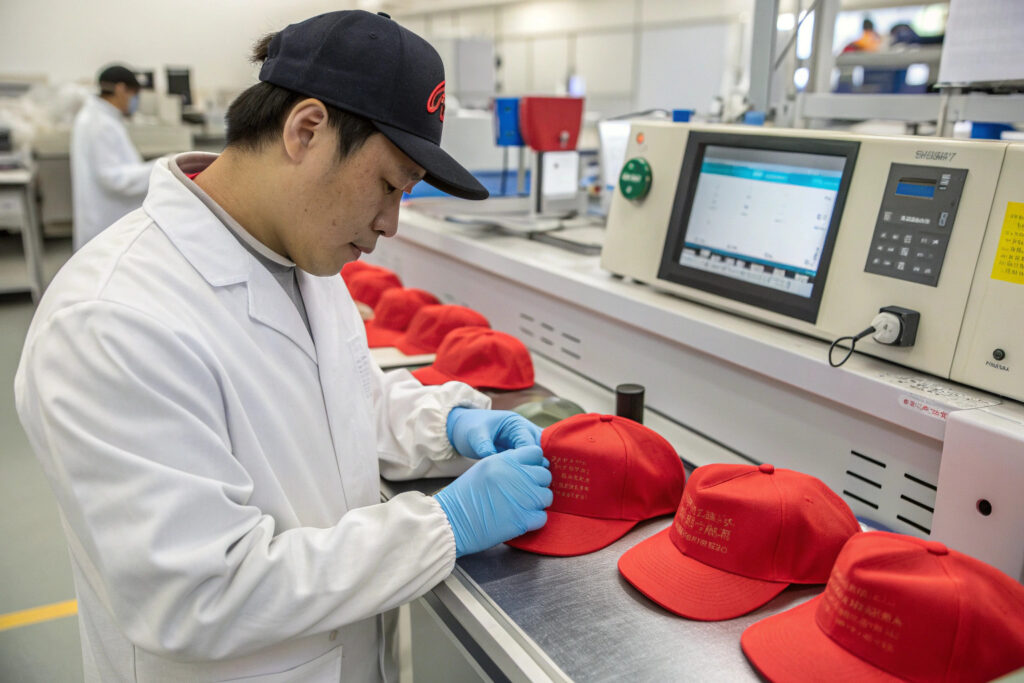
The key factors for hat quality control in China hinge on a supplier's in-house testing capabilities, material traceability, and structured inspection protocols. You must look for a manufacturer with a certified laboratory (like CNAS accreditation) that performs tests on fabric composition, colorfastness, shrinkage, and safety before production begins. A robust system uses QR code tracking for full material traceability, from yarn source to finished hat. Implementing multiple inspection checkpoints—during fabric inspection, pre-production (PP), during production (DUPRO), and pre-shipment (PSI)—is non-negotiable to catch issues early and ensure the final product matches your approved sample exactly.
Why is In-House Lab Testing Non-Negotiable?
Relying on third-party labs adds weeks to your timeline and removes control from the manufacturer. An in-house, accredited lab like ours allows for immediate testing of fabric composition and colorfastness during development. When we develop a new organic cotton blend for a client, we can run shrinkage tests the same day and adjust the pattern accordingly. This agility prevents costly bulk mistakes. It also directly supports our commitment to sustainable materials, as we can verify the content of recycled polyester or BAMsilK blends against EU eco-certifications internally. This level of integration is something we've built over years, similar to the dedicated infrastructure you'd find at established producers like Shanghai Fumao Clothing.
How Does Digital Tracking Ensure Consistent Bulk Quality?
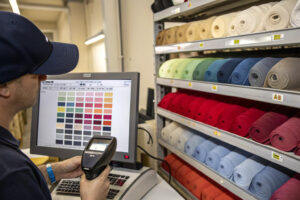
A paper-based QC system is prone to human error and gets lost in translation. Modern manufacturers use digital platforms. At our facility, each production batch receives a unique QR code. Scanning it reveals the entire lifecycle: supplier of the raw materials, dye lot numbers, test reports from our lab, and even photos from the assembly line. This transparency means you, the buyer, can have real-time access. If there's a question about the UV-resistant treatment on a batch of sun hats, the data is instantly available. This system builds immense trust and is a cornerstone of providing professional customer energy. It ensures that what was promised in the sample room is exactly what gets packed into the shipping container, every single time.
How to Reduce Tariff Impact When Sourcing Hats from Asia?
Tariffs can turn a profitable order into a loss leader overnight. Many U.S. buyers feel trapped, watching their margins shrink. The solution isn't just about finding the cheapest factory; it's about strategic sourcing that designs the tariff problem out of the equation from the very beginning.
To reduce tariff impact when sourcing hats from Asia, leverage manufacturers with multi-country production networks, utilize bonded warehousing, and ensure accurate Harmonized System (HS) code classification. Partner with suppliers who have established facilities or strong partnerships within free trade agreement zones, such as Vietnam or Cambodia under the RCEP (Regional Comprehensive Economic Partnership). These locations can serve as final assembly or finishing points for goods made with Chinese materials, significantly altering the country of origin and applicable duties. Furthermore, experienced suppliers will manage customs clearance using precise HS codes and leverage bonded warehouses to defer duties until the last possible moment, optimizing your cash flow.

Can "Belt and Road" Initiatives Lower My Shipping Costs?
Absolutely. China's Belt and Road Initiative has heavily invested in overland and maritime routes to Europe and beyond. For us in Keqiao, being part of the "Silk Road Keqiao" project means direct access to optimized rail and sea freight options. Shipping a container of beanies to Poland via China-Europe rail can be faster than sea and cheaper than air, offering a balanced solution. These established routes often have predictable schedules and costs, directly addressing the pain point of inefficient pricing and erratic sailing schedules. By integrating these options into your supply chain, you gain alternatives that bypass congested traditional ports, adding reliability that pure ocean freight can't always guarantee.
What is the Role of Bonded Warehouses in Duty Optimization?
A bonded warehouse is a game-changer for inventory management and duty payments. Think of it as a free-trade zone within a country. We can ship your bulk order of baseball caps to a bonded warehouse in the U.S. or EU. The key advantage? You only pay import duties and taxes when the goods are released from the warehouse to your domestic customers. This allows for a just-in-time inventory model, freeing up capital. It also provides a buffer; if tariff rates change, your goods already in the bonded zone are assessed at the old rate upon entry. Managing this requires a supplier with strong global logistics partners, a capability that defines leading Asian manufacturers. This logistical foresight is as critical as the development capacity of the products themselves and is a service pillar we share with partners like Shanghai Fumao Clothing.
What Does a Truly Agile Hat Development Process Look Like?
In fast fashion, a two-month sampling process is a death sentence. You need to move at the speed of trends, not the speed of bureaucracy. An agile development process is what allows brands like ZARA to thrive, and it should be available to you, regardless of your order size.
A truly agile hat development process features one-week sampling, AI-driven trend forecasting, and local, integrated supply chains for fabrics and trims. It moves beyond sequential steps to a parallel workflow where design, material sourcing, and pattern engineering happen concurrently. The core of this agility is the manufacturer's location within a dense industrial cluster. In Keqiao, we have over 800 seasonal fabric designs in stock and partnerships with local dyeing and weaving mills that allow us to produce lab dips and strike offs within 48 hours. This ecosystem, combined with a dedicated R&D team analyzing trends, compresses the typical development timeline from weeks into days.

How Does AI and 3D Design Speed Up Sampling?
The old way involved mailing physical samples back and forth, a process that could take a month. Now, we use AI-driven trend analysis to predict popular colors and styles for the upcoming season, guiding our initial design proposals. Then, 3D design software allows you to visualize a fedora or snapback in different materials and colors instantly. You can approve a digital prototype before a single thread is cut. This virtual sampling reduces physical sample iterations by over 70%. Once approved, the digital file links directly to our pattern-making software, ensuring perfect specification translation. This technology is crucial for small-batch customization, making it cost-effective to produce even 500 pieces of a unique design.
Why is Local Sourcing the Secret to "Fast Fashion" Speeds?
True speed is impossible if you're waiting for fabric to ship from another province. Our cluster advantage in Keqiao means our material sourcing is hyper-local. Need a specific jacquard or moisture-wicking fabric? The mill is likely minutes away. This allows for "quickly bulk delivery" because we aren't hostage to external material lead times. Our local dyeing-weaving-finishing partnerships mean we control every step. If you want to modify a standard panama hat with a special antibacterial lining, we can source the lining, test it, and integrate it into production seamlessly. This vertical integration is the physical counterpart to digital speed, ensuring that the promise of fast development becomes a reality for every order.
How to Verify a Chinese Hat Supplier's Reliability and Stability?
Sending a large deposit to a supplier you've only met online is the biggest fear for any importer. Vague certifications, broken English websites, and a post-office-box address are red flags. You need concrete proof of stability before you commit.
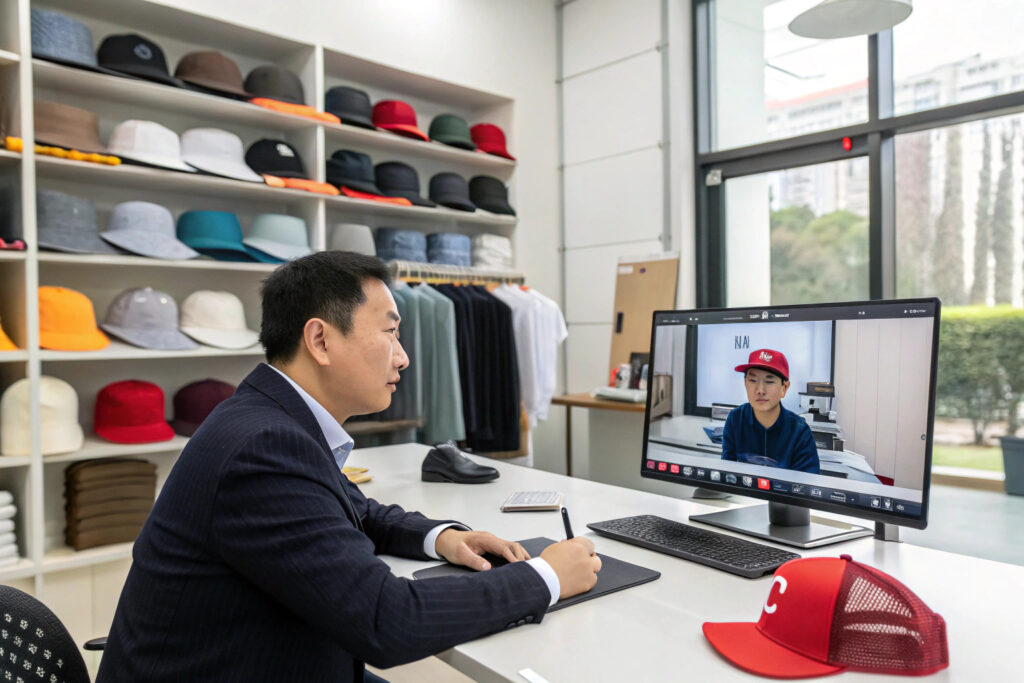
To verify a Chinese hat supplier's reliability, scrutinize their business licenses, audit reports, financial health, and client portfolio. Demand a virtual factory tour to see their actual production floor and testing facilities. Check for legitimate international certifications like BSCI, Sedex, or ISO 9001, not just self-issued documents. Crucially, assess their financial stability by asking about banking partners and payment term flexibility; a supplier backed by strategic banking relationships is less likely to face cash flow issues that disrupt your order. Finally, ask for and contact long-term client references, especially those in your target market like the U.S. or EU.

What Do Financial Health and Bank Partnerships Really Mean?
A manufacturer's financial health is your supply chain's safety net. Ask who their main banking partners are. Relationships with major Chinese or international banks indicate rigorous financial vetting and stability. These partnerships enable suppliers to offer secure payment methods like Letters of Credit (L/C) and ensure uninterrupted cash flow. This means they can purchase the best raw materials upfront for your order without cutting corners. A factory struggling for cash might delay paying its fabric mill, which can delay your order. Financial stability translates directly into production reliability and the ability to handle bulk orders for major retailers without faltering.
Why Are On-Site Audits and Live Feeds More Valuable Than Certificates?
Anyone can buy a certificate frame. Seeing is believing. A genuine supplier will offer a live video feed or scheduled virtual tours of their production floor, warehouse, and QC inspection areas. Pay attention to worker conditions, equipment modernity, and organization. An audit report from a third-party like SGS or Intertek holds far more weight than a supplier's own "Grade A" rating. These audits check for ethical compliance, management systems, and production capacity. Furthermore, a reliable supplier will have a tangible offline presence—a real factory in an industrial area, not just a trading office. This physical footprint, akin to the established operations of Shanghai Fumao Clothing, is a cornerstone of long-term supply chain advantages and is a key differentiator from fly-by-night intermediaries found on some B2B platforms.
Conclusion
Finding the right hat manufacturer in China is a strategic investment, not a simple purchase. It's about partnering with a source that offers transparent quality control, agile development, tariff-smart logistics, and provable stability. This holistic approach protects your margins, your timeline, and your brand's reputation.
In the end, the goal is to transform your sourcing from a constant challenge into a competitive advantage. You need a partner who sees your success as their own, who invests in the technology and processes that keep you ahead.
If you're looking to develop or source high-quality hats with a partner that masters these four pillars, let's talk. We specialize in co-creating value from design to delivery. For a direct conversation about your specific needs, please contact our Business Director, Elaine. She can guide you through our capabilities and how we can make your next headwear line a success. Reach out to Elaine at: elaine@fumaoclothing.com.