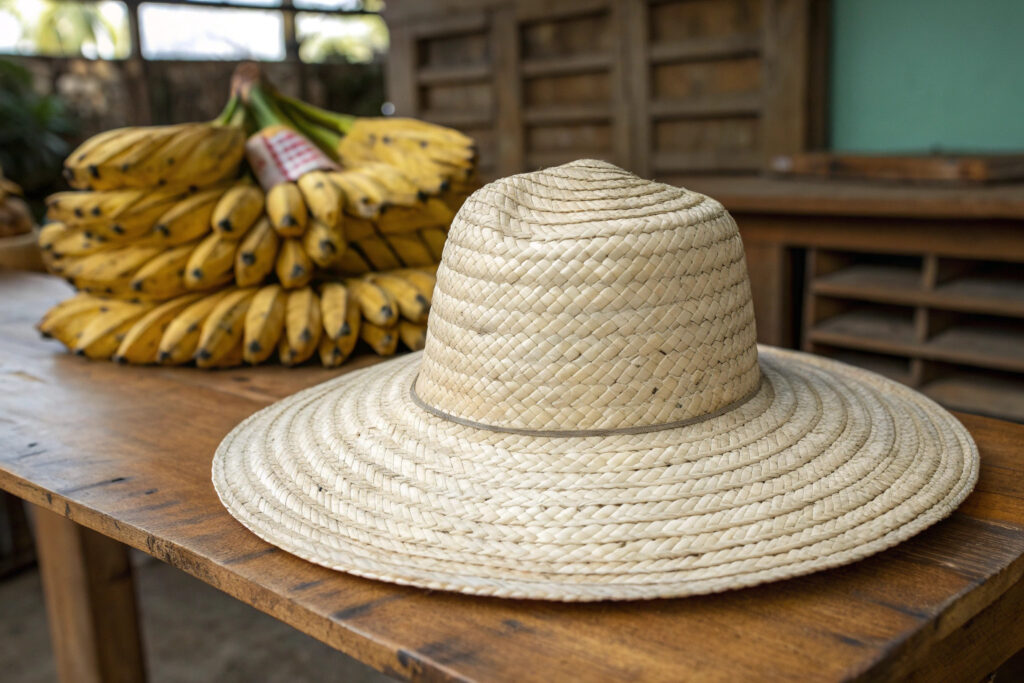
Imagine your next best-selling sun hat not only protecting customers from the sun but also protecting the planet. It’s made from a luxurious, breathable, and durable material that transforms agricultural waste into a fashion statement. This isn't a distant dream; it's the reality of banana fiber, a material that answers the modern demand for true sustainability without compromising on quality or style. For businesses aiming to lead in the eco-conscious market, understanding this innovative fiber is the first step.
Banana fiber is an outstanding choice for sustainable sun hat production because it transforms a major agricultural byproduct into a high-quality, biodegradable textile. This process significantly reduces waste and carbon emissions while creating a hat that is naturally lightweight, breathable, and strong—perfect for combining eco-credentials with premium product performance.
As a manufacturer deeply embedded in the global textiles hub of Keqiao, I've seen materials come and go. The shift towards genuine, circular materials is not just a trend; it's the future. Let's explore why banana fiber stands out in this new era and how it can elevate your sun hat line from ordinary to extraordinary.
How Does Banana Fiber Support a Circular Economy?
The traditional textile model is linear: take, make, dispose. Banana fiber disrupts this entirely by creating value from what was once considered waste, forming a perfect circle of sustainability.
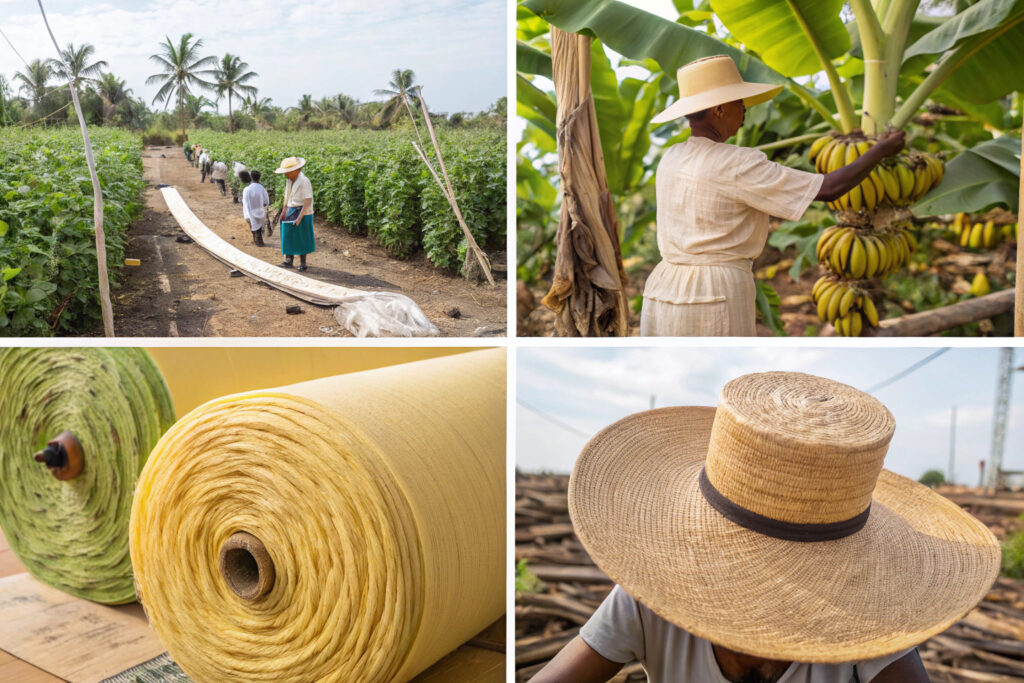
The core of banana fiber's environmental story is its origin. After the banana fruit is harvested, the entire pseudostem (the tall, tree-like stalk) is typically cut down and discarded, as each stem only fruits once. Globally, this results in billions of tons of agricultural waste annually. Instead of burning or leaving this biomass to decompose—releasing carbon dioxide in the process—the fiber is extracted from these stems. This process gives a second life to agricultural byproducts, reducing pressure on virgin resources and cutting down on farm waste. A prominent example is the brand Bananatex®, which has developed a fully circular fabric from Abacá banana plants grown in a natural ecosystem without pesticides.
What Are the Tangible Environmental Benefits?
The impact is measurable. By upcycling this waste, the banana fiber industry actively prevents carbon emissions. For instance, one initiative in the Philippines that converts banana stems into fabric is reported to reduce approximately 250,000 tons of carbon dioxide emissions each year. Furthermore, as a 100% natural plant-based material, banana fiber is completely biodegradable at the end of a product's life. This means a banana fiber sun hat won't linger in a landfill for centuries like a synthetic alternative; it can safely return to the earth, completing the circular loop. This commitment to reducing our carbon footprint is central to the sustainable manufacturing philosophy at Shanghai Fumao Clothing.
How Does It Drive Real Farm-Level Change?
The adoption of banana fiber creates a new, valuable revenue stream for farming communities. It incentivizes better waste management practices on plantations and supports rural economies. This model of creating textile-grade material from what was once trash is a powerful example of a circular economy, a system gaining traction globally as defined by the Ellen MacArthur Foundation. It moves us away from the take-make-waste model towards a regenerative one, which is a core goal for forward-thinking brands.
What Are the Functional Benefits for Sun Hat Performance?
Beyond its green credentials, banana fiber must perform. Fortunately, its natural properties align exceptionally well with the demands of a high-quality sun hat, offering advantages that synthetic or even common natural fibers can't match.
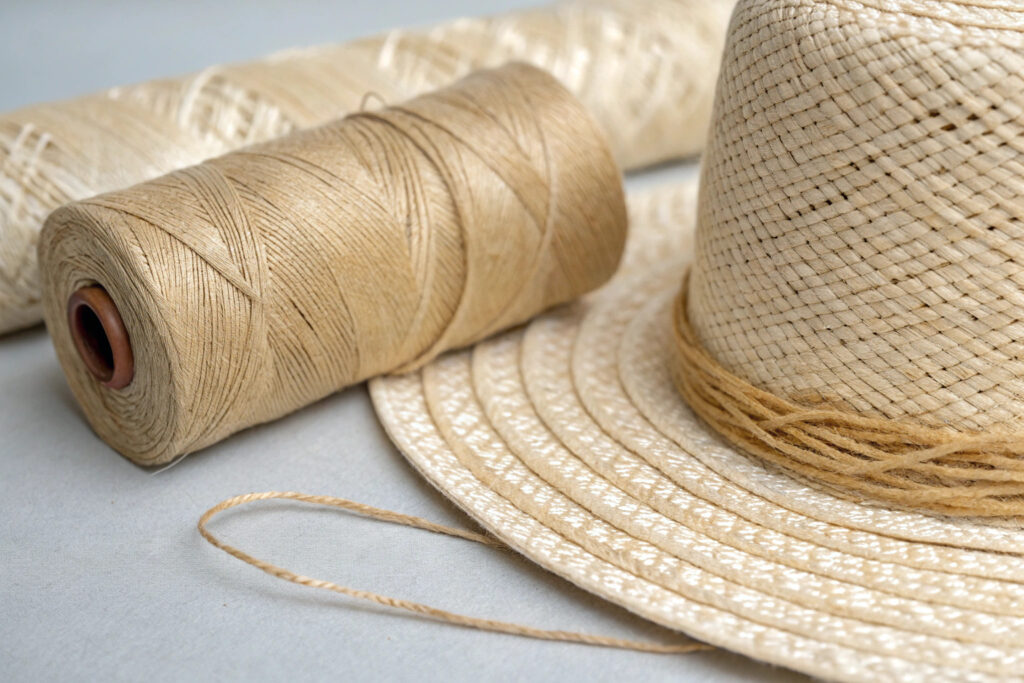
First and foremost, banana fiber is inherently lightweight and breathable. This is crucial for sun hats, as it ensures all-day comfort for the wearer without causing overheating. The fiber also has a natural sheen and smooth texture, giving finished hats an elegant, high-end look that appeals to fashion-conscious consumers. In terms of durability, studies have shown that banana fiber possesses good strength. This structural integrity means hats can maintain their shape well through regular use.
How Does It Compare to Other Natural Fibers?
When selecting materials, comparing key properties is essential. The table below highlights how banana fiber stands against other popular natural options for hats:
| Property | Banana Fiber | Cotton (Conventional) | Linen | Hemp |
|---|---|---|---|---|
| Primary Source | Agricultural waste (pseudostem) | Cultivated crop (requires water, land) | Cultivated crop (flax plant) | Cultivated crop |
| Breathability | Very High | High | Very High | High |
| Natural Sheen | Yes (notable gloss) | No (matte) | No (matte) | No (matte) |
| Biodegradability | Fully Biodegradable | Fully Biodegradable | Fully Biodegradable | Fully Biodegradable |
| Key Advantage | Waste-to-product model, elegant feel | Softness, widespread familiarity | Classic texture, crispness | Durability, eco-friendly cultivation |
This comparison shows that banana fiber's unique combination of visual appeal, feel, and sustainable origin makes it a distinctive choice in the market.
Why is Moisture-Wicking Important for Comfort?
A key functional advantage is moisture management. Banana fibers are hollow, which allows them to wick moisture (sweat) away from the skin and dry quickly. This is a superior comfort feature, especially in hot climates or for active use, preventing the damp, clammy feeling that can occur with some materials. It’s a natural performance attribute similar to advanced technical fabrics, making it ideal for the functional demands of outwear and athleisure products. At Shanghai Fumao Clothing, we leverage these properties by working with advanced spinning techniques to create yarns that maximize both comfort and durability for our clients' hat collections.
Is Banana Fiber Scalable for Commercial Production?
A material can be perfect in theory, but for brands and buyers, commercial viability is key. The good news is that banana fiber is moving beyond a niche novelty into a scalable textile solution, thanks to global innovation and established agricultural supply chains.
The raw material is abundantly available. With over 130 banana-producing countries worldwide, the potential feedstock for fiber is massive. The extraction and processing technology is also advancing rapidly. For example, the China Tropical Agricultural Academy has pioneered steam explosion techniques for efficient industrial extraction. Internationally, companies in Japan and India are leading in fiber research and product development. For practical textile use, the fiber is often blended with others like cotton to optimize handle and strength for weaving. This flexibility allows manufacturers to tailor the fabric's properties. Today, it's possible to produce everything from coarse yarns for structured hat bodies to finer blends for more delicate trims and linings.
What Does the Supply Chain Look Like?
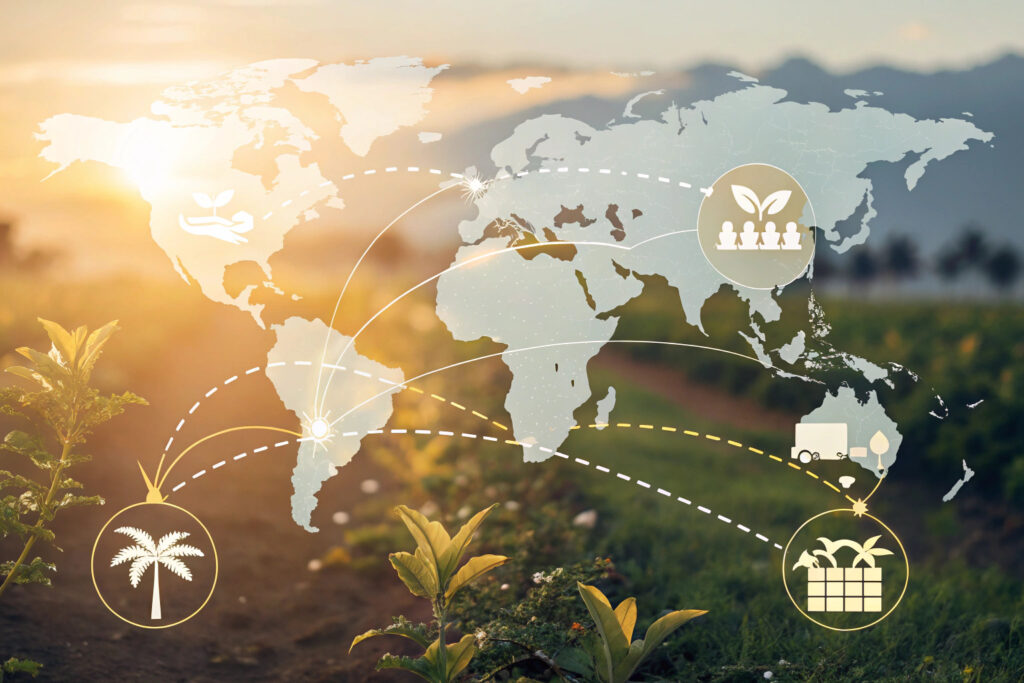
The journey from farm to hat is becoming more streamlined. It begins with partnering with banana plantations or cooperatives that collect the pseudostems. The fiber is then extracted, degummed, and processed into spinnable material. At Shanghai Fumao Clothing, our strategic location in Keqiao, China's textile heartland, gives us direct access to this evolving supply chain. We collaborate with specialist spinners and weavers who are mastering these new materials, ensuring we can source consistent, high-quality banana fiber fabrics to meet client orders, from initial sampling to bulk production.
Can You Really Get Consistent Quality and Color?
Yes, modern processing methods have solved early challenges with consistency. Through controlled degumming and spinning, uniform yarn counts can be achieved. In terms of color, banana fiber takes dye beautifully, yielding rich and vibrant hues. It is compatible with both natural and synthetic dyes, allowing for full creative freedom in design. The material also works well with a variety of hat manufacturing techniques, from traditional sewing to modern molding, giving designers ample flexibility.
How Does It Enhance Brand Value and Market Appeal?
In today's market, a product's story is as important as its function. Choosing banana fiber is a powerful branding decision that resonates deeply with a growing segment of consumers and aligns with global corporate responsibility goals.
Using banana fiber allows a brand to authentically communicate a commitment to innovation and environmental stewardship. It's a tangible example of the circular economy in action—a concept that resonates strongly with ethically-minded consumers. This material choice directly supports several United Nations Sustainable Development Goals (SDGs), such as Responsible Consumption and Production (SDG 12) and Climate Action (SDG 13). For retailers and wholesalers, this provides a compelling narrative that can be used in marketing, on hangtags, and in campaigns to differentiate products on the shelf and online. It transforms a simple sun hat into a symbol of conscious choice.
What Is the End-User Experience?
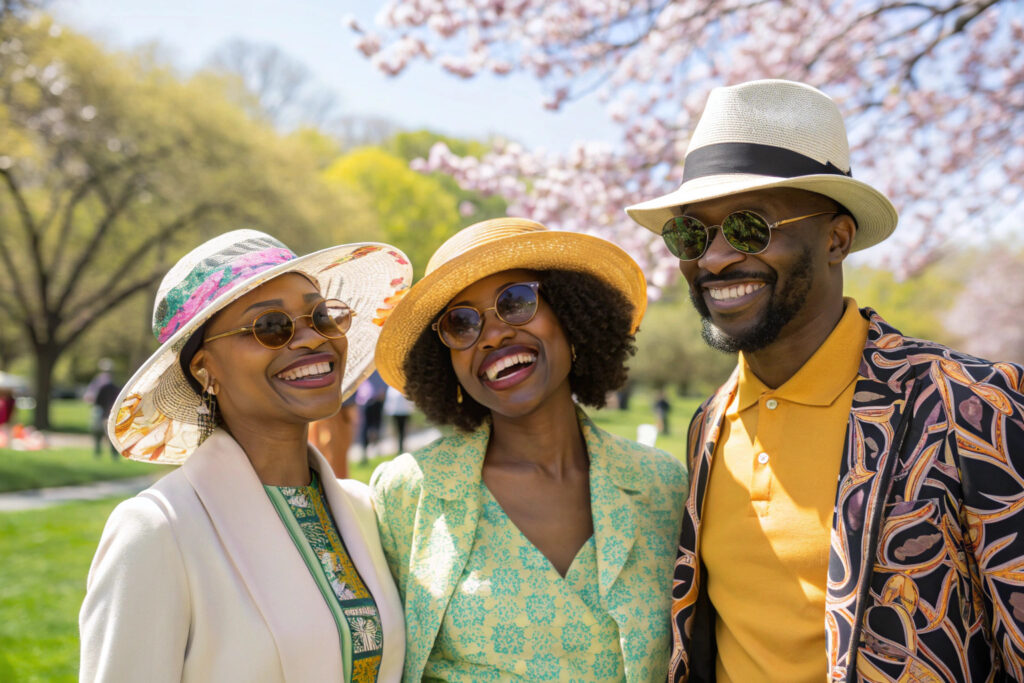
Ultimately, the success of any material depends on the customer who buys the hat. Consumers get a product that is not only beautiful and functional but also aligns with their personal values. They can enjoy a hat that feels premium—with its distinctive luster and comfortable drape—while knowing their purchase supports a positive environmental story. This creates a deeper emotional connection to the brand, fostering loyalty and advocacy that goes beyond a single season's fashion trend.
How Does It Future-Proof Your Product Line?
Regulatory landscapes are shifting. The European Union's strategy for sustainable textiles and similar initiatives worldwide are increasingly favoring products with lower environmental impact. By integrating materials like banana fiber now, brands future-proof their supply chains against stricter regulations and potential taxes on virgin or polluting materials. It’s a proactive step that demonstrates market leadership and a deep understanding of the global trend towards sustainable fashion.
Conclusion
Banana fiber represents a significant leap forward in sustainable textiles, perfectly suited for sun hat production. It masterfully turns a pervasive agricultural waste problem into an elegant solution, offering a material that is lightweight, breathable, and strong. Its story of circularity provides brands with an authentic and powerful narrative in an eco-conscious marketplace.
The journey from innovative material to finished product requires a partner with expertise in both development and scalable production. If you are ready to explore how banana fiber or other sustainable materials can define your next hat collection, we should talk. Contact our Business Director, Elaine, at elaine@fumaoclothing.com to discuss co-creating your sustainable headwear line.