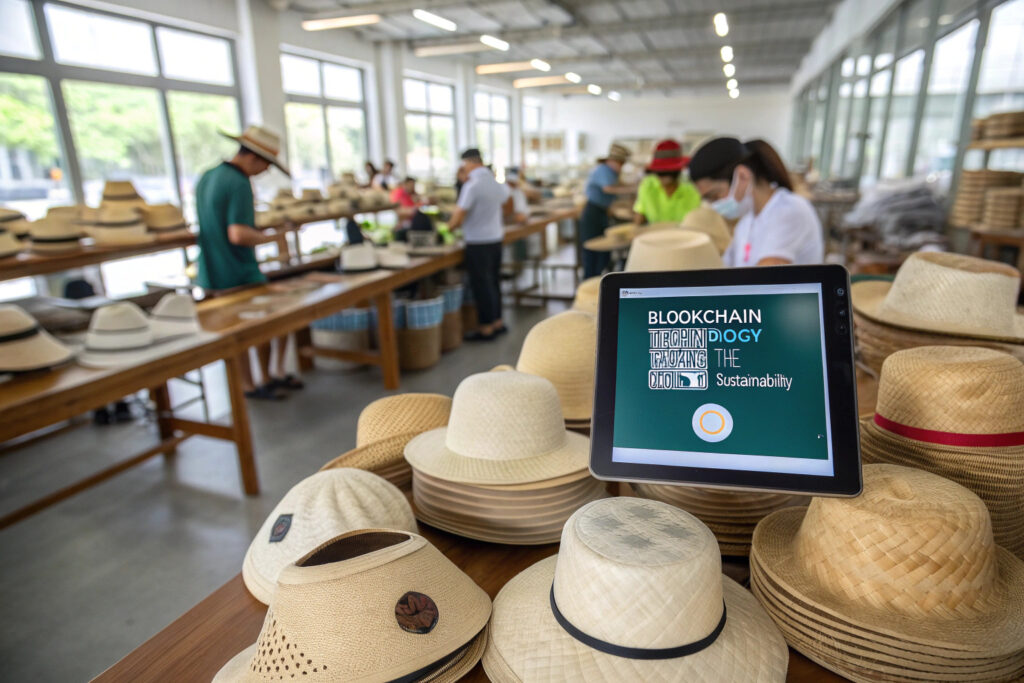
In a fashion industry increasingly driven by demands for authenticity and sustainability, consumers and brands face a common challenge: how can you be absolutely certain about the story behind a product's materials? For hat manufacturers and ethical brands, this question is paramount. Blockchain technology, often associated with cryptocurrencies, is emerging as a revolutionary tool to provide an unbreakable answer. It transforms vague claims of "eco-friendly" or "organic" into verifiable, digital proof.
Blockchain creates a permanent, transparent, and tamper-proof digital ledger for hat materials. It tracks every step from organic cotton farm or recycled plastic source to the finished fedora or beanie, providing unparalleled proof of origin, ethical practices, and sustainability claims that build ultimate consumer trust.
This guide explores how this technology works specifically for headwear, the tangible benefits it offers to brands like yours, and the practical steps to implement it in your supply chain.
How Does Blockchain Tracing Work for Hat Materials?
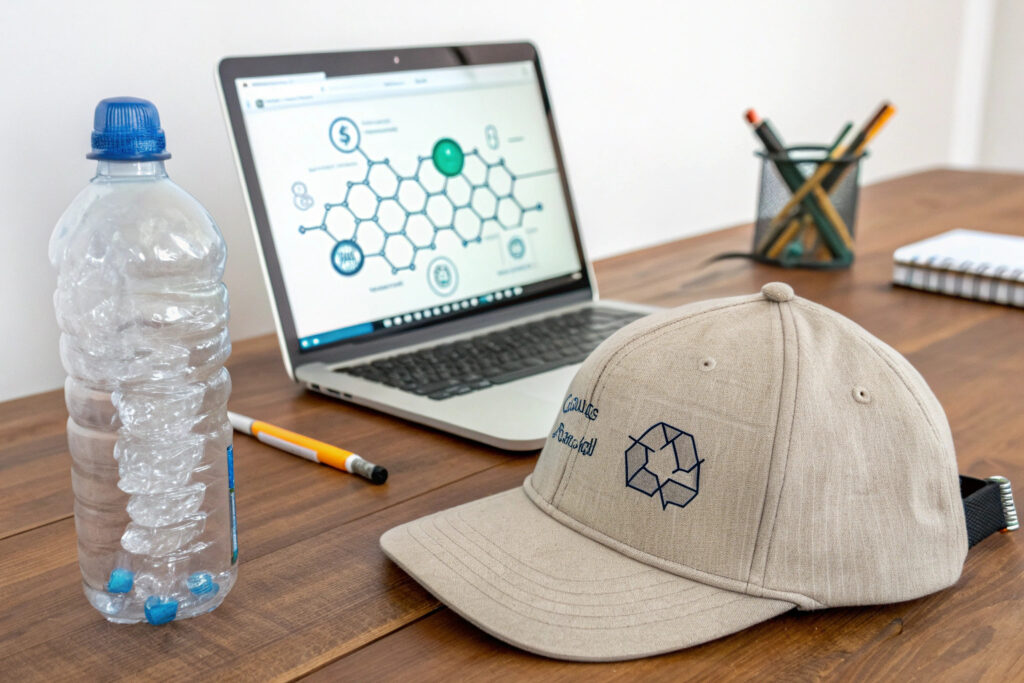
At its core, blockchain is a decentralized digital ledger. Imagine a shared spreadsheet that is duplicated across a network of computers. No single entity controls it, and once a piece of data (a "block") is added and verified by the network, it cannot be altered or deleted. This creates an immutable chain of custody. For a hat made from recycled PET (plastic bottles), the journey is recorded step-by-step.
What specific data is recorded at each stage?
Each participant in the supply chain adds verified information to the material's digital passport. A practical sequence might look like this:
- Stage 1: Source. A recycling facility records the tonnage of PET bottles collected, geolocation data, date of processing, and a batch number for the resulting recycled polyester chips.
- Stage 2: Yarn Production. The yarn spinner scans the batch number and adds data: transformation into yarn, blend percentages (e.g., 85% rPET, 15% organic cotton), certification IDs (e.g., Global Recycled Standard), and new lot numbers.
- Stage 3: Manufacturing. Upon receipt, your hat factory, like shanghaifumaoclothing, records the lot number, dyeing process details (using certified eco-dyes), and the production date of the finished hats, assigning a new SKU/Batch code.
- Stage 4: Audit & Verification. Independent auditors or certification bodies can add their verification seals and reports directly to this chain, making them inseparable from the product history.
How does the consumer access this story?
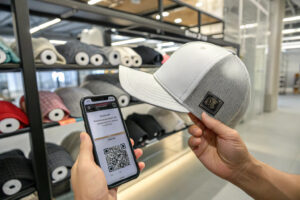
The final hat batch code is linked to a unique QR code or NFC tag on the care label. When a consumer scans it with their smartphone, they don't see complex blockchain data. Instead, they see a clean, branded interface showing the hat's verified journey: "This brim is made from 22 recycled plastic bottles, collected in Coastal Region X, spun into yarn at Mill Y, and crafted at our Z facility." This transforms a purchase into a transparent, engaging story.
What Are the Tangible Benefits for Hat Brands and Consumers?
Moving beyond theory, blockchain tracing delivers concrete competitive advantages that address major industry pain points, from building trust to streamlining compliance.

How does it build unmatched brand trust and combat greenwashing?
In a market saturated with sustainability claims, proof is power. Blockchain provides indisputable evidence that backs up your marketing. When you claim "100% Organic Peruvian Cotton," the blockchain ledger shows the farm's certification, the shipment to the mill, and the processing date. This destroys greenwashing by making vague claims impossible to sustain. It elevates your brand as a truly transparent leader, allowing you to connect with conscious consumers on a deeper level. This proven integrity is a powerful tool for B2B sales as well, giving major retailers and corporate clients the verified data they require.
Can it improve supply chain efficiency and compliance?
Absolutely. Beyond marketing, blockchain is a powerful supply chain management tool. It provides real-time visibility into material flow, helping identify bottlenecks or delays. It also radically simplifies compliance. Instead of managing piles of paper certificates for organic, recycled, or fair-trade materials, all certifications and audit reports are digitally attached to the material batch on the blockchain. This makes it easy to prove compliance with regulations like the EU's forthcoming due diligence laws or brand-specific ethical codes. For a manufacturer, this saves immense time and reduces risk.
What Are the Challenges and Key Considerations for Implementation?
While powerful, integrating blockchain is not a plug-and-play solution. It requires strategic planning and collaboration across your supply chain.

What are the main barriers to adoption?
The primary challenge is supply chain participation. Blockchain's value depends on data input at every stage. You must get farmers, ginners, spinners, dyers, and factories to agree to record data. This requires overcoming technological hesitancy and demonstrating the mutual benefit. There are also initial costs for technology integration, tag sourcing (QR/NFC), and platform fees. Furthermore, the data is only as reliable as its input ("garbage in, garbage out"), necessitating reliable verification processes at each node.
How should a brand start with blockchain tracing?
A successful implementation follows a clear path:
Start with a Pilot: Don't trace your entire collection. Choose one flagship product—like your best-selling plant-based leather fedora or organic cotton beanie—and one key material.
Choose the Right Partner: Select a blockchain platform built for physical goods (like VeChain, IBM Food Trust, or TextileGenesis). They provide the framework and tools.
Engage Your Supply Chain Early: Work with your key material suppliers and manufacturers. A partner like shanghaifumaoclothing, experienced in tech-forward production, can be invaluable here.
Focus on the Story: Use the data to create a compelling consumer-facing narrative. The technology is the backbone; the trust and story are the product.
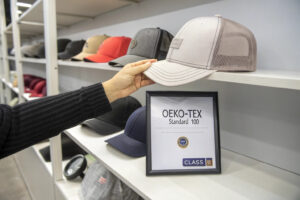
Verify and Certify: Link the blockchain data to existing third-party certifications (GRS, GOTS, OCS). This combines the trust of traditional audits with the transparency of digital tracking.
What Does the Future Hold for Transparency in Fashion?
Blockchain is not the end goal; it's a foundational technology enabling a more transparent and responsible industry.

Is this just a trend or the new standard?
Transparency is shifting from a competitive advantage to a basic expectation. Major brands are already piloting these systems. As technology costs decrease and consumer pressure increases, traceability will become table stakes for any brand making ethical or sustainability claims. Early adopters will be seen as pioneers, while laggards may face skepticism.
What comes after blockchain tracing?
Blockchain provides the trust layer. The future integrates it with other technologies:
- Internet of Things (IoT): Sensors on bales of cotton could automatically record temperature and humidity to prove optimal storage conditions.
- AI & Big Data: Analyzing the blockchain data across your supply chain can predict disruptions, optimize inventory, and calculate precise carbon footprints for each product.
This creates a fully digitized, intelligent, and transparent supply chain, where every hat has a complete and verified life story.
Conclusion
For hat brands and manufacturers, blockchain technology moves material sourcing from the back room to the front label, with verified proof. It solves the critical issues of trust, greenwashing, and supply chain opacity, offering a powerful way to prove your commitment to quality and ethics. While implementation requires effort and collaboration, the payoff is a formidable brand advantage: the ability to tell a true, unchangeable story that resonates deeply with today's conscious consumer.
Ready to explore how blockchain-backed transparency can be woven into your next hat collection? As a manufacturer invested in innovation and ethical production, we can help navigate this process. For a detailed discussion on integrating material tracing into your product line, please contact our Business Director Elaine at elaine@fumaoclothing.com.